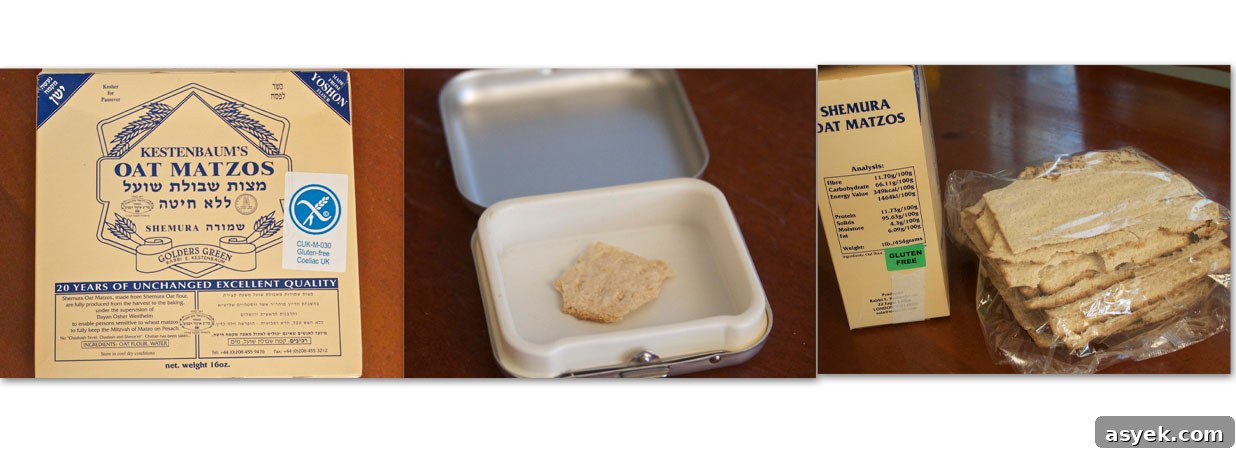
I have followed a paleo diet since early February 2011 and was only recently diagnosed with celiac disease. Because the paleo approach eliminates grains, it is naturally gluten-free, so I hadn’t been overly worried about the tiny amounts of gluten I occasionally encountered at church during communion. After learning more about gluten intolerance and celiac disease, however, I realized that even trace amounts of gluten can trigger an immune response. Once diagnosed, I understood I needed to take strict measures to avoid any exposure.
For someone with celiac disease, ingesting even a crumb of gluten can cause harm. The immune reaction may be immediate or delayed, but tissue damage can occur regardless. At my congregation, communion is served from shared trays that hold a matzo cracker; people break off a piece as the tray is passed. For several months my compromise was to break off a piece and discard it later. Waving the tray away felt awkward and made me self-conscious, and I resented not being able to fully participate in the sacrament. I wanted a better solution that would allow me to partake without risking my health.
Recently I noticed that a friend and sister in Christ, Pamela, was preparing communion for December. I had already told her about my diagnosis, so when she began researching options she understood my concern. Pamela called with questions and followed up by investigating gluten-free communion wafers and alternatives. The very next morning she brought me a thoughtful solution that solved the problem.
She found Kestenbaum’s Oat Matzos, a product that is marketed as gluten-free and appropriate for people with celiac disease. At first, I was skeptical because oats are often considered problematic for those avoiding gluten. The issue is not usually the oat itself but cross-contamination: oats can easily be contaminated with wheat, barley, or rye during planting, harvesting, milling, or packaging. The makers of these oat matzos, however, assure buyers that their production — from harvest to baking — is carefully supervised to prevent contamination. The finished product, they say, is simply oat flour and water, produced under conditions intended to keep it free of gluten.
“Shemura Oat Matzos, made of Shemura Oat flour, are fully produed from the harvest to the baking, under the supervision of Dayan Osher Westheim to enable person sensitive to wheat matzos to fully keep the Mitzvah of Matzo on Pesach.”
As a Christian, the Jewish ritual context of matzo is not my focus; my concern is safety and adherence to the example of using unleavened bread. The important point is that genuinely gluten-free oat products rely on careful controls to avoid contamination. According to the product description, these matzos originate from a line of oats cultivated and handled to remain free of gluten, and they are machine-packed in approximately one-pound boxes.
“About 20 years ago Rabbi Kestenbaum started producing these matzos, and in due course Hashem helped him to breed completely gluten free oats. These are used to produce the first gluten free matzos in the world. The machine matzos are packed in boxes weighing approximately 1lb each net and holding about 11 matzos.”
During her research, Pamela had also looked at a commercially available gluten-free communion wafer option from a Christian supplier but she was uncomfortable with the long ingredient list and the presence of potential leavening agents. Determined to find truly unleavened bread that was also safe for celiacs, she consulted a rabbi known for making gluten-free matzo. Although he produces matzo primarily for Passover, he recommended Kestenbaum’s Oat Matzos as a year-round alternative. Pamela ordered a 16-ounce package labeled for celiac safety that contained only oat flour and water, and brought it to me.
The package contains several matzos and will likely last me a long time. I plan to store most of them in the freezer and bring a portion to worship services as needed. Our congregation also has small portable communion kits used for home or hospital visits; I borrowed a tiny container from the church today to keep my gluten-free matzo safe and separate during services.
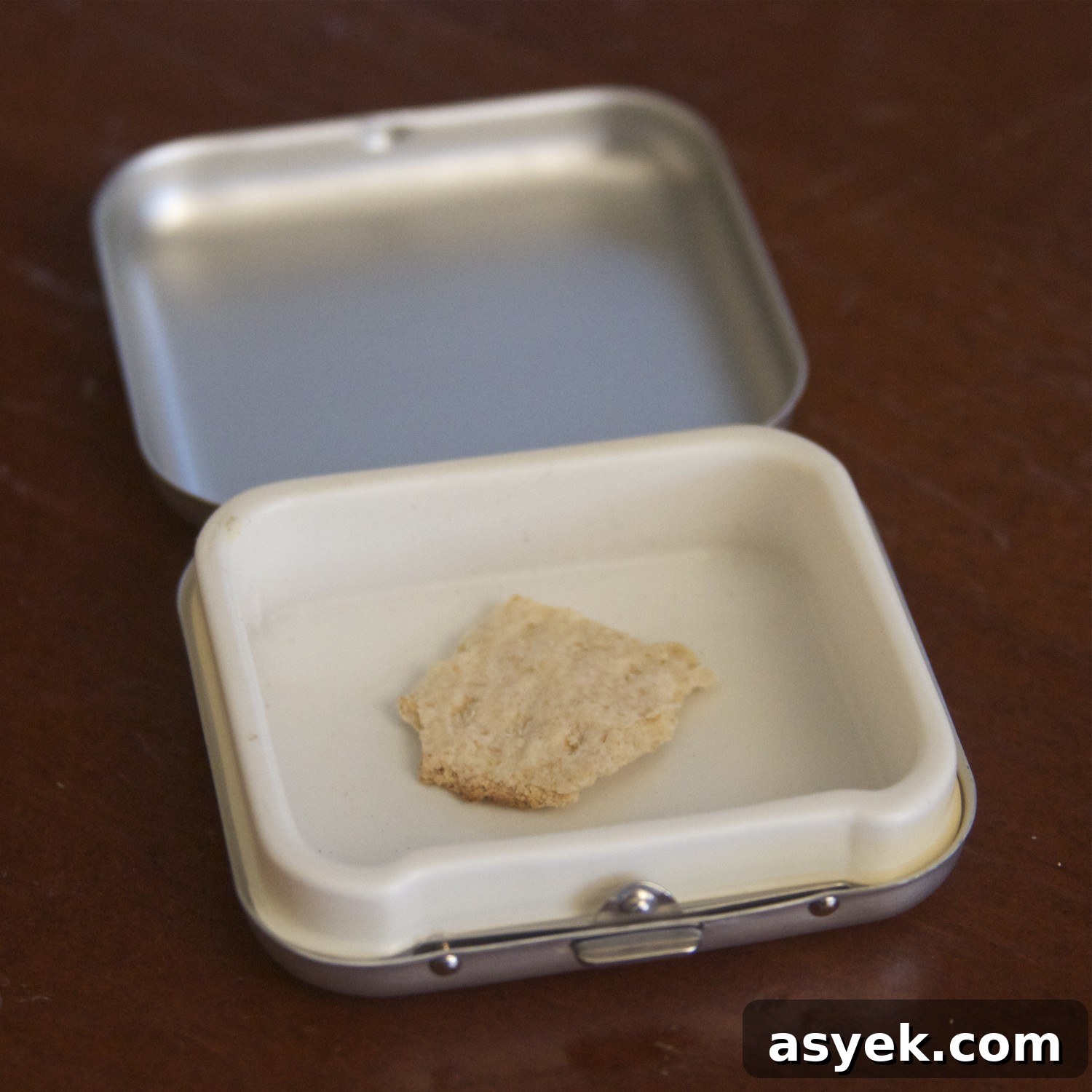
Finding a gluten-free communion option relieves a lot of anxiety. I’m grateful for a solution that respects both my health needs and the tradition of using unleavened bread for communion. More than that, I’m thankful for Pamela’s kindness and persistence in researching a safe option. The only remaining challenge is remembering to take my portion with me to services — but knowing I have a safe, labeled option makes full participation possible and far less stressful.