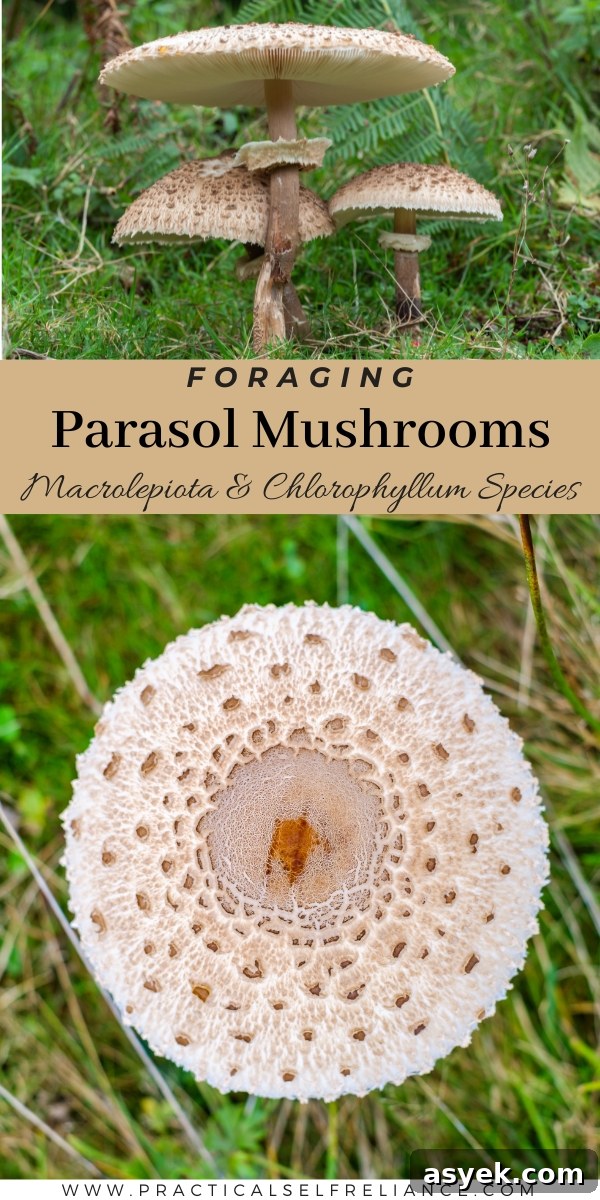
Parasol mushrooms (Macrolepiota and some Chlorophyllum species) are classic summer edibles found across much of Europe and North America. Popular in French cuisine—often breaded and fried—they work well in many dishes where you would use cultivated mushrooms.
This article was written by Timo Mendez, a freelance writer and amateur mycologist who has foraged wild mushrooms around the world.
In France the Parasol Mushroom (Macrolepiota procera) has many regional names—coulemelle, grizzette, fusée, lépiote élevée—and a reputation as one of the tastiest wild mushrooms. Whether grilled, sautéed, or breaded and fried, parasols pair well with simple preparations that emphasize their texture and mild flavor.
These mushrooms are visually striking: tall, umbrella-shaped, and often large, they commonly appear in pastures, meadows, forest edges, gardens, and other areas with rich, organic soil. They are easy to spot and, when correctly identified, make a rewarding forage.
“Parasol” is a broad common name that covers a few related groups. The best-known edible species belong to the genus Macrolepiota, while similar “shaggy parasols” belong to Chlorophyllum (section rhacodes). Although these groups look alike, they are distinct and require careful identification.
Be aware: parasols have toxic lookalikes. The green-spored parasol (Chlorophyllum molybdites) causes many cases of mushroom poisoning, particularly in North America. With attention to distinguishing features and cautious practice, however, parasols can be safely foraged.
Natural History Of Parasol Mushrooms
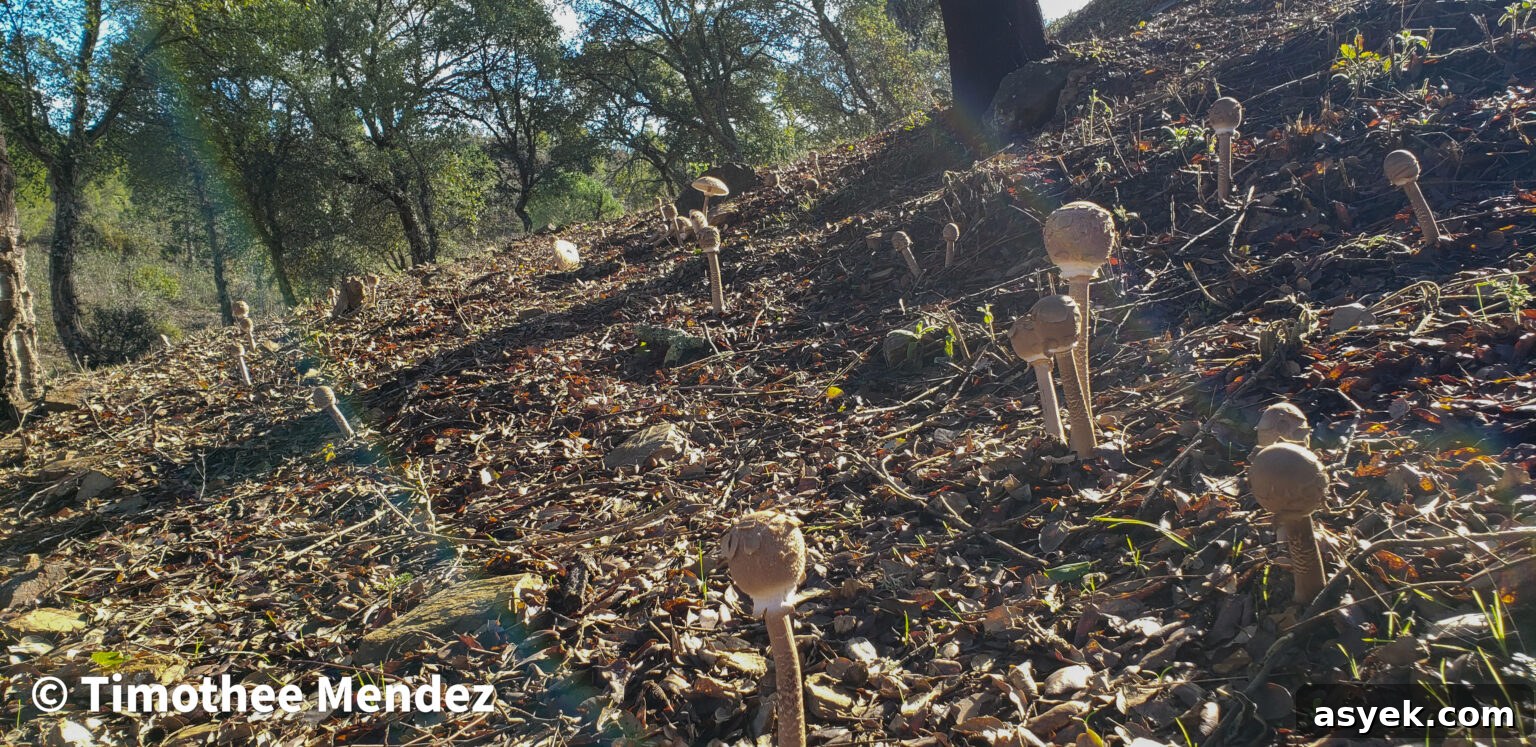
Parasol mushrooms are saprotrophic, breaking down organic matter in soil. They favor fertile, nitrogen-rich ground and are common in human-influenced landscapes—pastures, lawns, gardens, and roadside verges—as well as in more natural woodlands and forest edges. They always fruit directly from the soil and are sometimes found forming fairy rings.
Because they grow in soil, parasols can accumulate environmental contaminants such as heavy metals. Avoid harvesting near polluted roadsides, industrial sites, or areas where pesticides or other contaminants may have been applied.
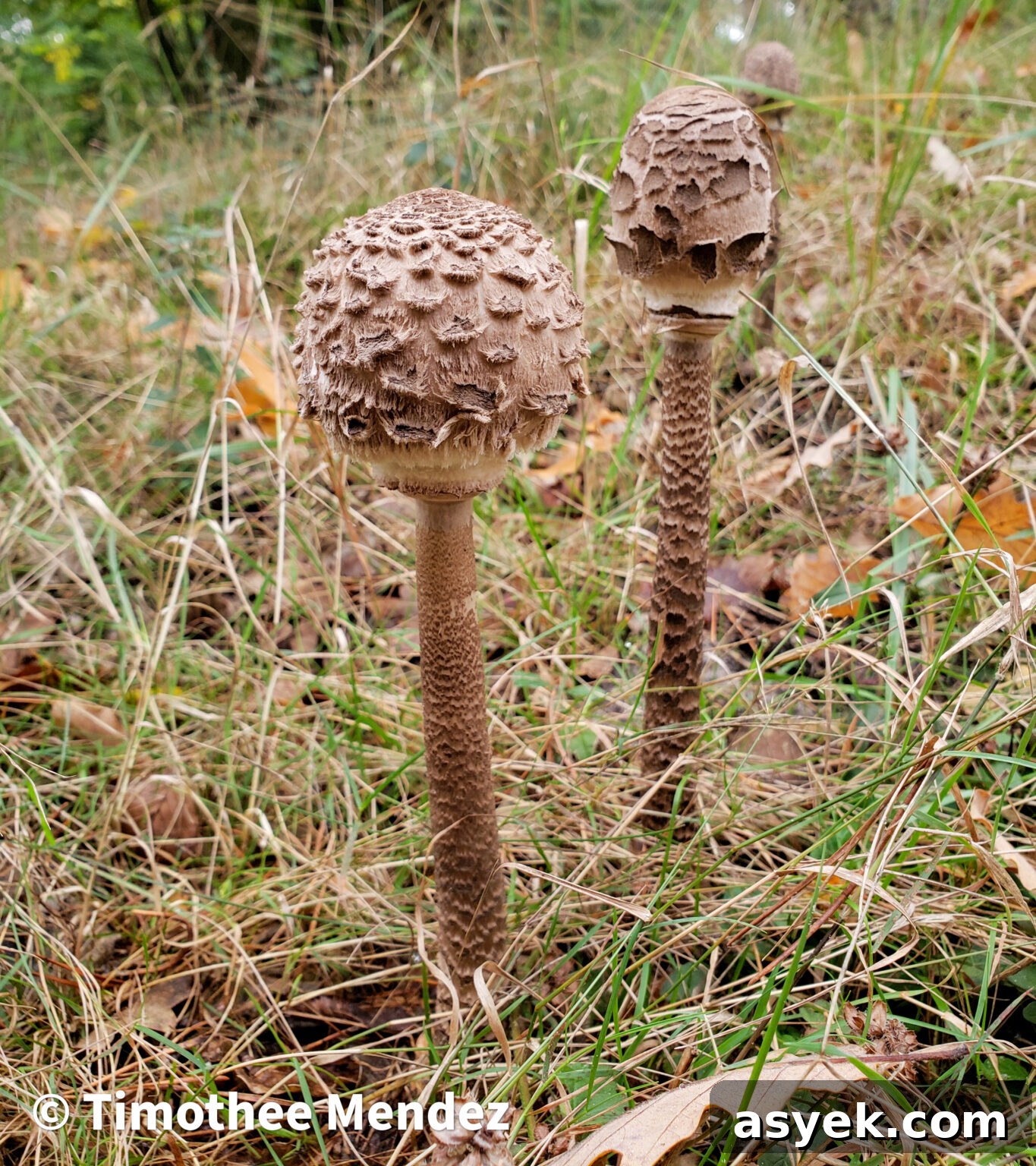
Taxonomically, parasol-type mushrooms fall mainly into two groups:
- True parasols (Macrolepiota): The best-known species is Macrolepiota procera. These are widely eaten, though regional variation exists and some North American collections may represent distinct but related taxa.
- Shaggy parasols (Chlorophyllum, section rhacodes): This group includes several edible species, such as Chlorophyllum rhacodes and relatives. While many are edible, some Chlorophyllum species are toxic or can cause gastric upset in sensitive individuals.
How To Identify Parasol Mushrooms
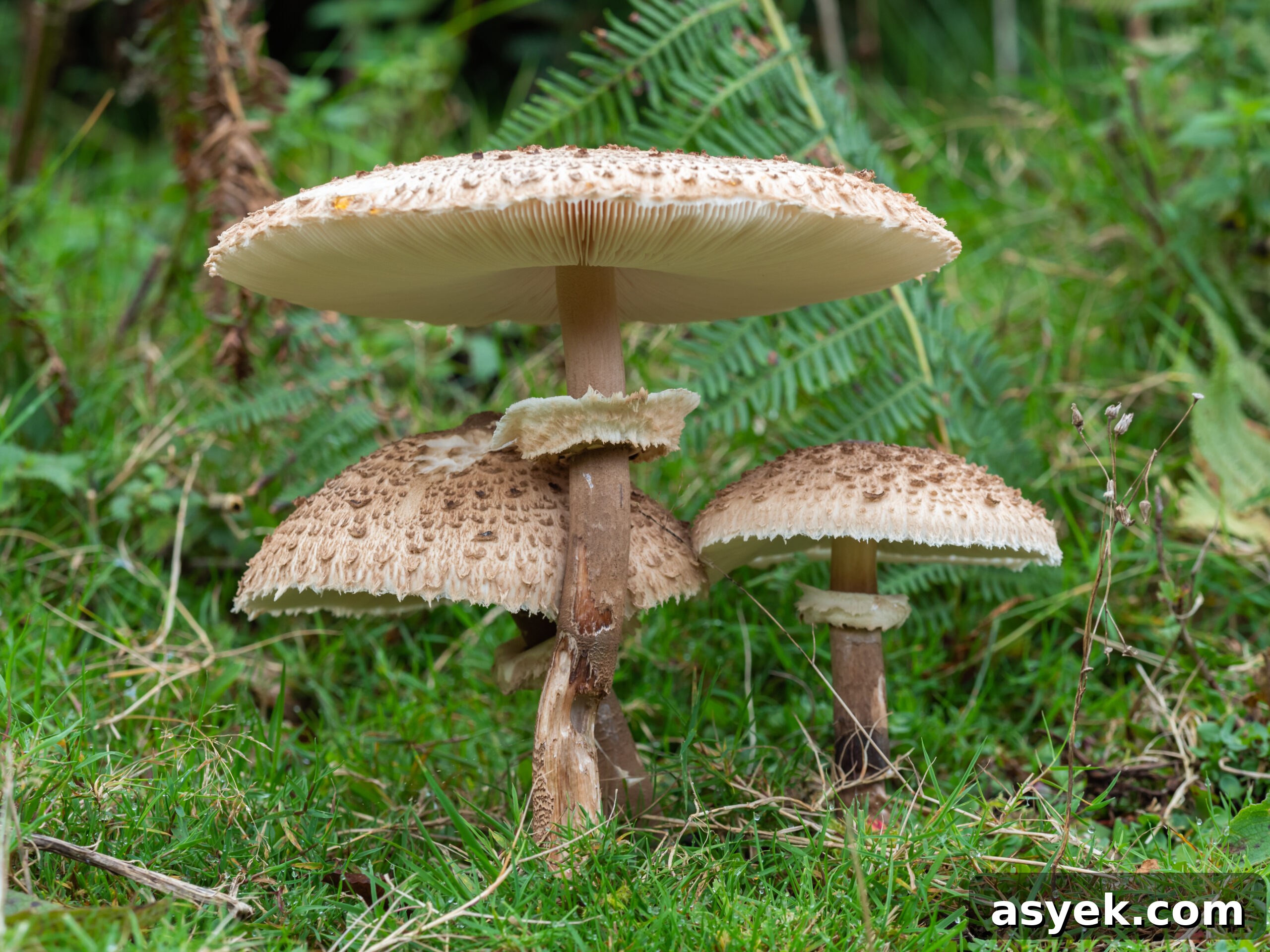
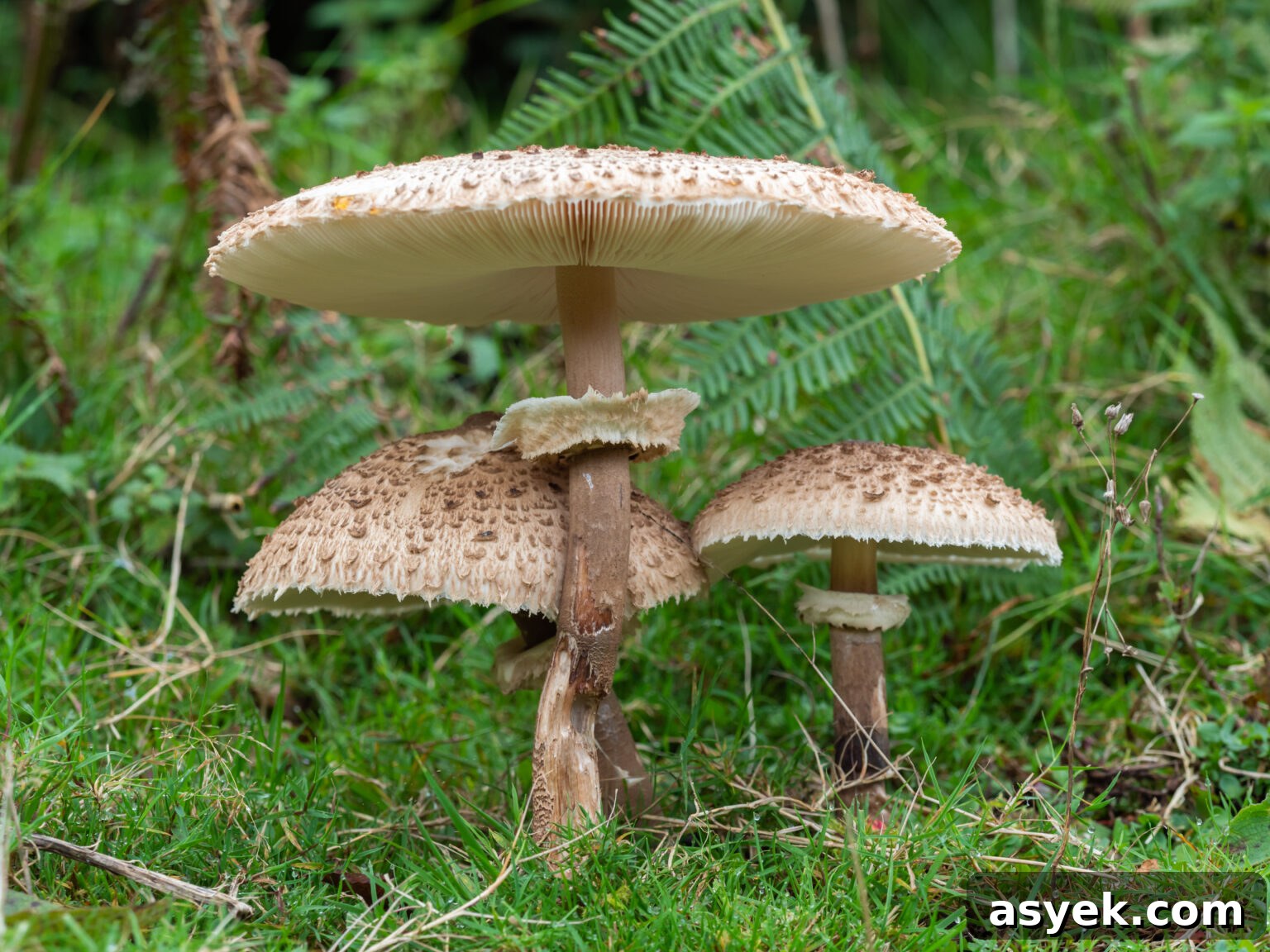
True parasols (Macrolepiota procera) are usually large, umbrella-shaped mushrooms with caps often far exceeding 10 cm across—sometimes reaching 30–40 cm. They are generally white to brown with a distinctive scaly cap and a patterned stem.
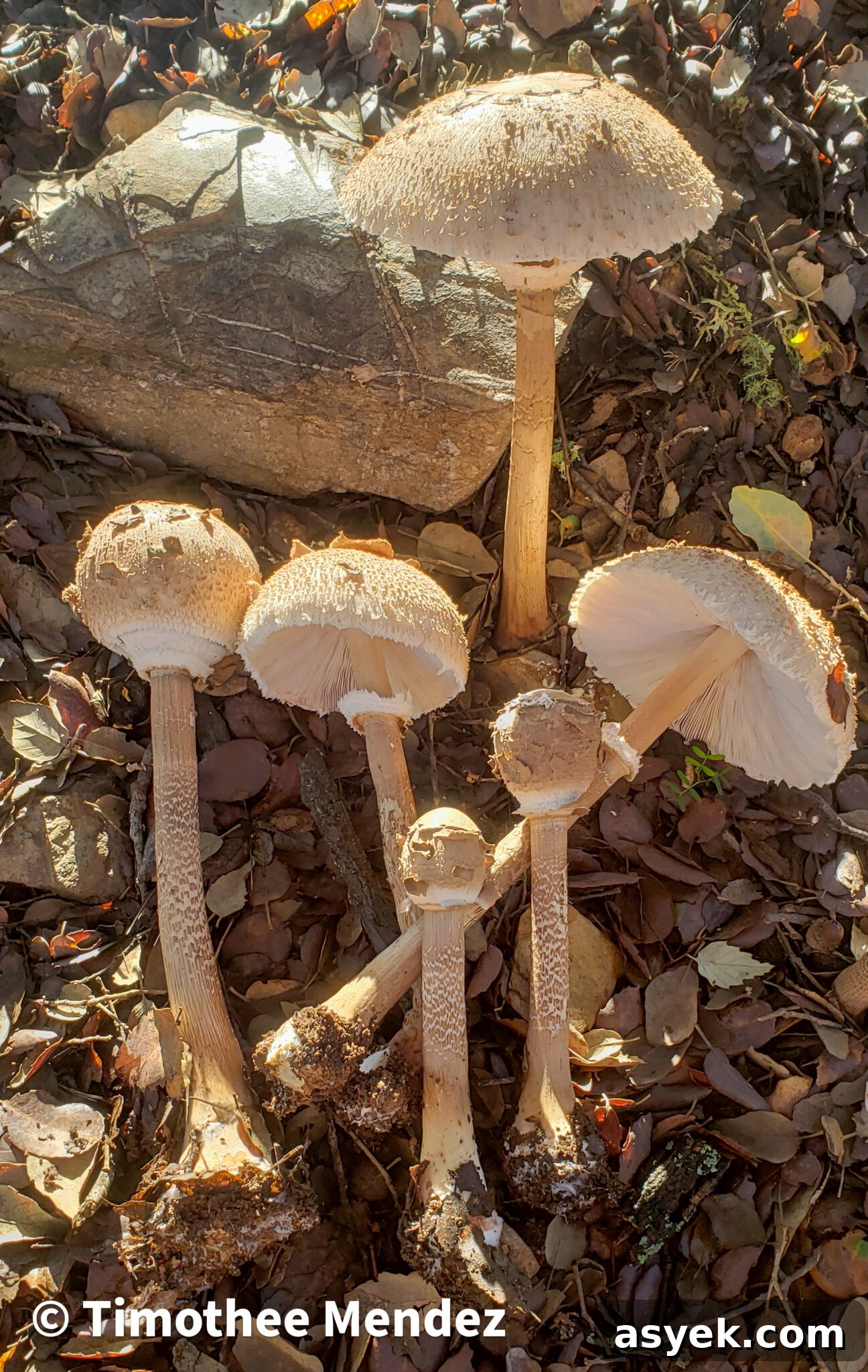
True Parasol Mushrooms (Macrolepiota procera)
Key features of true parasols:
Cap
Young caps are rounded or egg-shaped and open into a broad, saucer-like shape. The surface bears radial brown scales, often darker toward the center where a small central bump or “nipple” forms.
Gills
Gills are free from the stem, closely spaced, and white to pale pink at times. Spore prints are white.
Stem
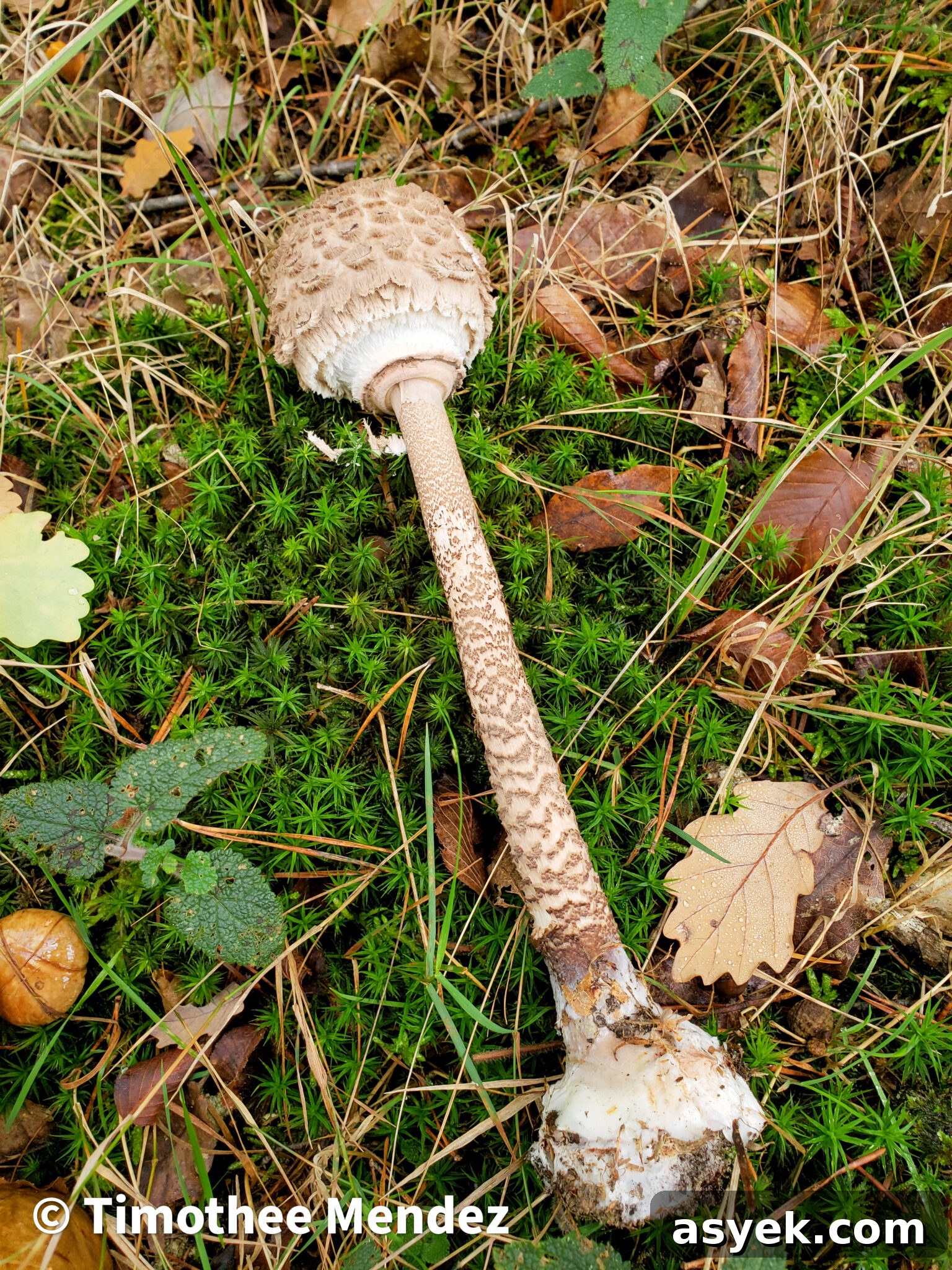
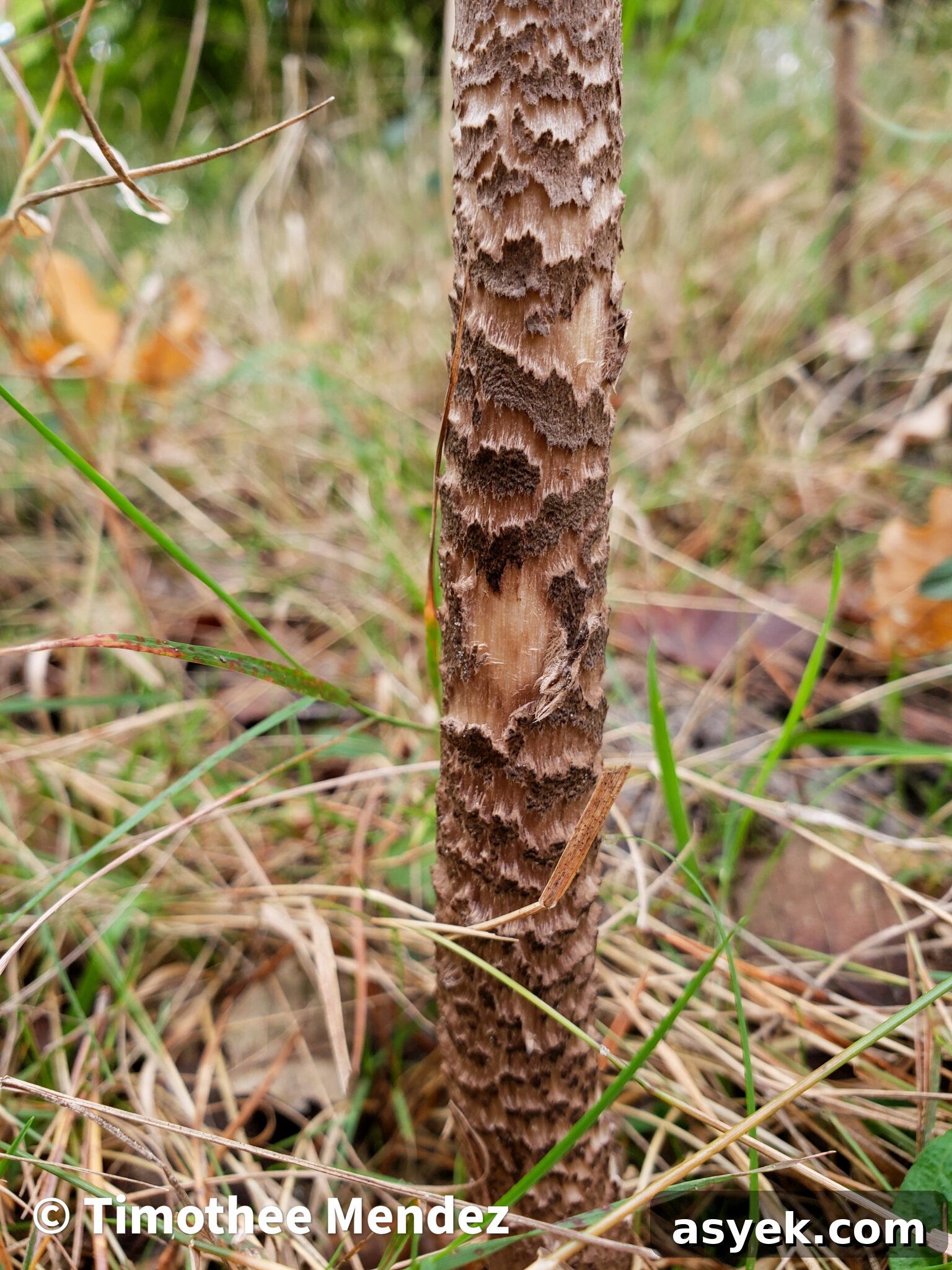
The stem usually shows a movable ring (annulus) that can slide up and down, and many Macrolepiota species have a distinctive snakeskin-like pattern on the stem. There is no volva or bulbous base like in Amanita species.
Smell and Taste
Fresh parasols have a mild, pleasant aroma and flavor. They are not strongly scented like some wild species.
Several related Macrolepiota species exist and are generally edible; the detachable ring and the patterned stem help distinguish them from lookalikes. Note that some species once placed in Macrolepiota have been reclassified into Chlorophyllum.
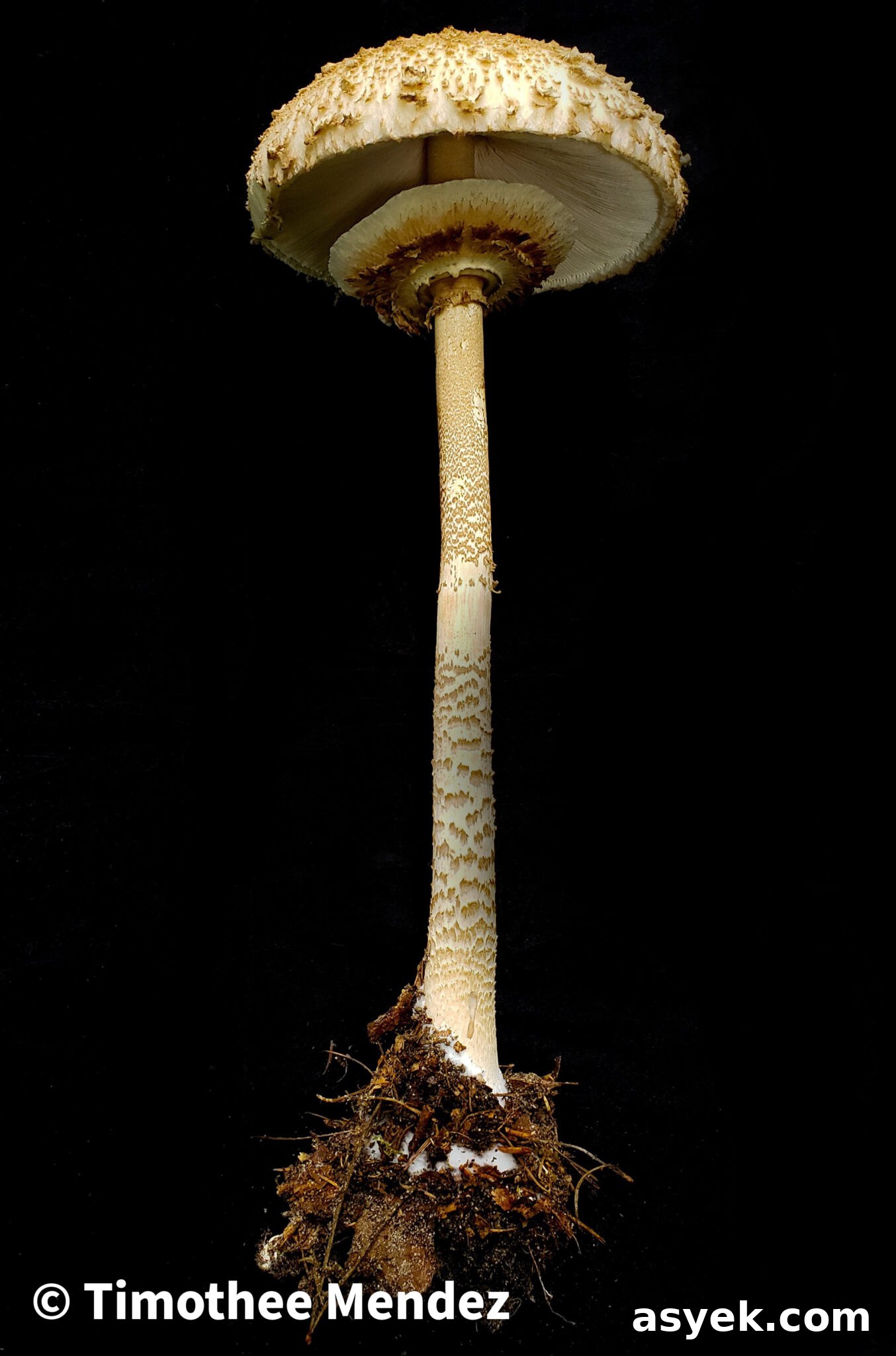
Identification Checklist For Parasol Mushrooms (Macrolepiota)
- Large fruiting body, rarely under 10 cm across.
- Cap begins rounded and matures to a flat, saucer-like shape with a darker central nipple.
- Radial brown scales on the cap, fading toward the margin.
- Free, closely spaced gills; spore print white.
- Stem with a movable annulus and a snakeskin-like surface pattern.
- No cottony volva or bulbous base.
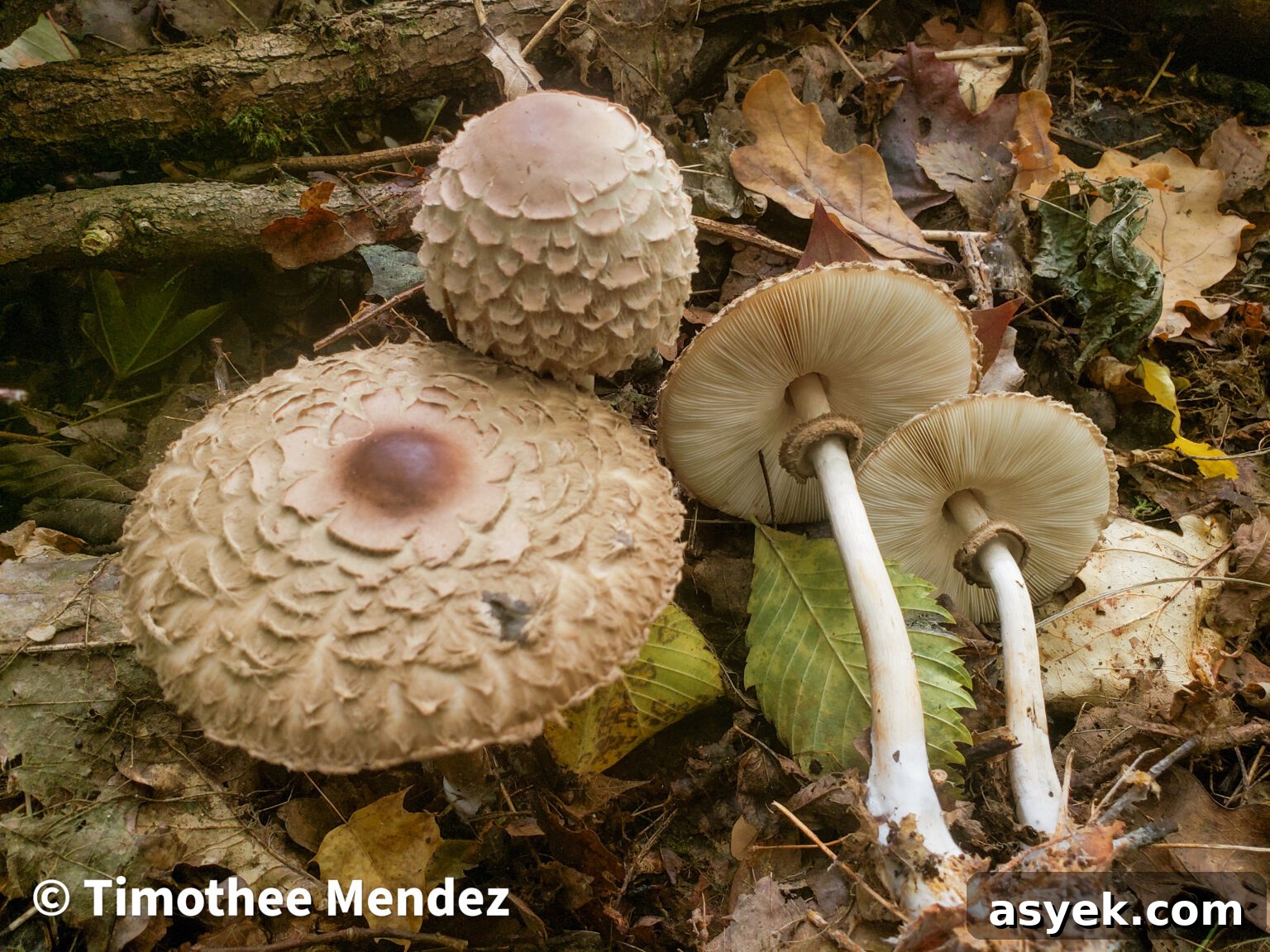
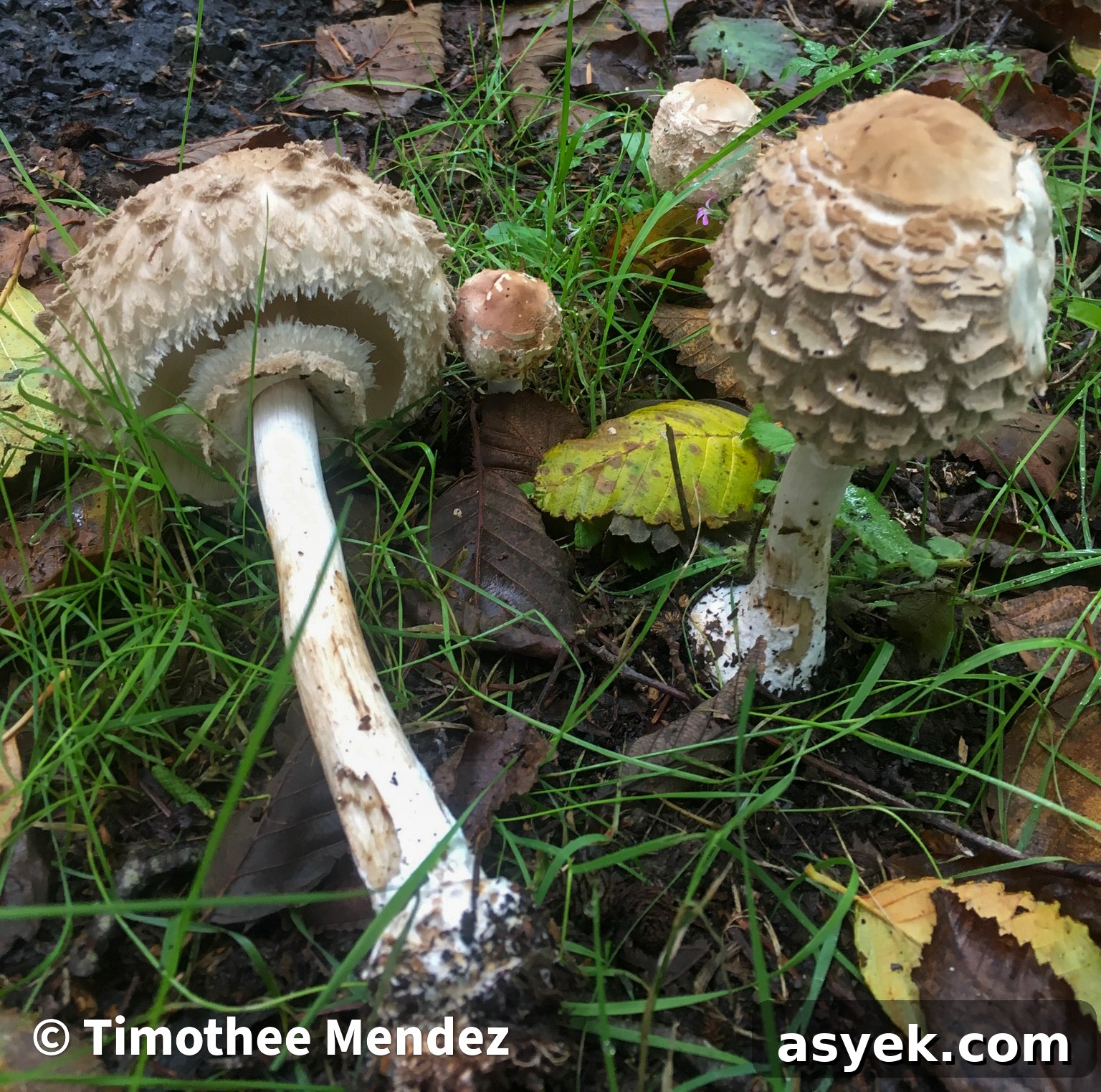
Shaggy Parasols (Chlorophyllum, section rhacodes)
Shaggy parasols (for example, Chlorophyllum olivieri, C. brunneum, C. rhacodes) tend to be paler, often with more pronounced shaggy scales, and are sometimes slightly smaller than true parasols. Their stems are usually smoother and lack the snakeskin pattern. Some people experience digestive sensitivity to certain Chlorophyllum species, so try a small amount when sampling for the first time.
Parasol Mushroom Lookalikes
Common lookalikes include:
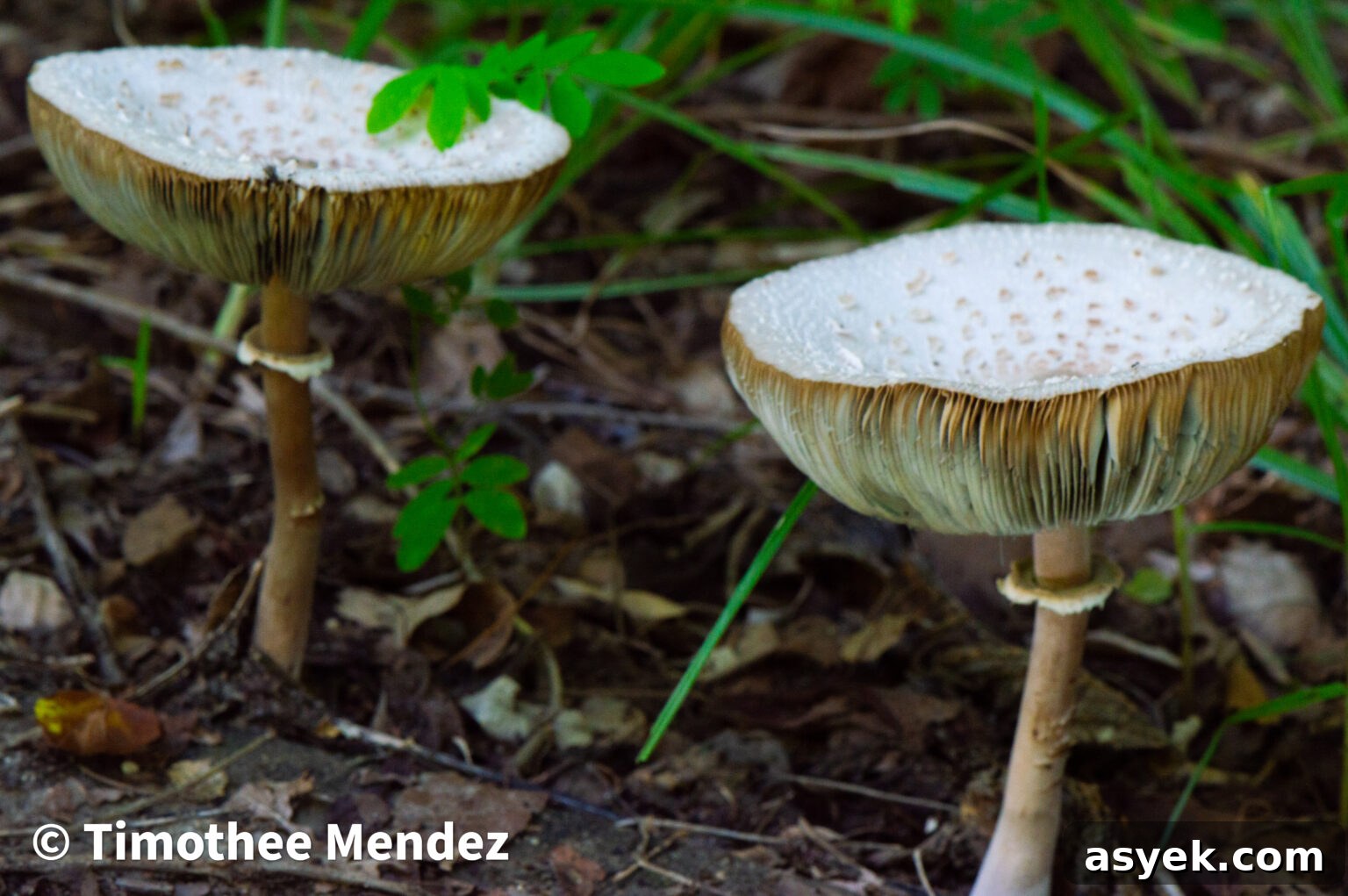
Green-spored parasol (Chlorophyllum molybdites)
This toxic species is common in North America and is distinguished by greenish to blue-green gills and a green spore print. If gills show any green or bluish tones, do not eat it. When in doubt, take a spore print: edible parasols have white spores.
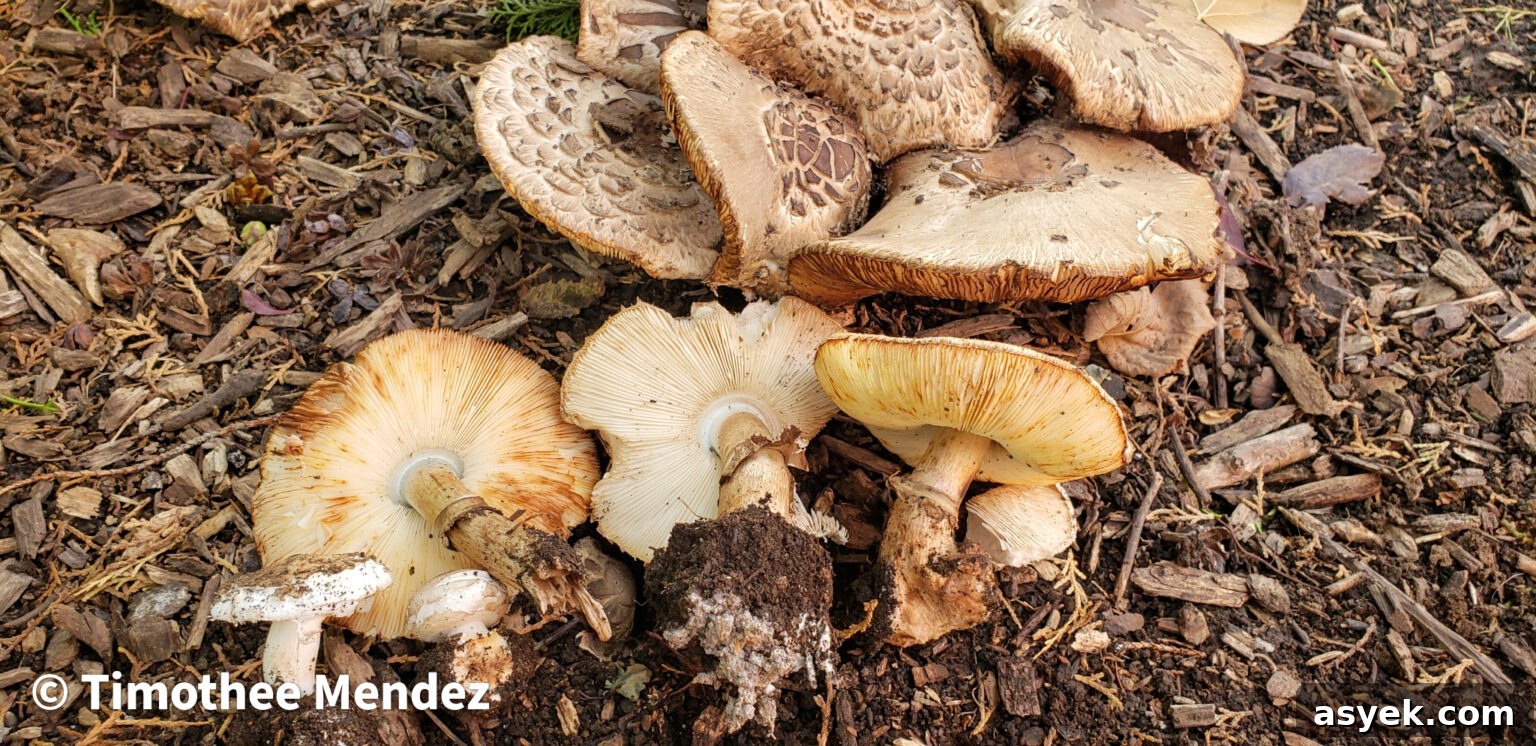
Certain toxic Chlorophyllum species
Some Chlorophyllum taxa can be toxic and may grow in clustered groups or have pronounced bulbs. Avoid parasols that grow in tight clumps or that show doubtful features.
Deadly Amanitas (Amanita spp.)
Amanitas can share an umbrella-like shape and a ring, but they differ in having a bulbous base with a volva and typically lack the true scaly cap and snakeskin stem pattern of parasols. Always check the base when identification is uncertain.
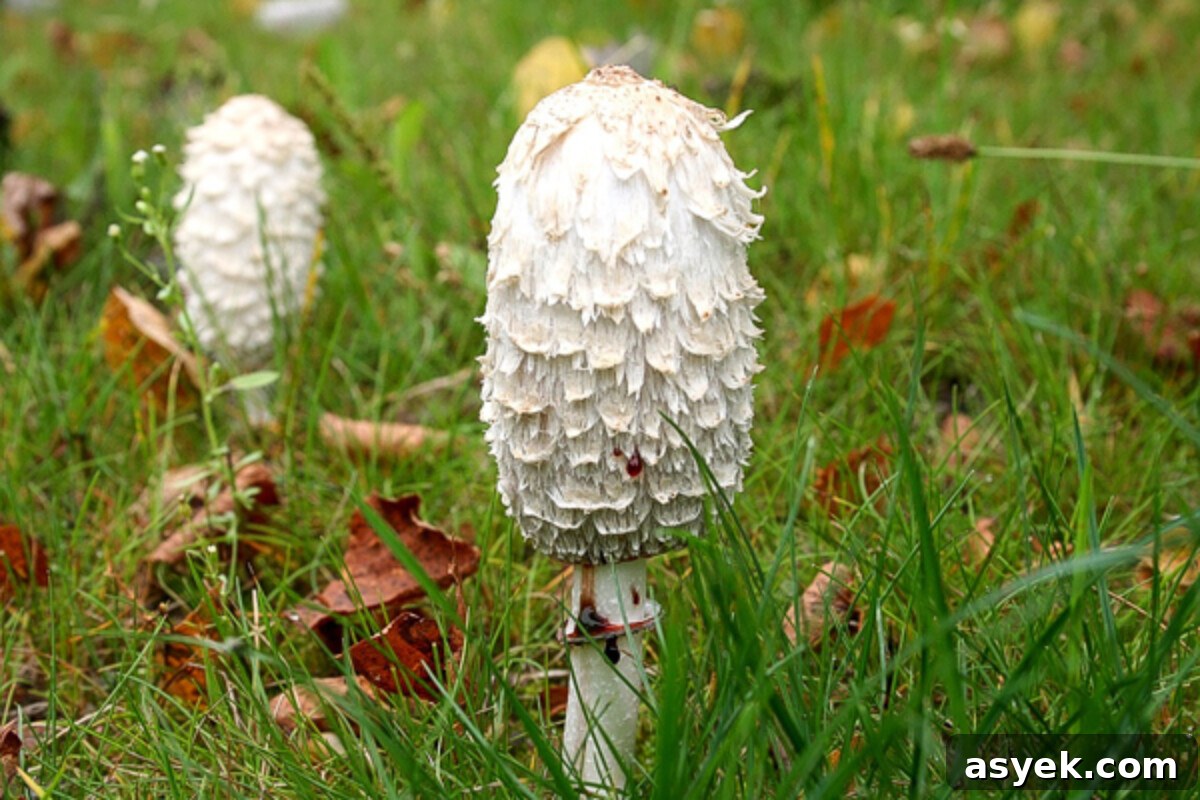
Shaggy mane (Coprinus comatus)
Shaggy manes have a distinct elongated, cylindrical cap and often deliquesce into an inky fluid as they age. Their overall structure and lifecycle differ from parasols.
Lepiotas
Many smaller Lepiota species resemble young parasols but are usually under 10 cm and lack the characteristic stem pattern of Macrolepiota. Some Lepiota species are toxic, so size and stem features help separate them.
Where To Find Parasol Mushrooms
Parasols grow across temperate regions of the world. Habitat includes meadows, pastures, forest edges, lawns, and gardens—places with rich organic soil and adequate moisture.
- Eastern North America: From the Gulf states north through the Appalachians and the Northeast, parasols are commonly encountered in summer and fall.
- Western North America: True Macrolepiota are less common in the West; Chlorophyllum species are more frequent, especially in urban and garden settings.
- Europe: Parasols are widespread and familiar in many habitats across the continent during the mushroom season.
- Elsewhere: Parasol-type mushrooms are reported in parts of South America, Africa, Asia, Australia, and New Zealand, adapted to regional climates.
When To Find Parasol Mushrooms
- Northeastern North America: July–November, with a peak around September.
- Southeastern U.S. and Gulf States: May–November, with regional variation; in warmer areas seasons may extend longer.
- Mexico and Central America: Often tied to the rainy season (summer months).
- Europe: Summer into autumn, typically July–November.
- Southern Hemisphere: Autumn months (roughly March–July) are most productive.
How To Harvest Parasol Mushrooms
Forage responsibly. Do not damage the site, and respect local rules and landowners. If identification is uncertain, harvest a single specimen for study or take detailed photos. New foragers may want to carefully dig up a sample to check for a bulb or volva, which helps rule out dangerous lookalikes.
Many people collect only the caps, which are the most prized portion. Stems are edible but tougher; they can be dried and powdered for use in soups or stews. Harvesting by cutting or gently twisting off the mushroom both have minimal long-term impact when done thoughtfully.
Keep mushrooms clean in a basket rather than a sealed bag, and process them promptly at home. Fresh parasols typically last only a few days refrigerated, so cook or preserve them soon after harvesting.
Cooking Parasol Mushrooms
Parasol mushrooms are versatile. They can replace button mushrooms in many recipes but deliver a distinct texture and mild flavor. Always cook them thoroughly—raw parasols can be hard to digest, and thorough cooking reduces the chance of gastric upset, particularly with shaggy parasols.
Classic preparations include breaded-and-fried caps, simply grilled caps over coals, and stuffed caps filled with bread, cheese, nuts, or other savory fillings. For best flavor, use simple seasonings that let the mushroom shine.
Preserving Parasol Mushrooms
The best preservation method is to cook the mushrooms and freeze them. Sauté slices until fully cooked, cool, then freeze for easy use later. Drying is possible but reduces flavor; canning or pickling are alternatives, though freezing cooked mushrooms usually retains the most texture and taste.
Bon appétit and enjoy your foraging!
Summer Mushroom Foraging
Other summer edible mushrooms to explore include:
- Puffball mushrooms
- Shaggy mane mushrooms
- Reishi
- Turkey tail
- Dryad’s saddle (pheasant’s back)
- Saffron milk caps
- Chanterelles
- Pigs ear mushrooms
- Honey mushrooms
- Matsutake
- Boletes
- Hedgehog mushrooms
- Lobster mushrooms
- Black trumpet mushrooms
- Chicken of the woods
- Beefsteak mushrooms
- Coral mushrooms
- Wood ear mushrooms
- Agaricus species