
Making homemade butter croissants takes time and patience, but there’s nothing like biting into a warm, flaky, buttery croissant fresh from your oven.
This guide has been written to help you through the multi-day process of making croissants at home. It’s not a quick project, and you should expect to practice a few times before you’re completely comfortable, but the results are worth the effort.

With practice the techniques become easier. Don’t be discouraged if your first attempts aren’t perfect—each batch teaches you something. Once you master the basic butter croissant, you can easily adapt the dough for chocolate, almond, or other flavored croissants.

Table of Contents
- Helpful tools
- Ingredients and substitutions
- How to make a butter croissant
- Storage
- Homemade Butter Croissant Recipe
This post includes step-by-step photos and a detailed recipe card near the end. Read through the instructions first, then follow the recipe when you’re ready to bake.
Helpful tools
A French-style rolling pin helps apply even pressure when laminating the dough, and a kitchen scale is essential for accurate measurements. A stand mixer with a dough hook makes kneading easier, but you can prepare the dough by hand if needed.
Ingredients and substitutions
The complete ingredient list and quantities are in the recipe card below. Here are a few notes and substitution tips to consider:
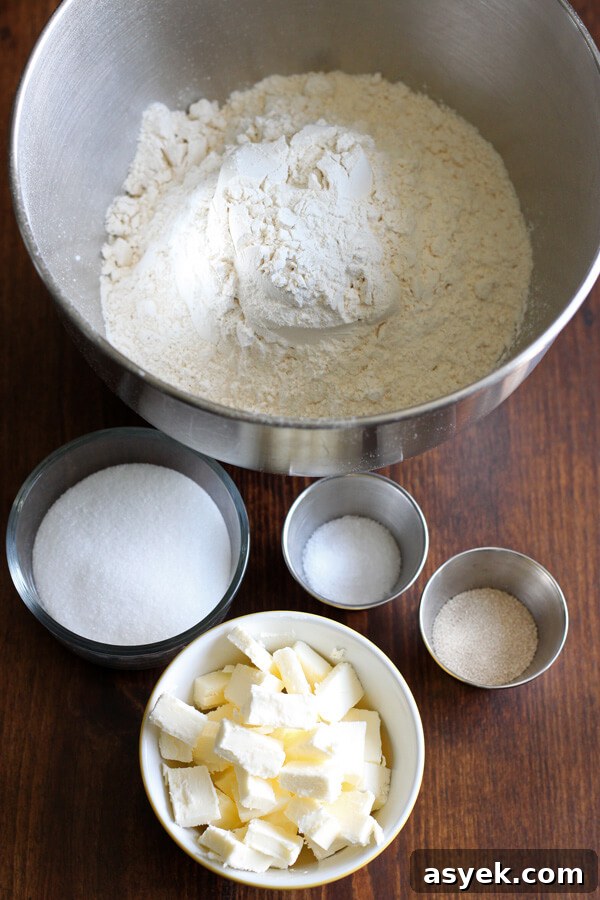
- All-purpose flour – Used for the poolish (pre-ferment) and the dough. Bread flour or a mix of bread and all-purpose can be used for more chew, but all-purpose makes the recipe widely accessible.
- Active dry yeast – Required for both the poolish and the main dough to drive fermentation.
- Water – Warm water activates the yeast and hydrates the dough. Use warm, not hot, water to avoid killing the yeast.
- Granulated sugar – Adds light sweetness and feeds the yeast for fermentation.
- Kosher salt – Balances and enhances flavor.
- Unsalted butter – You need a significant amount for laminating and for flavor. Avoid reduced-fat spreads; do not substitute salted butter unless you reduce the salt elsewhere.
- Egg – For an egg wash to achieve a glossy, golden crust.
How to make a butter croissant
Below are the step-by-step instructions, organized by day. If you prefer, skip ahead to the recipe card to print or reference while you bake.
Day 1: Make the poolish
Combine 100 g all-purpose flour, a pinch of active dry yeast, and 100 g warm water in a small bowl. Cover and let ferment at room temperature overnight, at least 15 hours and preferably longer until it becomes bubbly.
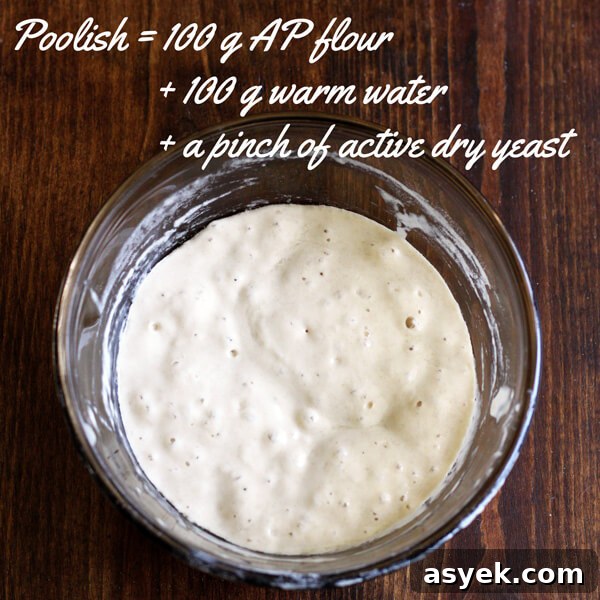
Note: When the poolish is bubbling and active, it’s ready to use. Cooler room temperatures may require longer fermentation.
Day 2: Make the dough
Measure all ingredients before you begin for a smooth process. Begin by dissolving about a teaspoon of sugar and a small amount of yeast in warm water and let it bloom for 10–15 minutes. If the yeast does not become puffy, repeat this step with fresh yeast.
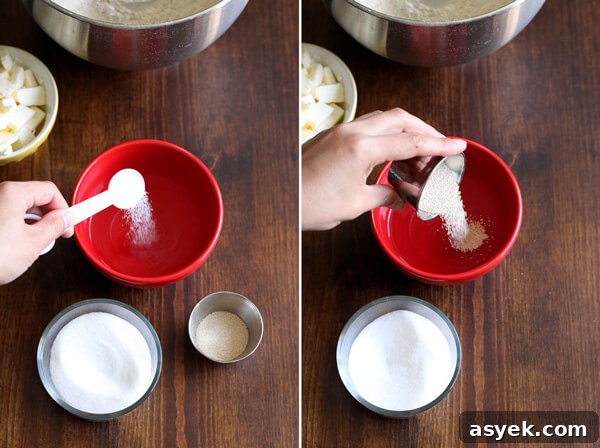
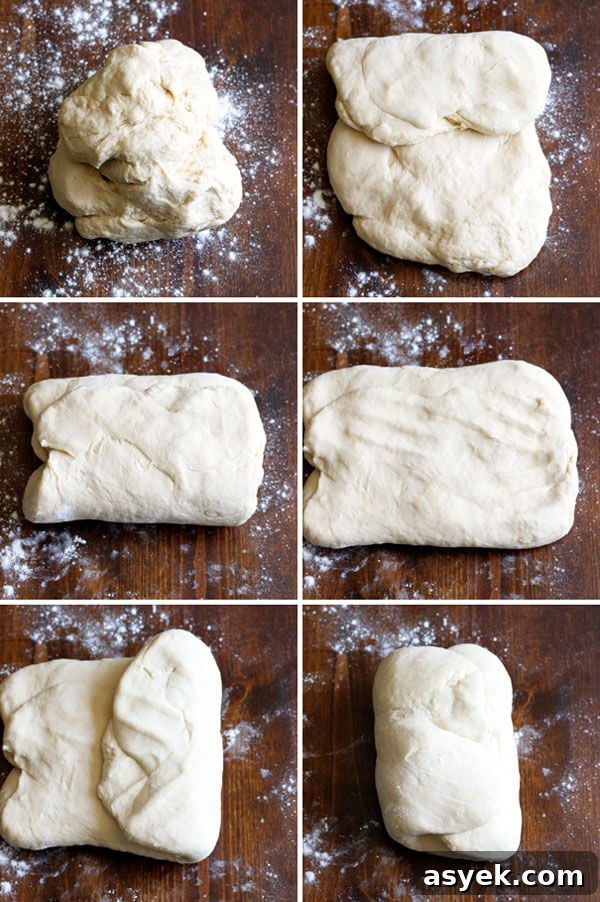
Mix the flour, remaining sugar, and salt, then add the bloomed yeast, the poolish, softened butter, and water. Knead with a dough hook for about 20 minutes until the dough is smooth and manageable. Turn the dough onto a lightly floured counter, flatten it into a small rectangle and fold it like a letter twice. Place the dough in an oiled bowl and let it rise for 1.5 hours until doubled.
While the dough rises, prepare the butter for lamination. Soften the block slightly, place it between parchment, and roll into a flat rectangle about 6.5″ x 7.5″. Chill until ready.
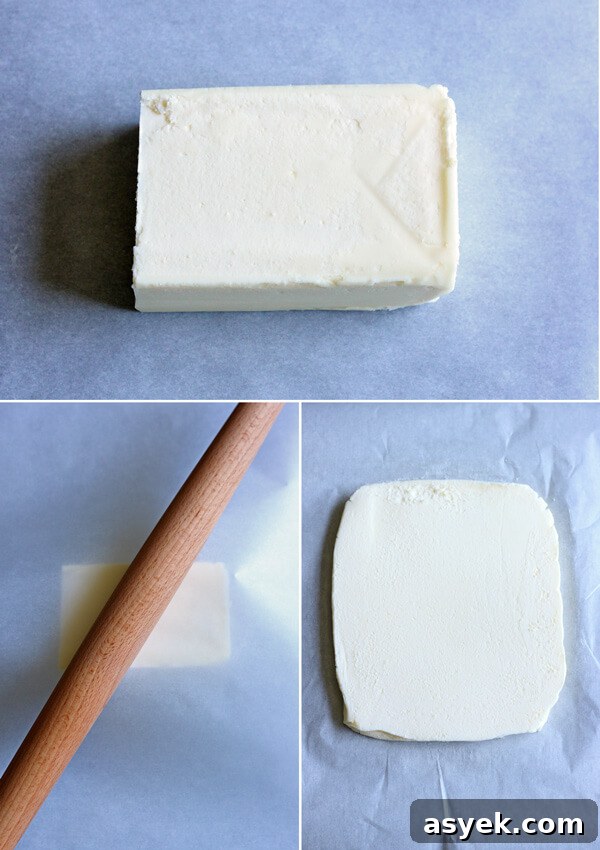
Tip: Firm, even butter is easier to laminate. If necessary, work the butter with the rolling pin to achieve an even sheet.
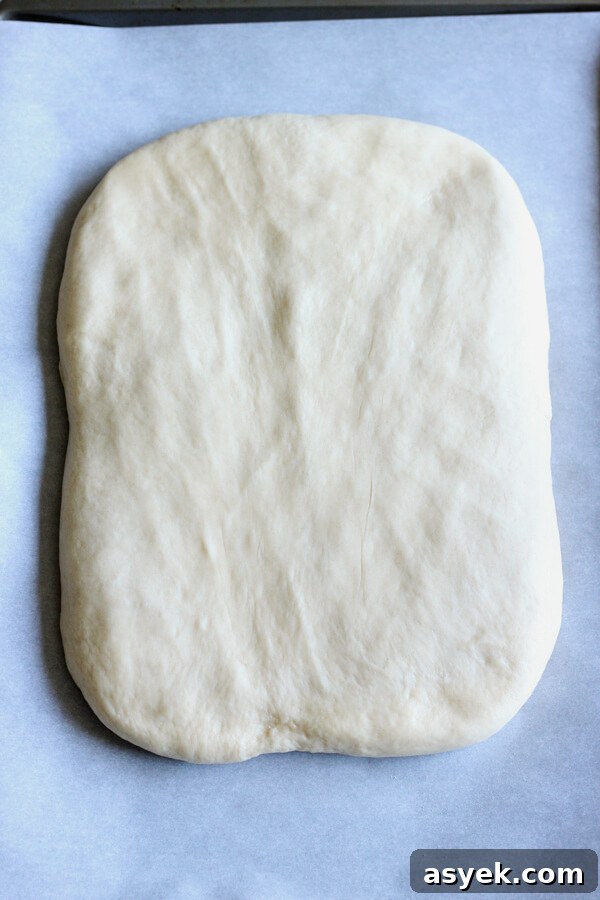
When the dough has risen, flatten it to about 10″ x 7.5″, place on a parchment-lined tray, cover, and freeze for 20 minutes. Bring the butter out of the fridge so it softens slightly; the butter and dough should be similar in firmness for easy lamination.
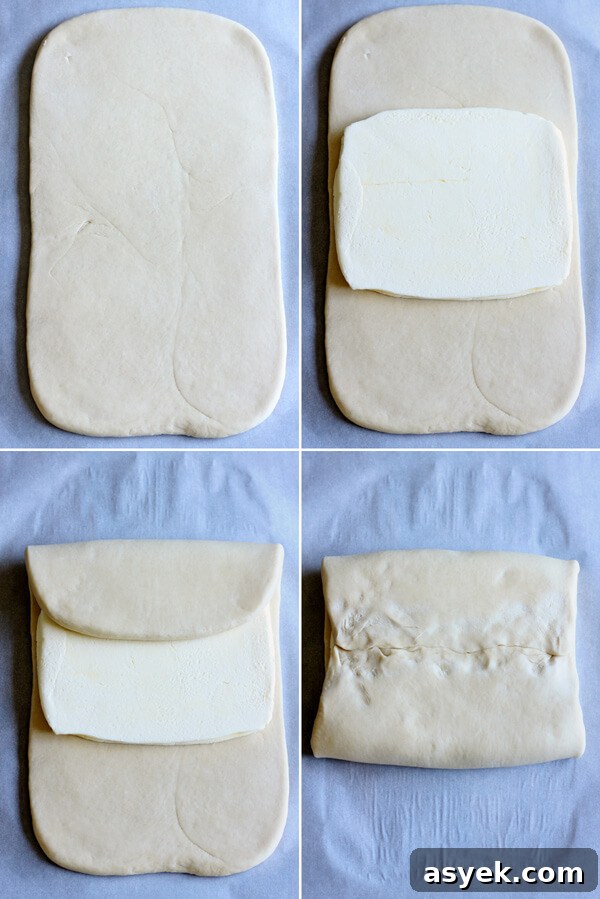
Roll the chilled dough to about 16″ x 7.5″, place the butter in the center, and fold the dough over the butter to encase it. Pinch the edges to seal.
Dough lamination — turns 1 to 3
Turn 1: With the short side facing you, roll to roughly 22″ x 9″ and fold into thirds like a letter. Chill 15–20 minutes.
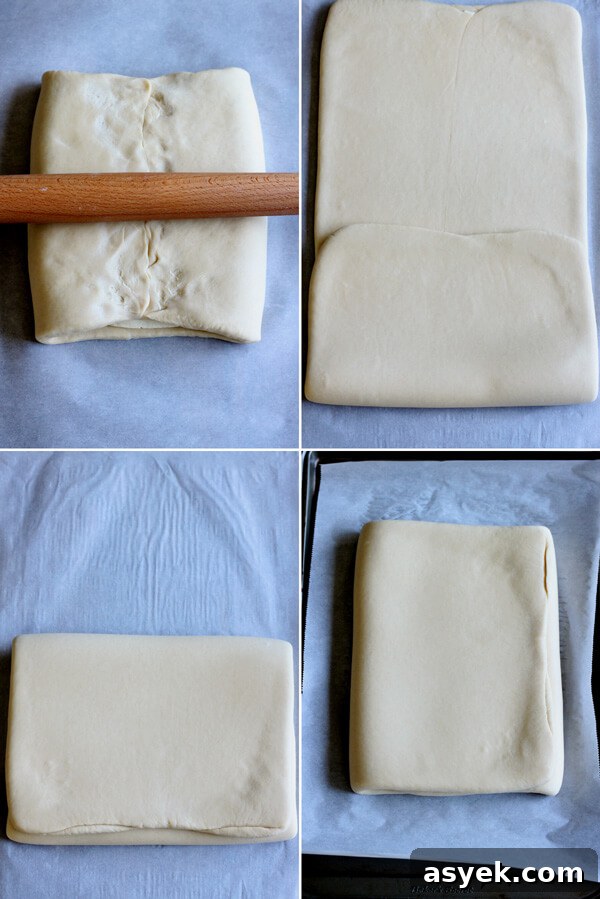
Turn 2: Repeat the same rolling and folding, rotating the dough as you roll. Chill again 15–20 minutes.
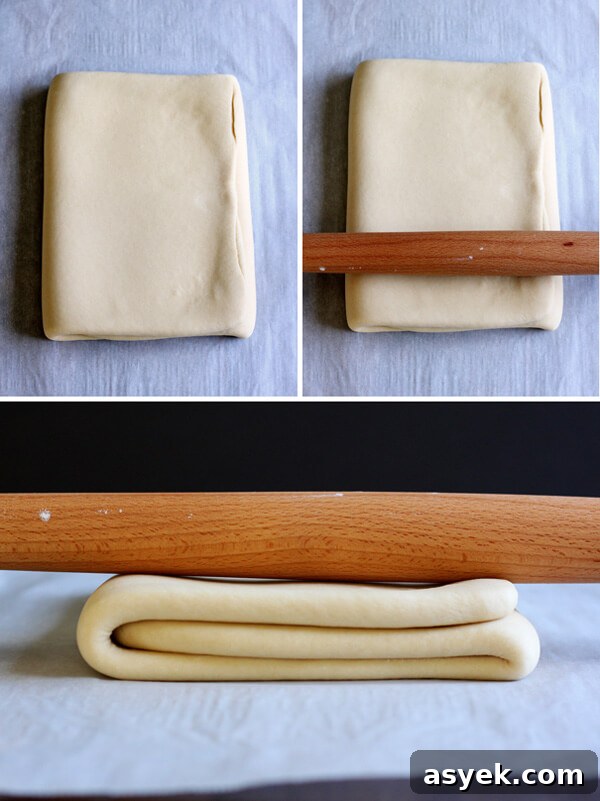
Turn 3: Repeat once more. After the final turn, roll to a rectangle about 24″ x 9″ and cut it in half crosswise to create two 12″ x 9″ pieces. Place parchment between them and either chill in the freezer for 15–20 minutes to continue now or wrap and refrigerate overnight to finish the next day.
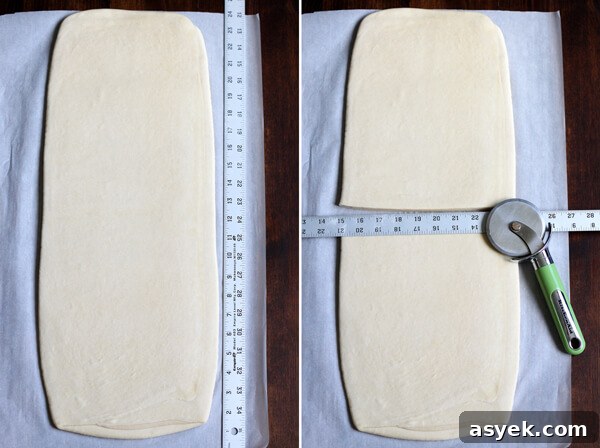
Day 3: Form the croissants
Work with one piece of dough at a time while keeping the other chilled. Roll one sheet to roughly 18″ x 10″. Using a ruler as a guide, mark and cut the dough into seven isosceles triangles. Lightly roll each triangle to about 12″ long, trim about 1/4″ from the base to expose the layers, then roll up from the base toward the point. Place shaped croissants on a parchment-lined baking sheet about 2″ apart.
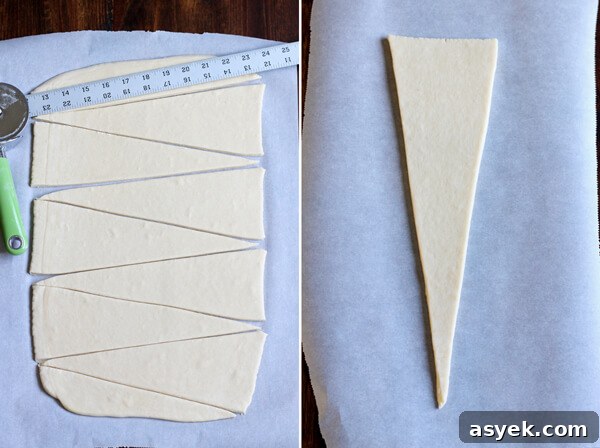
Repeat with the second sheet. Cover the trays lightly with floured plastic wrap and proof at room temperature for up to 4–5 hours. A room temperature of 75–80°F is ideal; in warmer environments check frequently to avoid over-proofing.
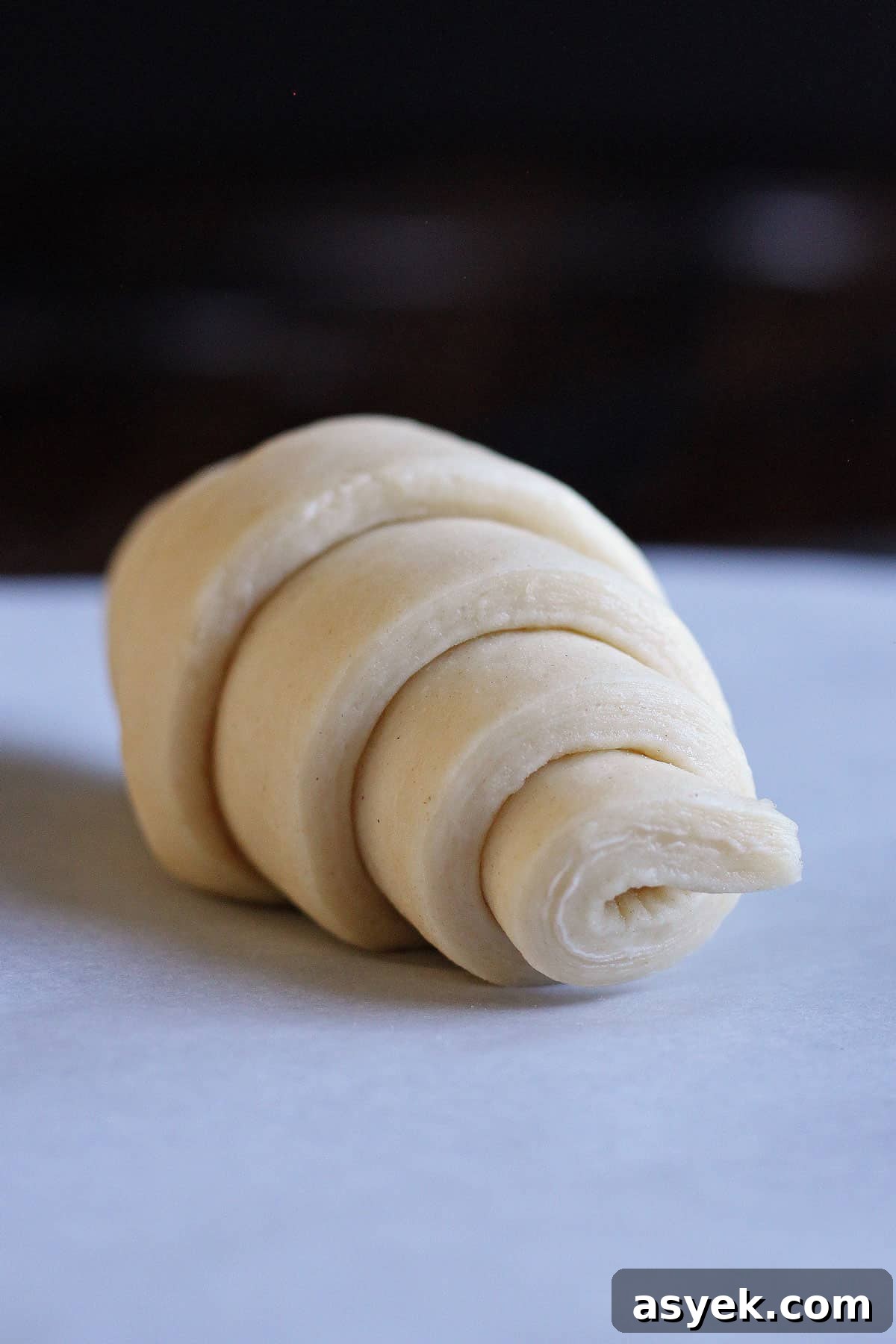
When proofed, preheat the oven to 325°F. Beat one egg with 1 tablespoon water and brush the croissants lightly. Bake one tray at a time for 35–40 minutes until deep golden. Cool on a wire rack before serving—they will continue to finish cooking as they cool.
Storage
This recipe yields about 14 croissants. Store leftovers in an airtight container in the refrigerator for 1–2 days. For longer storage, unbaked shaped croissants can be frozen for up to 2 months; bake from frozen after thawing and proofing 6–8 hours at room temperature for best results. Baked croissants freeze well for up to 1 month.

Hungry for more?
Join the newsletter to receive recipe ideas, inspiration, and occasional subscriber-only updates.
Homemade Butter Croissant Recipe
Making croissants at home requires time and patience, but yields warm, flaky, buttery pastries you’ll be proud to bake.
Servings: 14 croissants
Prep Time: 3 days
Cook Time: 35 minutes
Total Time: 3 days and 35 minutes

Equipment
- Stand mixer (optional, useful)
Ingredients
Poolish
- 100 g all-purpose flour (¾ cup)
- 100 g warm water (½ cup)
- A pinch of active dry yeast
Dough
- 500 g all-purpose flour (3 ½ cups + 2 tbsp)
- 75 g granulated sugar (¼ cup + 2 tbsp + 1 ½ tsp)
- 15 g kosher salt (2 ½ tsp)
- 100 g unsalted butter (about 3.5 oz), cubed and softened
- 10 g active dry yeast (1 tbsp)
- 200 g water (about 1 cup)
- Poolish from Day 1
For lamination
- 330 g unsalted butter in a single block (about 11.6 oz)
Egg wash
- 1 egg
- 1 tablespoon water
Instructions
Day 1 – Make the poolish
- Mix 100 g flour, a pinch of yeast, and 100 g warm water in a small bowl. Cover and ferment at room temperature overnight (at least 15 hours) until bubbly.
Day 2 – Make the dough
- Cube 100 g unsalted butter and allow to soften.
- Soften the large lamination butter block slightly at room temperature.
- Measure ingredients into bowls for a smooth process.
- Warm the water to about 100°F and add to the mixer bowl.
- Add 2 teaspoons sugar to the water with the yeast and let bloom 15 minutes.
- When the yeast is puffy, add poolish, flour, remaining sugar, salt, and softened butter. Knead with a dough hook for 20 minutes.
- Grease a large bowl with oil, place the dough inside, and let rise 1.5 hours.
- Roll the lamination butter between parchment into a rectangle about 6.5″ x 7.5″ and refrigerate.
- Flatten the risen dough to about 10″ x 7.5″, place on a parchment-lined tray, wrap, and freeze 20 minutes.
- Roll the chilled dough to about 16″ x 7.5″, center the butter sheet, fold the dough over to encase the butter, and seal the edges.
- Turn 1: Roll to roughly 22″ x 9″, fold into thirds, and freeze 15–20 minutes.
- Turn 2: Repeat rolling and folding, then freeze 15–20 minutes.
- Turn 3: Repeat once more.
- After the final turn, roll to about 24″ x 9″, cut in half into two 12″ x 9″ pieces, place parchment between them, and either freeze 15–20 minutes to continue the same day or wrap and refrigerate overnight.
Day 3 – Form and bake
- Work with one piece of dough at a time. Roll to about 18″ x 10″, trim edges as needed.
- Mark and cut the dough into seven isosceles triangles. Lightly roll each triangle to about 12″, trim ¼” from the base, then roll up from base to tip and place on a lined baking sheet 2″ apart.
- Repeat with the second piece. Cover with floured plastic wrap and proof at room temperature for 4–5 hours.
- Preheat oven to 325°F. Beat 1 egg with 1 tbsp water and brush the croissants lightly.
- Bake one tray at a time for 35–40 minutes until deep golden. Cool on a wire rack before serving.
Notes
- Work quickly during lamination. If the dough gets too warm or elastic, chill it for a few minutes to keep the butter from melting into the dough.
- Use only enough flour to prevent sticking while rolling; excessive flour will dry the dough.
- Save scraps: they make excellent cinnamon twists or puff pastry substitutes; refrigerate or freeze them for later use.
Nutrition
Serving size: 107 g • Calories: 404 kcal (approximate)
This recipe is adapted from Thomas Keller’s Bouchon Bakery.
This post may contain affiliate links. Affiliate partnerships help support the creation of free recipes and content.