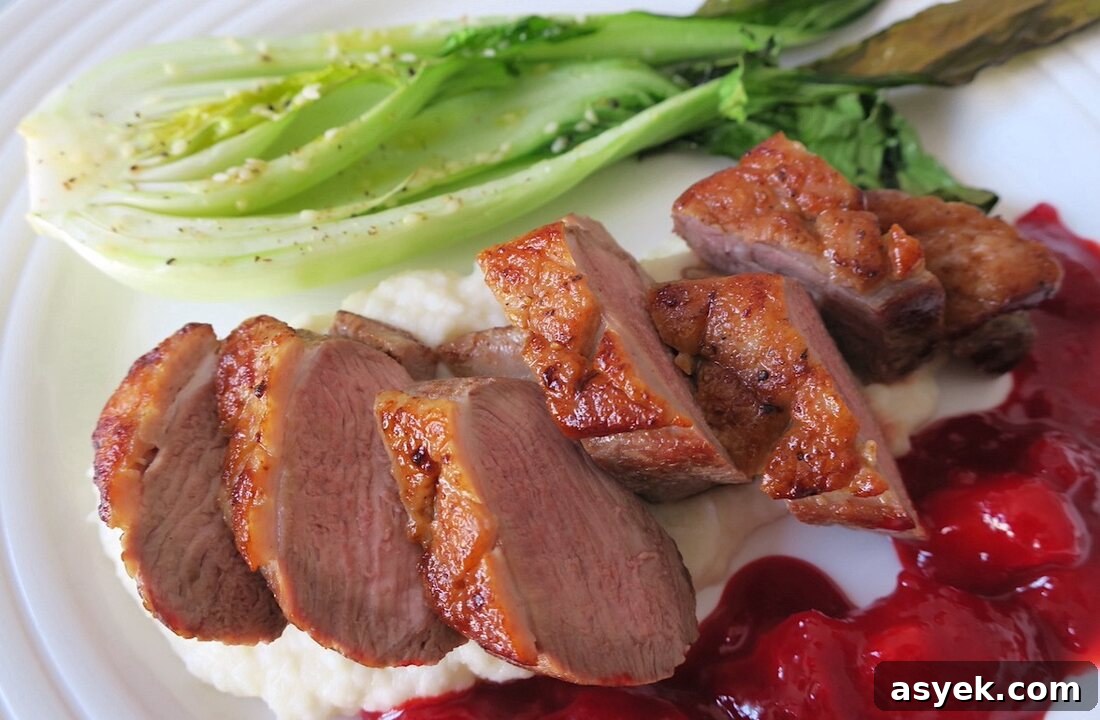
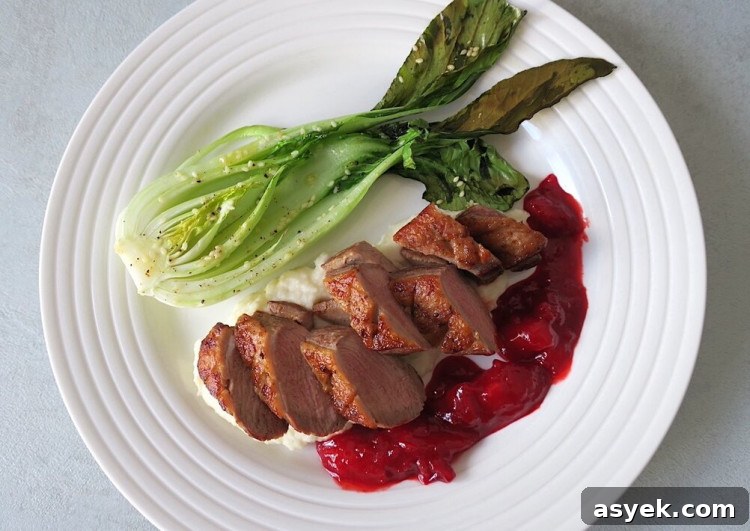
Duck Breast, Plum Compote, Pak Choi & Celeriac Purée.
Keto life doesn’t have to be dull. This elegant, restaurant-style keto meal is complete and surprisingly simple, with just 6g total carbs per serving. The combination of rich duck, a tangy plum compote, silky celeriac purée and roasted pak choi feels indulgent while staying low in carbs.
About Pak Choi
Pak choi (also called bok choy) is a leafy brassica with short, pale stalks and glossy green leaves. Widely used in Asian cooking, it’s delicious both raw and cooked. It’s nutrient-dense and very keto-friendly, offering low net carbs. If pak choi isn’t available, low-carb greens such as spinach make a good alternative.
What is Celeriac and Is It Keto-Friendly?
Celeriac is a knobbly root vegetable with a sweet, slightly nutty flavour and a faint hint of celery. It works beautifully as a purée and pairs well with richer proteins. In moderate amounts it fits well into a low-carb plan and makes a creamy, satisfying base for this dish.
Plum Compote: Are Plums Keto?
Rather than labelling foods as simply “keto” or “not keto,” think in terms of portions and total carbohydrate intake. A small amount of fruit, used sparingly, can add brightness and complexity to a savoury dish without compromising ketosis. The compote here uses a single small plum split between two servings, contributing only a couple of grams of net carbs per portion. This little touch balances the richness of the duck and the creaminess of the purée.
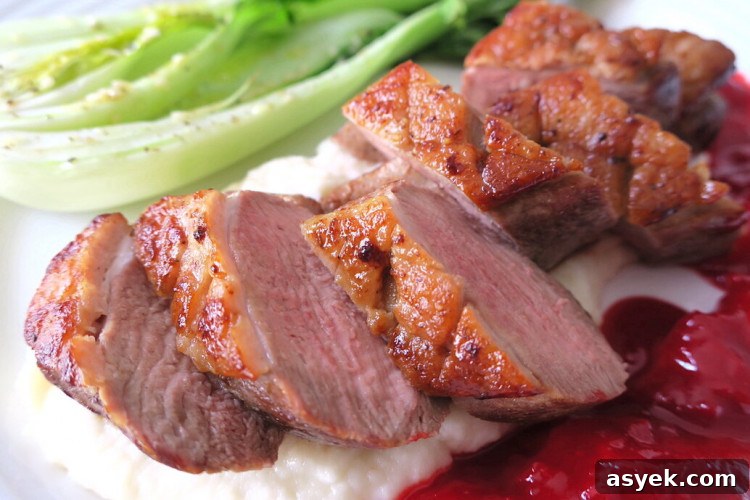
My plum compote uses one small plum (50g) divided between two servings. Net carbs per serving are about 2.5g. That small amount adds acidity, colour and a slightly jammy texture that complements the duck.
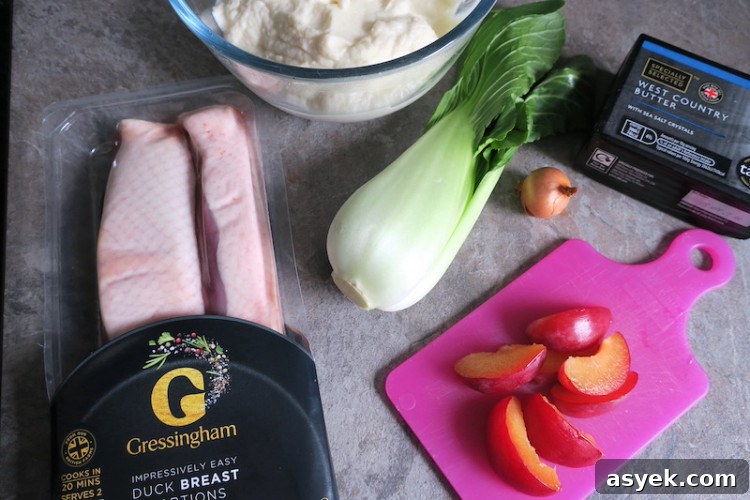
How to Make Duck Breast, Plum Compote, Pak Choi & Celeriac Purée
Although there are four components to prepare, each is straightforward. You can make the plum compote and celeriac purée in advance to reduce active cooking time. Follow the steps below for a perfectly balanced plate that looks impressive but is genuinely simple to assemble.
Recipe: Duck Breast, Plum Compote, Pak Choi & Celeriac Purée
There is nothing ordinary about this superb Masterchef-style, complete keto meal.
Course: Main. Diet: British, French-influenced, Egg Free, Gluten Free, Grain Free, Keto, Low Carb, Sugar Free. Keywords: celeriac, compote, duck, pak choi, plums, purée.
Ingredients (Serves 2)
Celeriac Purée
- 1 celeriac (about 650g net after peeling)
- Fine salt to taste
- 70g mascarpone
Plum Compote
- ½ tbsp extra virgin olive oil
- 1 tiny shallot (about 3g net)
- 1 small plum (50g, stone removed)
- 10g Sukrin Gold or another suitable granulated sweetener (approx. 1 tbsp)
- 15g red wine (approx. 1½ tbsp)
Roasted Pak Choi
- 1 pak choi head (about 120g)
- Fine salt and freshly ground black pepper
- Sesame seeds for sprinkling
- Extra virgin olive oil for drizzling
Duck
- 2 duck breast portions (about 250g total)
- Fine salt and freshly ground black pepper
- 15g butter
- 2 whole star anise
- 1 sprig fresh thyme
Instructions
Celeriac Purée
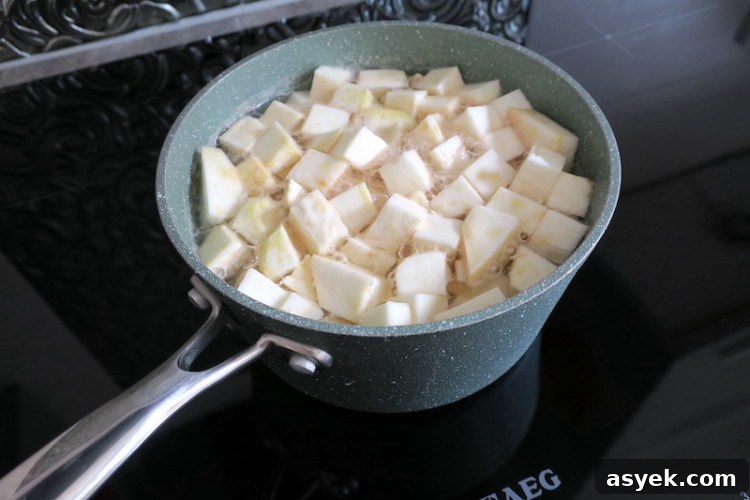
- Peel and cube the celeriac. Boil in salted water until very tender, about 12–15 minutes depending on cube size.
- Drain well and leave in a colander over the empty pot for 10 minutes to shed extra moisture.
- Transfer the celeriac to a mixing bowl and blend with an immersion blender or food processor until smooth.
- Stir in the mascarpone, season to taste and set aside. Leave uncovered briefly so residual steam can escape; this keeps the purée from becoming watery.
Plum Compote
- Thinly slice the shallot and warm it in the oil in a small saucepan for about 1 minute to soften and infuse the oil. Remove and discard the shallot.
- Stone and cut the plum into eighths and add to the infused oil with the sweetener and red wine.
- Bring to a boil, then reduce heat and simmer, uncovered, for about 5 minutes until the fruit breaks down and the mixture thickens into a compote.
- Leave the compote in the pan to cool slightly; it will thicken more as it stands.
Roasted Pak Choi
- Preheat the oven to 200°C (fan off / static). Lightly oil a roasting tray.
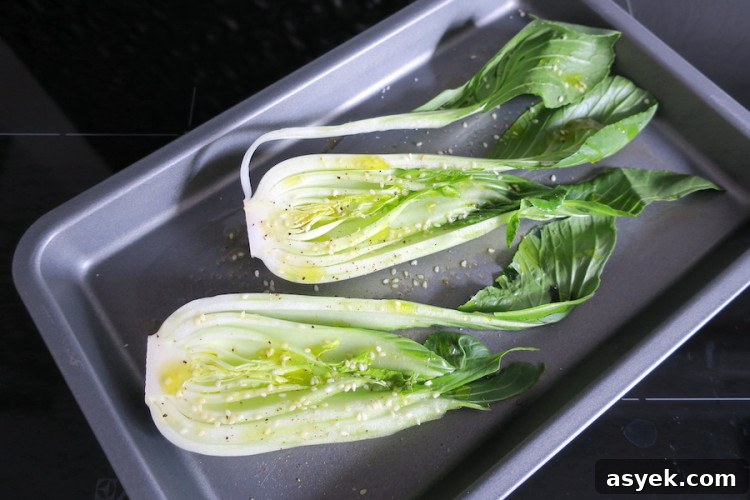
- Halve the pak choi lengthways and place cut-side up on the tray. Drizzle with olive oil, season with salt and pepper and sprinkle with sesame seeds.
- Roast for 8–9 minutes, watching carefully so the leaves do not burn. Remove and keep warm in the tray.
Duck
- Preheat the oven to 180°C (static).
- Score the duck skin in a criss-cross pattern with a sharp knife and let the breasts sit at room temperature for 30 minutes.
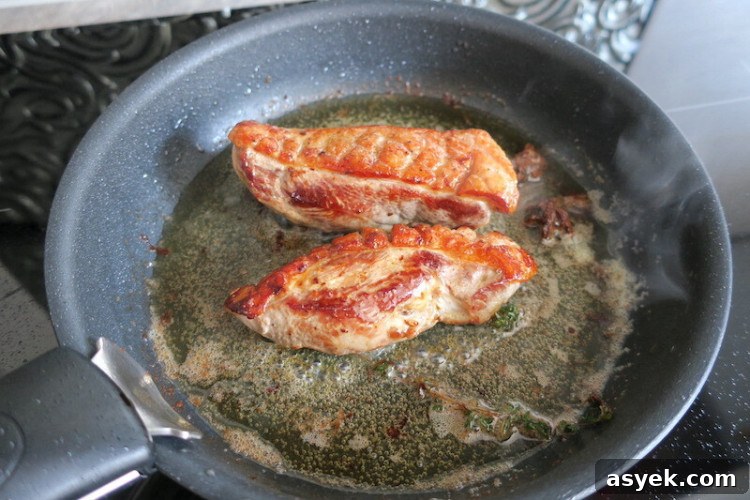
- Season generously with salt and pepper. Place skin-side down in a cold non-stick pan (no added fat) and turn the heat to medium-high.
- Cook 6–8 minutes until most of the fat has rendered and the skin is golden and crisp. Use tongs to hold the breasts on their sides if needed to render extra fat.
- Add the butter, thyme and star anise, turn the breasts to sear the flesh side for a couple of minutes and baste with the pan juices.
- Transfer skin-side up to the oven for 5 minutes, then rest on a board for 5 minutes before slicing.
Final Assembly
- While the duck rests, gently reheat 100g of the celeriac purée per serving, warm the plum compote and reheat the pak choi if needed in the residual oven heat.
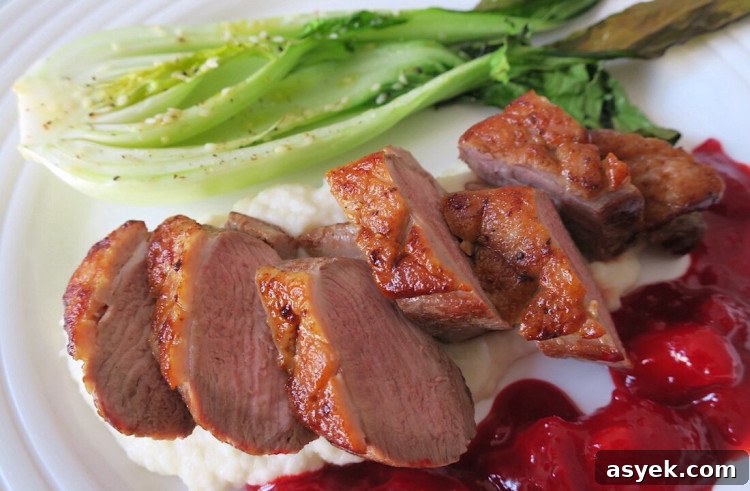
- Slice the duck and plate with a spoonful of celeriac purée, a dollop of plum compote and the roasted pak choi. Serve at once.
Notes & Tips
Making the purée and compote ahead saves time on the day. The recipe yields roughly 600g of prepared celeriac purée; you will use about 200g (100g per serving). Store leftover purée covered in the fridge for up to five days and use it with other meals.
Save the rendered duck fat from the pan to roast vegetables later — it adds excellent flavour. Line roasting trays with foil for easier cleanup.
Nutrition (per serving)
Calories: 693 kcal |
Carbohydrates: 6 g |
Protein: 27 g |
Fat: 56 g
Mention @queenketo or tag #queenketo on social media to share your results. Thank you!
This post originally contained affiliate links. While there is no extra cost to you, affiliate partnerships help support the costs of running this site.