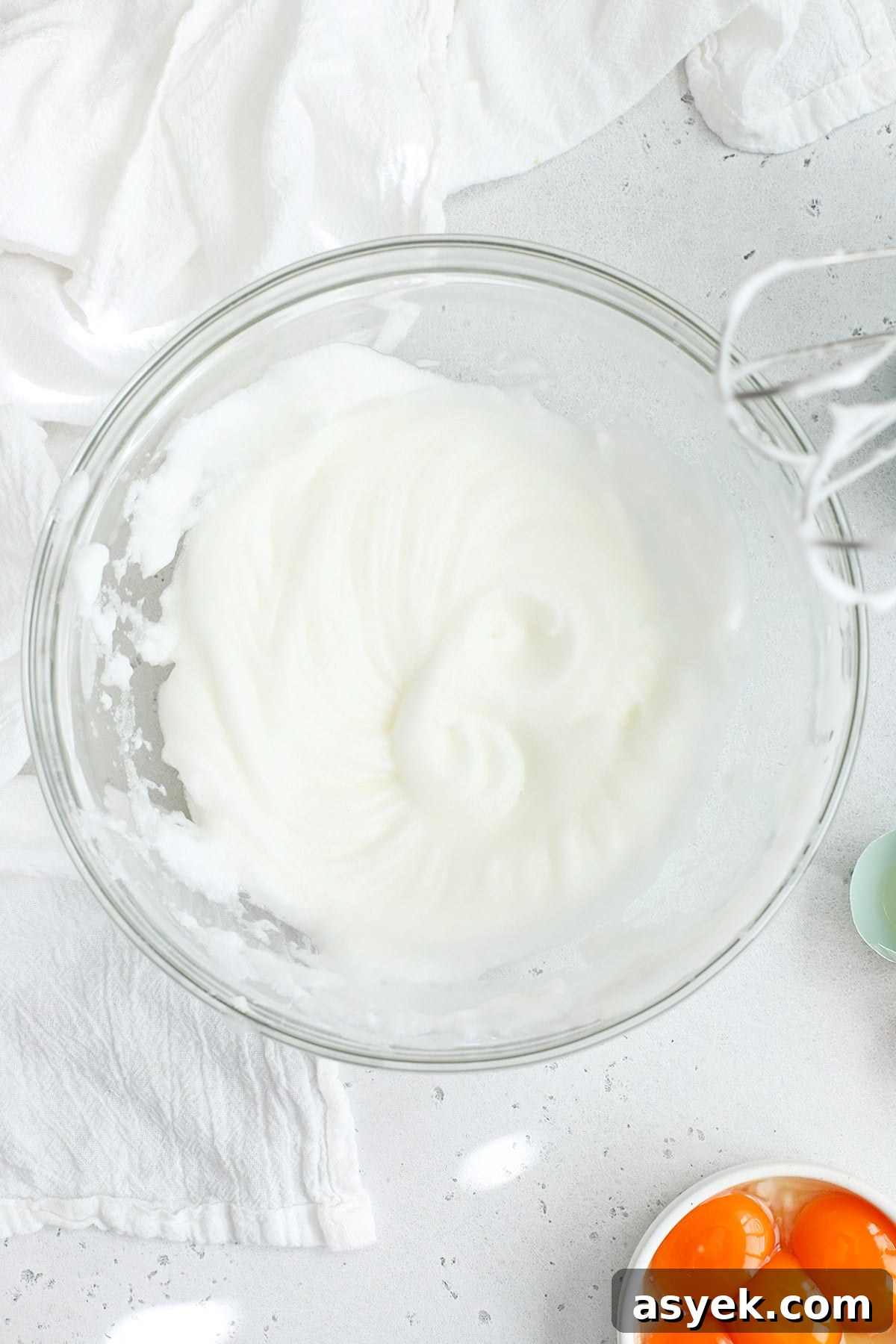
Today’s baking tip: How to whip egg whites. Learn how to take egg whites to soft peaks or stiff peaks for meringues, cakes, soufflés and more. Follow these simple steps and troubleshooting tips to get consistent results.
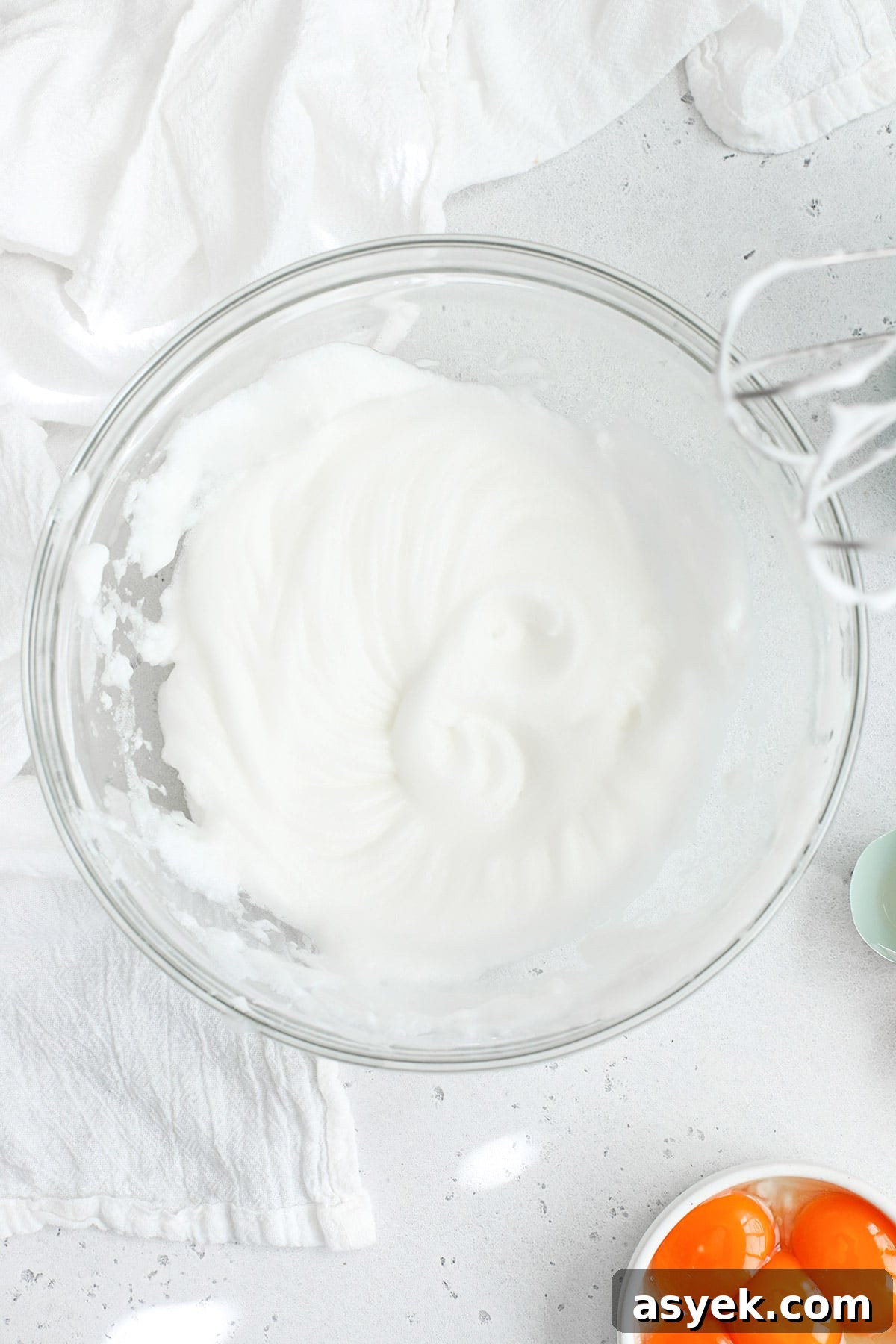
Have you whipped egg whites before? If you’re preparing recipes that rely on aerated egg whites, now is a great time for a quick refresher. Whipping egg whites correctly makes a huge difference in texture, volume and final results.
The technique is straightforward, but precise timing and a few simple rules will help you avoid common problems like under- or over-whipping. Properly whipped whites provide structure and lightness to everything from macarons and meringues to sponge cakes and soufflés.
Below you’ll find clear instructions, how to recognize soft versus stiff peaks, uses for whipped whites, and practical tips to help them hold their shape.
What Is Whipping Egg Whites?
Egg whites are mostly protein and water. Whipping (or beating) stretches the protein molecules and traps air, creating a foam that increases in volume. This aerated structure adds lift, lightness and a delicate crumb to many baked goods and desserts. You can whip egg whites by hand with a whisk, but a hand mixer or stand mixer makes the process faster and more consistent.
What Are Whipped Egg Whites Used For?
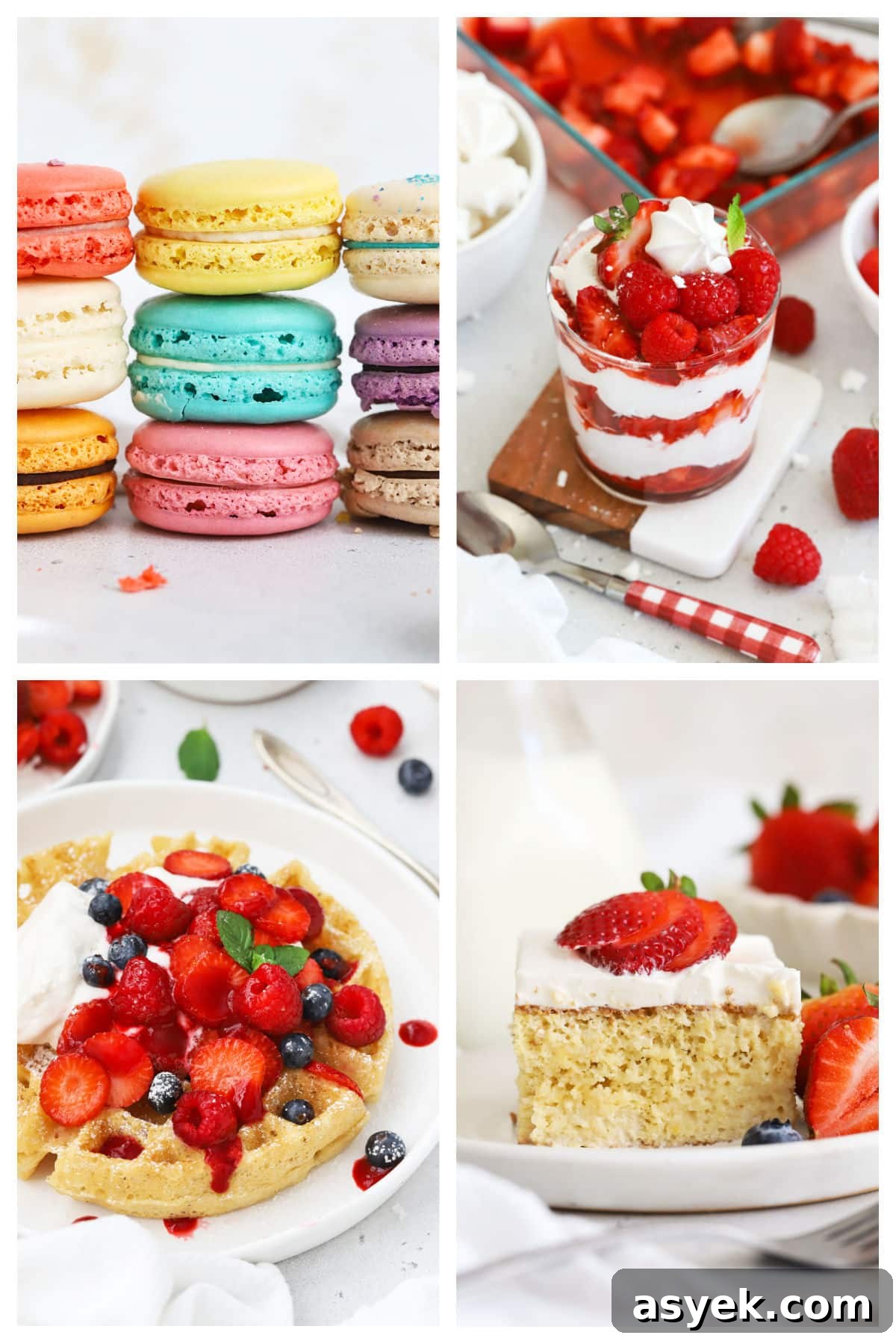
Whipped egg whites are used wherever you want a light, airy texture or stable foam. Common uses include:
- French macarons and coconut macaroons
- Soufflés and soufflé-style desserts
- Pavlova and other meringue-based desserts
- Cake recipes that rely on aeration—angel food cake, chiffon and sponge cakes
- Meringue cookies and meringue toppings for pies
- Frostings like Swiss meringue buttercream and stovetop meringue frostings
- Folding whipped whites into batters (waffles, pancakes, sponge cakes) to make them lighter and fluffier
How To Whip Egg Whites To Stiff Peaks (Or Soft Peaks)
Use the recipe card below for a concise instructions set. The steps here explain technique and timing to help you achieve reliable peaks.
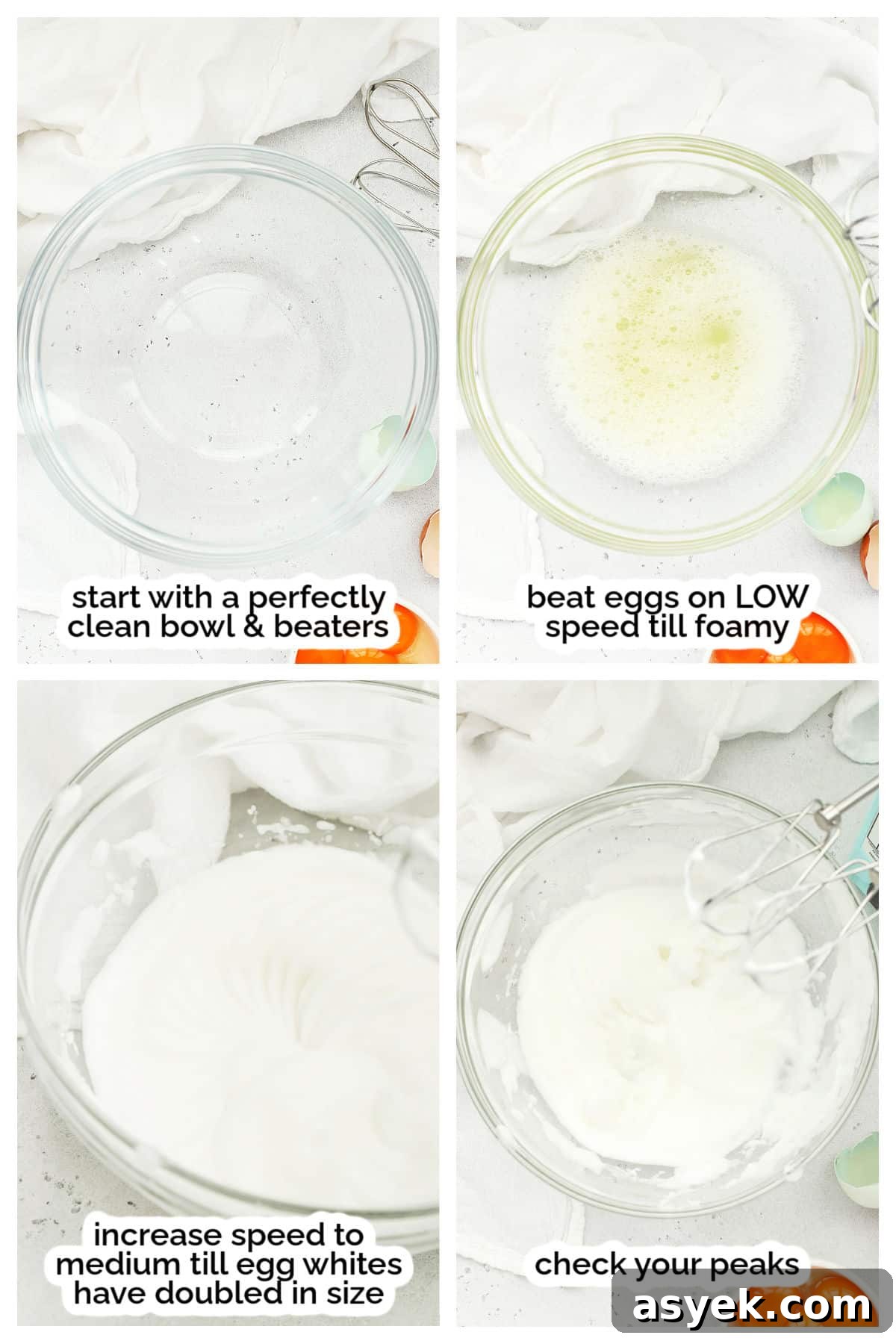
- Choose a clean glass or metal bowl. These surfaces help whites whip better. Avoid plastic bowls because they can retain traces of fat that interfere with foaming.
- Ensure the bowl and beaters are spotless. Even small traces of grease, oil or egg yolk will prevent whites from forming a stable foam. Wash and dry thoroughly, then wipe with a paper towel or cloth dampened with a little vinegar or lemon juice if you want extra assurance.
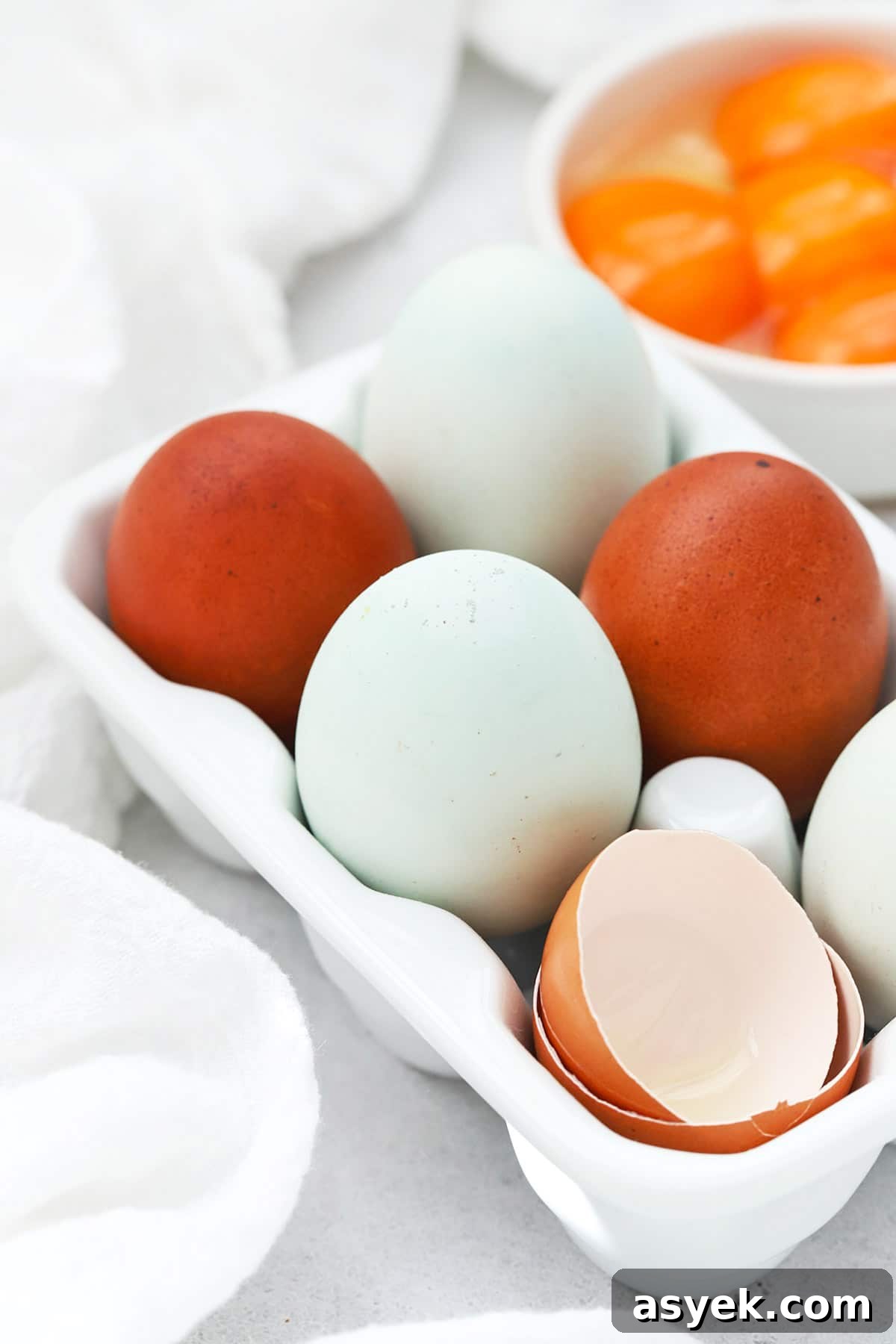
- Separate the eggs carefully. Make sure no yolk gets into the whites. One speck of yolk can ruin the batch; if that happens, save those eggs for scrambled eggs and start with fresh whites.
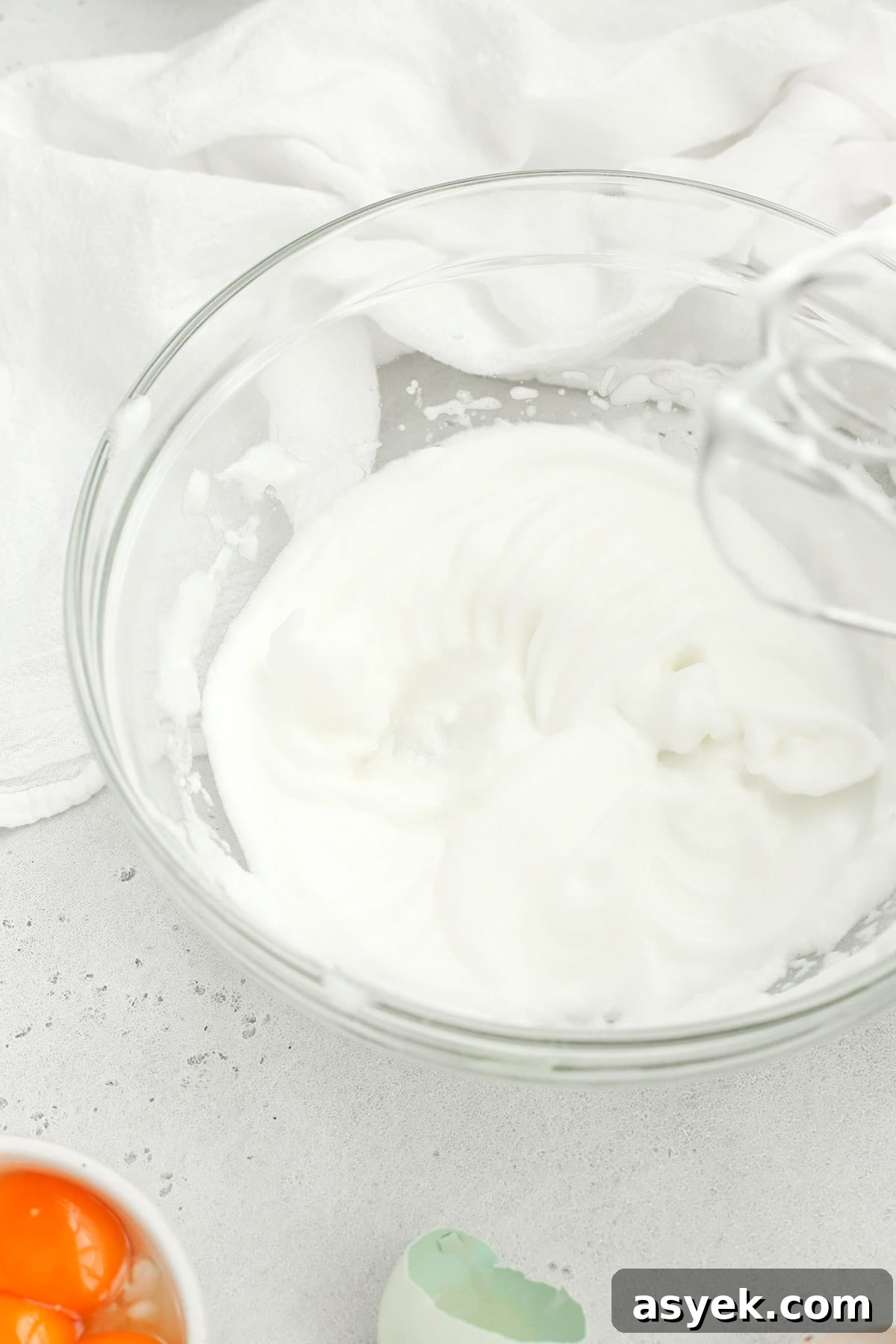
- Begin whipping at low speed. Start on low until the whites become foamy with small bubbles and are still mostly translucent.
- Increase to medium speed. Move to medium or medium-high and continue beating until the volume has roughly doubled and the mixture looks white and opaque.
- Test the peaks often. Dip the whisk or beaters into the foam and lift. If the peak forms and the tip droops slightly, you have soft peaks. If the peak stands up and keeps its shape, you have stiff peaks.
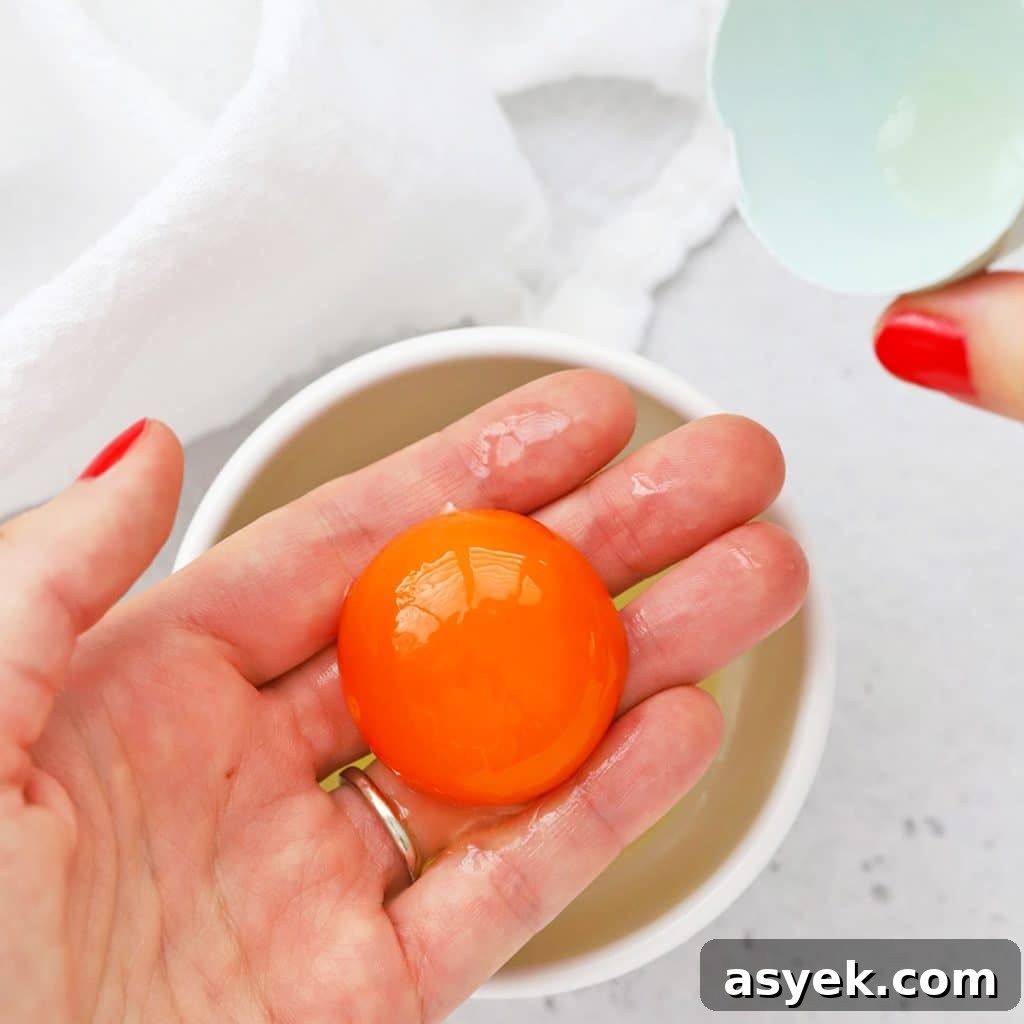
Psst! Here’s How To Separate Eggs
Separate yolks and whites carefully before whipping. If you need a guide, search for basic egg-separating techniques—there are several reliable methods including using the shell-to-shell transfer, an egg separator tool, or the hand method.
Soft Peaks Vs. Stiff Peaks
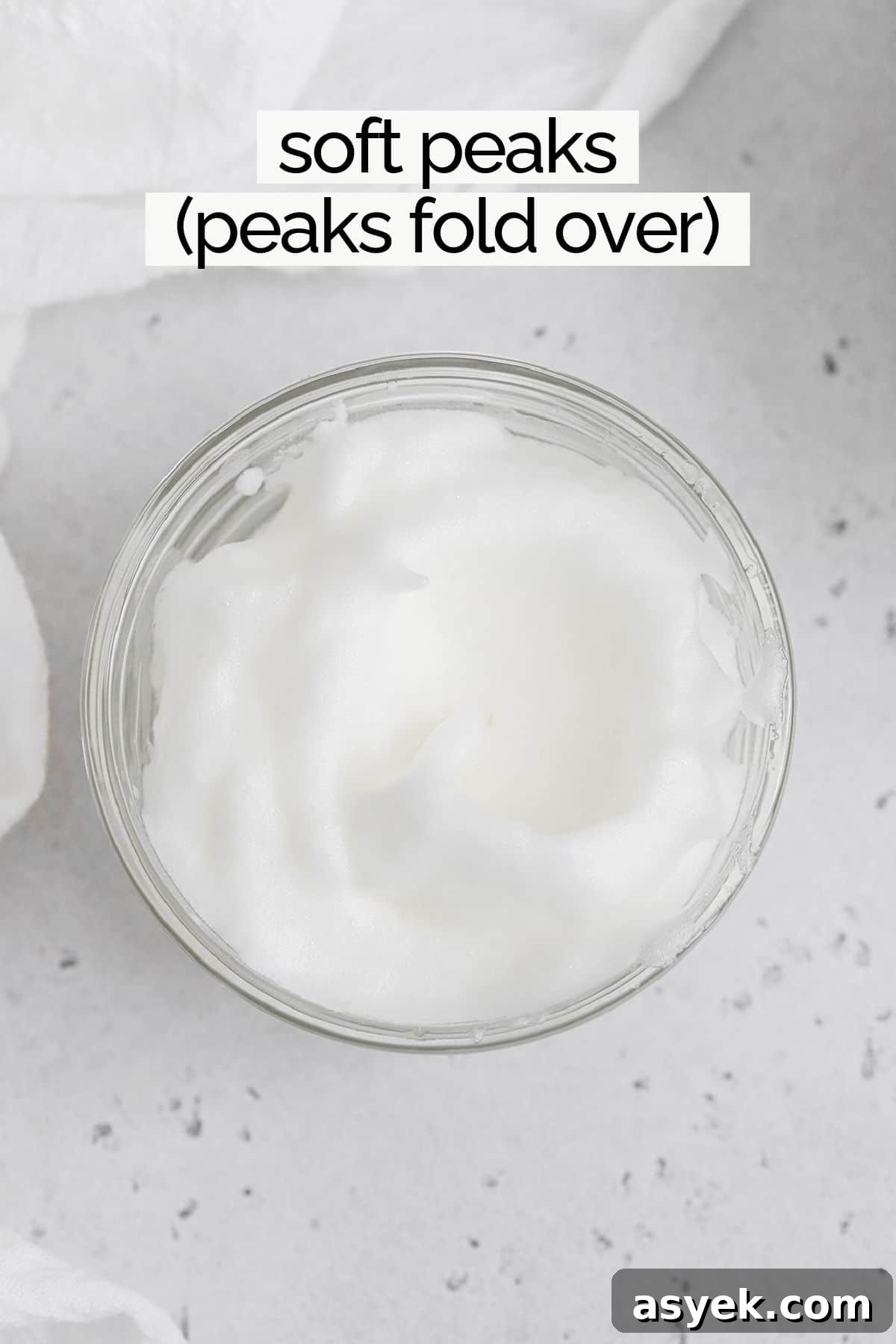
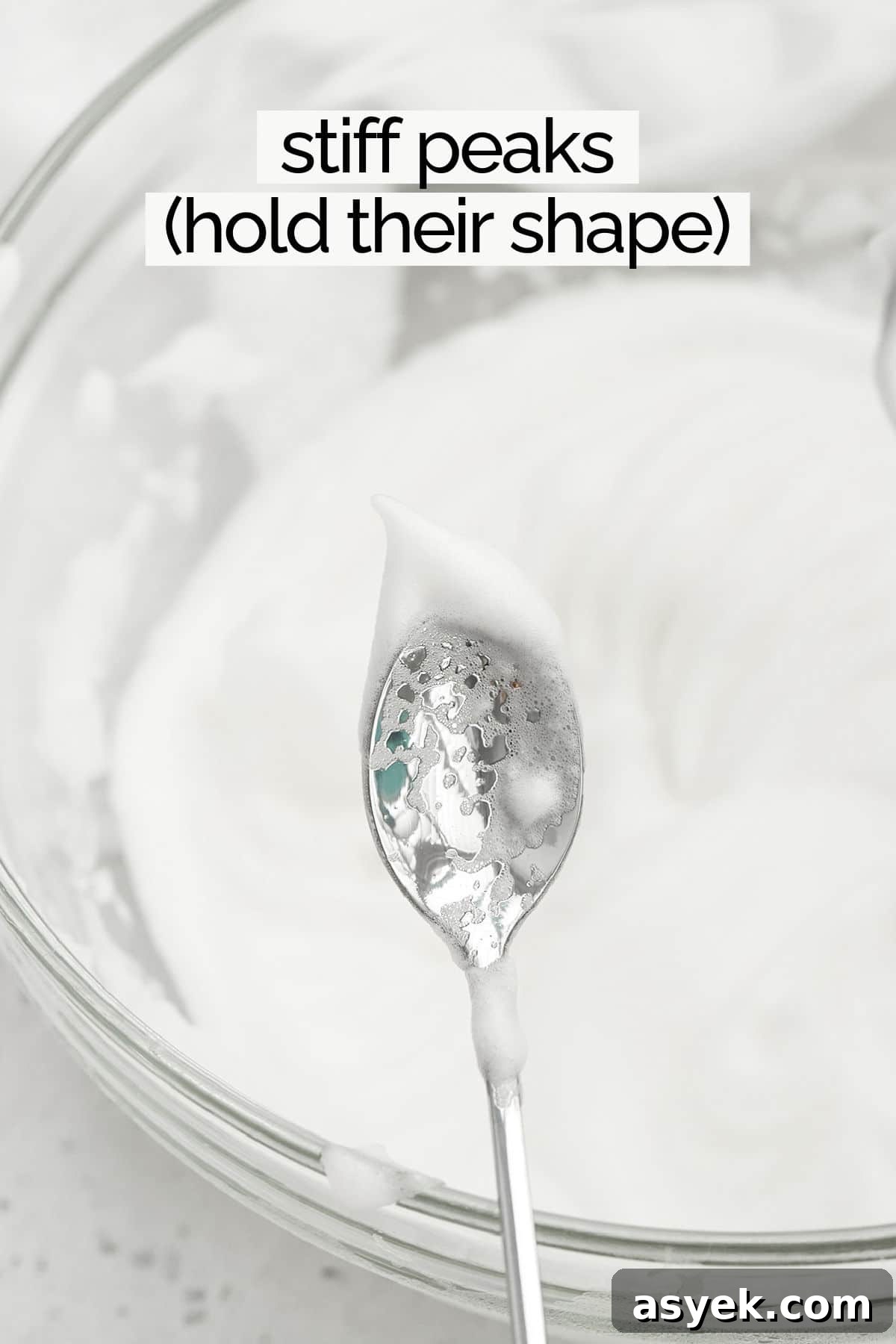
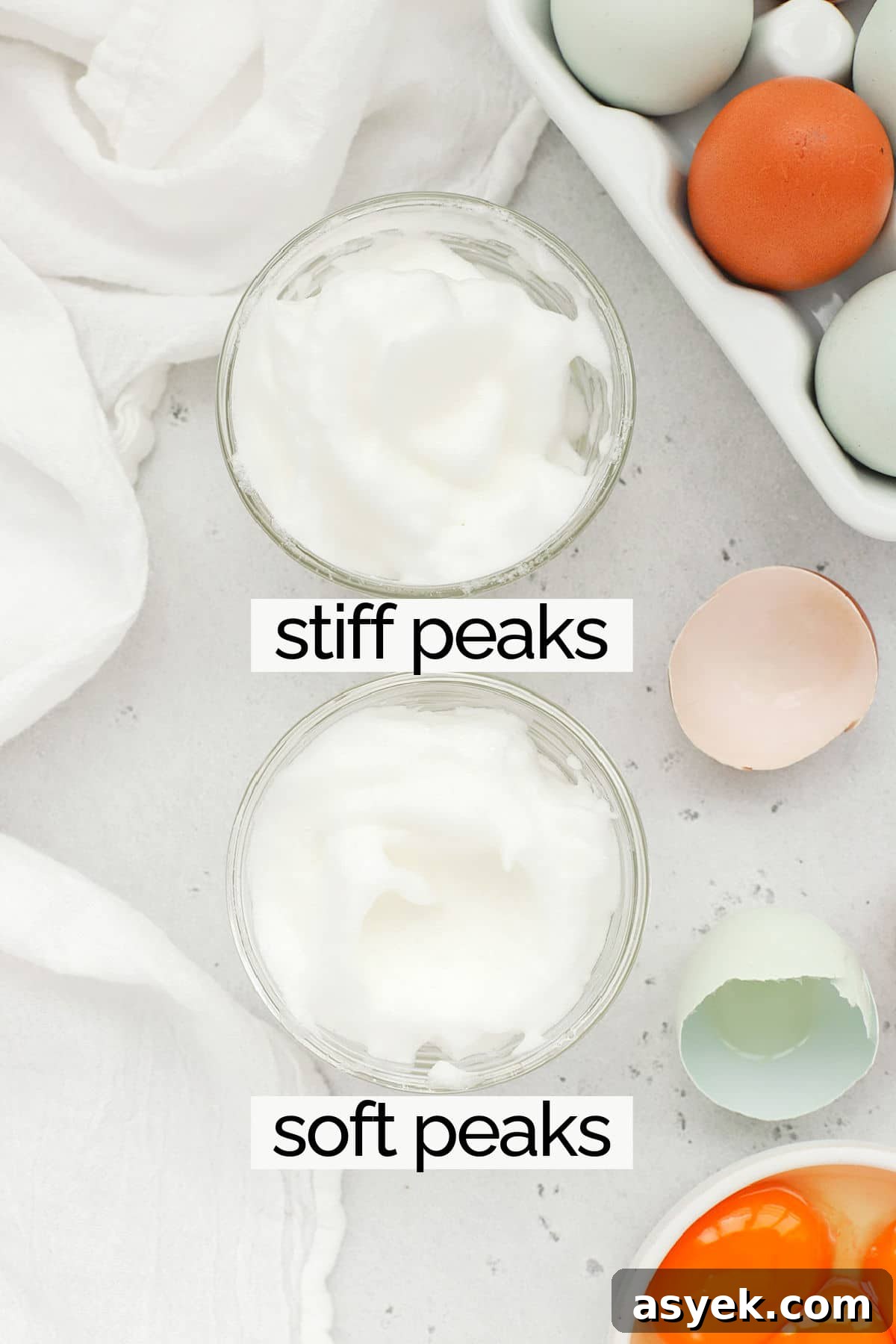
The main difference is firmness. Use soft peaks when you need a tender, foldable foam; use stiff peaks when you need stability and structure.
Soft Peaks: A Slight Droop
- When you lift the whisk, the peak will form but the tip will bend over slightly, like soft-serve ice cream. Soft peaks are ideal for folding into batters for a light texture.
Stiff Peaks: Hold Their Shape
- With stiff peaks, the lifted peak stays tall and pointed without drooping. The foam looks glossy and holds its shape when the whisk is moved. Stiff peaks are used for meringues, piping and any application that needs firm structure.
How To Get Whipped Egg Whites To Hold Their Shape Better
- Add a pinch of salt. A very small pinch (less than 1/8 teaspoon for several whites) can help the foam set. Add once the whites are foamy.
- Add acid. A little white vinegar or lemon juice (about 1/8 teaspoon per white) stabilizes the foam and makes it less likely to collapse.
- Use cream of tartar. Cream of tartar (about 1/8 teaspoon per white) is a dry acid that works well for stabilizing meringues and frostings.
- Add sugar gradually when required. If you’re making meringue or a meringue-based frosting, add sugar slowly once soft peaks form. Adding sugar too early can inhibit foam formation, so dissolve it gradually as you whip.
FAQ + Tips For Whipping Egg Whites
How Long Does It Take To Whip Egg Whites?
Timing depends on quantity, temperature and mixer speed. As a rough guide using a hand mixer:
- Soft peaks: about 4–5 minutes
- Stiff peaks: about 8–9 minutes
Why Are My Egg Whites Not Whipping?
The most common cause is fat contamination—yolk, oil or greasy residue on the bowl or beaters. Even tiny amounts disrupt the foam. Start with perfectly clean, dry equipment and separate the eggs carefully.
Are Cold Egg Whites Or Room-Temperature Egg Whites Better For Whipping?
Cold eggs are easier to separate, but egg whites whip faster and reach greater volume when they’re at room temperature. If time allows, let separated whites sit at room temp for 15–30 minutes before whipping.
Have A Copper Bowl? Use It!
Copper bowls help stabilize egg white foam because copper ions interact with egg proteins and improve structure—this is why many pastry chefs prefer them.
Can You Overbeat or Overwhip Egg Whites?
Yes. If you keep beating past the stiff peak stage, the foam will break down: it becomes dull, grainy and may separate. You can sometimes rescue over-beaten whites by folding in one fresh egg white and gently rewhipping, but prevention is best—stop as soon as the desired peak forms.
More Baking Tips To Try
- How to separate eggs (three simple methods)
- How to measure flour correctly
- How to freeze cookie dough
- How to keep Bundt cakes from sticking
- How to brown butter
Recipe Card
Did you make this recipe?
Leave a star rating below when you try this whipping-egg-whites tutorial. We love seeing your results.
How To Whip Egg Whites (Stiff Peaks & Soft Peaks)
5 from 1 review
- Author: Sweets And Thank You
- Total Time: 15 minutes
- Yield: 1 batch
- Diet: Gluten Free
Description
Clear, step-by-step instructions to whip egg whites to soft or stiff peaks. Includes troubleshooting and tips to stabilize the foam for the best baking results.
Ingredients
- A clean glass or metal bowl (no plastic)
- A hand mixer or stand mixer with clean beaters
- Egg whites (room temperature recommended)
Instructions
How To Whip Egg Whites:
- Make sure your bowl and beaters are spotless. Even tiny traces of fat or oil prevent proper foaming. Wash, dry and wipe with a little vinegar or lemon juice if needed.
- Separate the eggs carefully. Place all whites in the clean bowl and keep yolks separate. If any yolk contaminates the whites, use those eggs for a different purpose and start over.
- Whisk on low until foamy. Start the mixer on low so small bubbles form and the mixture is still mostly clear.
- Increase to medium speed. Continue beating until the whites are doubled in volume, white and opaque.
- Test the peaks frequently. Lift the whisk to check for soft or stiff peaks and stop when you reach the desired stage.
3 Stages of Whipped Egg Whites:
- Soft peaks: The peak forms then tips over slightly. Ideal for folding into batters.
- Stiff peaks: Peaks stand tall and keep their shape. Use for meringues, piping or when firm structure is required.
- Prep Time: 15 minutes
- Category: Tutorial
- Method: No-Cook
- Cuisine: American