How to skin salmon at home is easier than many people think. With a sharp, flexible fillet knife and a few simple techniques, you can remove the skin quickly and cleanly—no advanced skills required. Whether you’re steaming, roasting, pan-searing, or flaking salmon into a salad, this clear, step-by-step guide will show you how to get the best results.
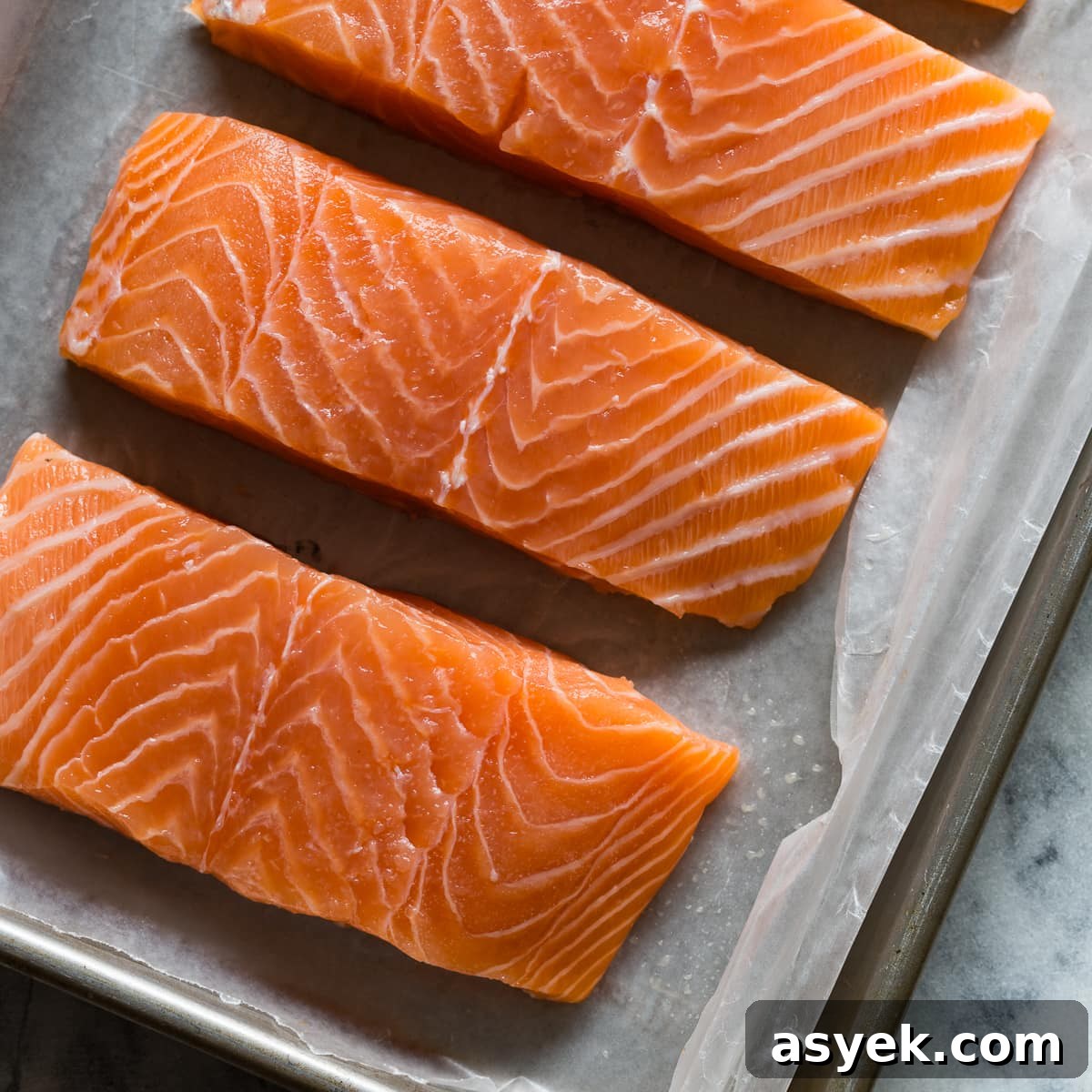
I cook salmon many ways—steamed, air fried, grilled, roasted, and pan-seared. Most salmon in the market is sold with the skin on, so you can either ask the fishmonger to remove it or learn to do it yourself. Once you get the hang of it, skinning salmon is fast and gives you cleaner, more consistent portions for a wide range of dishes.
If you prefer a milder flavor or want to trim out the darker bloodline, skinning is the right choice. Read on for the tools you need, a step-by-step technique, and answers to common questions.
Why Skin Salmon
Cooking salmon with the skin on can produce a delightful crunchy layer when pan-seared or grilled, but there are good reasons to remove it first. The darker band of flesh next to the skin—the bloodline—can carry a stronger, fishier flavor that some people find off-putting. Skinning allows you to trim that area away and get a cleaner, milder-tasting fillet.
For methods like steaming, roasting, or making salads and spreads, skinned salmon often gives better texture and presentation. If you do enjoy crispy skin, you can always reserve it and crisp it separately as a garnish—it’s a different approach and deserves its own technique.
Chef’s Tip: When buying salmon, ask for center-cut fillets if possible. They’re thicker and more even, which makes portioning and cooking easier. If a display piece looks tired, ask your fishmonger about fresher options or a different cut. Consult reputable seafood guides for sustainable choices when you can.
What You’ll Need
The essential tool for skinning salmon is a sharp, flexible fillet knife. A chef’s knife is usually too thick and rigid to slip cleanly between skin and flesh without tearing. A fillet knife gives you the control to make long, smooth cuts.
You don’t need a high-end blade, but the knife should be sharp and flexible. Other useful items include a clean cutting board, paper towels to improve grip, and tweezers or needle-nose pliers to remove pin bones if needed.
I keep a few fillet knives at home: a classic flexible fillet knife, a longer Japanese-style blade with a keen edge, and a simple utility fillet knife for quick jobs. One good fillet knife, kept sharp, will serve you well.
Chef’s Tip: Keep your fillet knife sharp and give it a professional sharpening occasionally. A dull blade makes the job harder and more likely to tear the flesh.
How to Skin Salmon (Step-by-Step)
Note: The photographs here illustrate the core technique and may vary in style but still show the essential motions clearly.
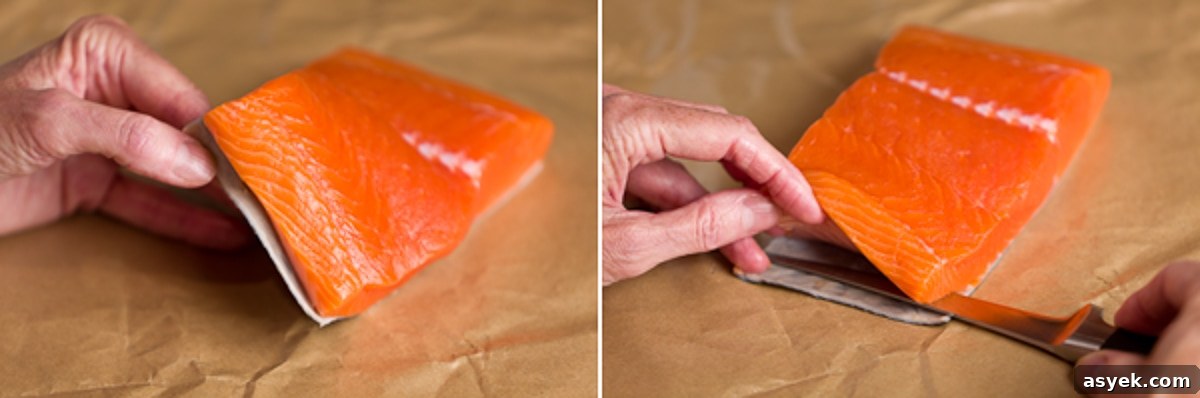
Step 1: Start at the tail
Place the fillet skin-side down on a stable cutting board. At the tail end, gently work the tip of your knife between the skin and the flesh to create a small tab of skin to hold onto.
Step 2: Position the knife
Hold the knife blade nearly parallel to the board, angled just slightly upward. Grip the skin firmly with your non-cutting hand—use a folded paper towel if it’s slippery.
Step 3: Glide the blade
With one smooth motion, push the knife forward while pulling the skin taut. Let the sharp blade do the work; aim for a single clean stroke along the fillet’s length. If the blade snags, pause and adjust your angle rather than forcing it.
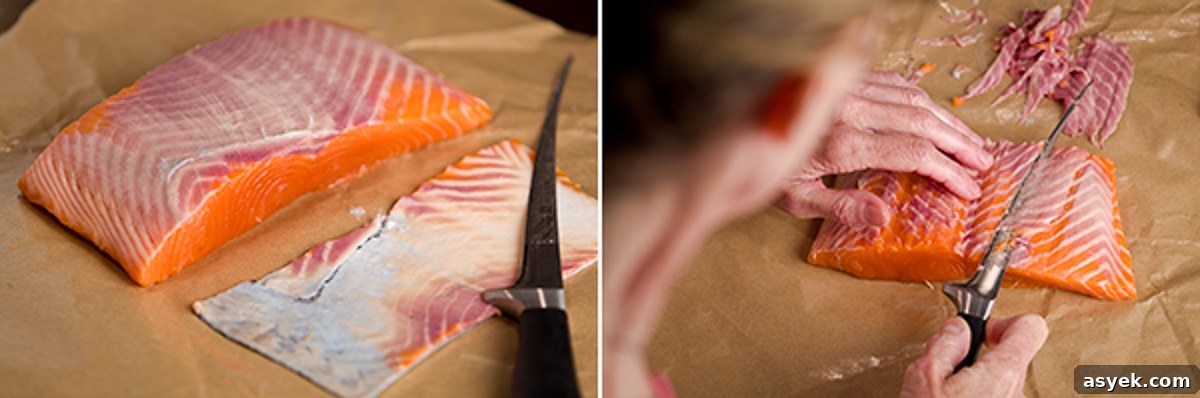
Step 4: Trim the bloodline (optional)
The darker strip of flesh nearest the skin is the bloodline. It varies by fish and can be removed if you prefer a milder flavor—slice along either side of that strip and lift it out. Whether to remove it is a matter of taste.
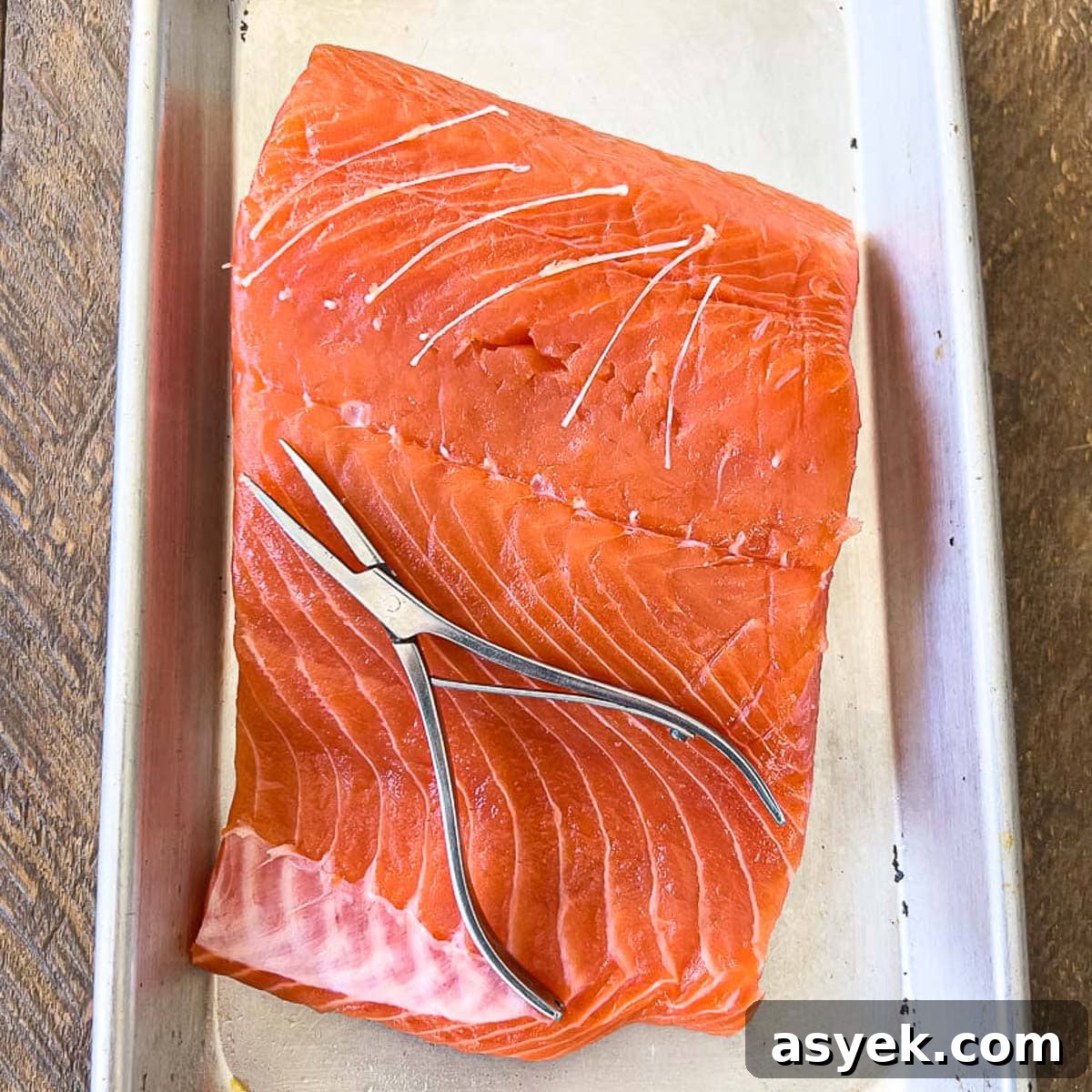
Step 5: Check for pin bones
Run your fingers lightly along the fillet to find any pin bones. Wet fingers slide more easily and will help you detect small bones. Remove them with tweezers or needle-nose pliers, pulling gently in the direction the bone goes in to avoid tearing the flesh.
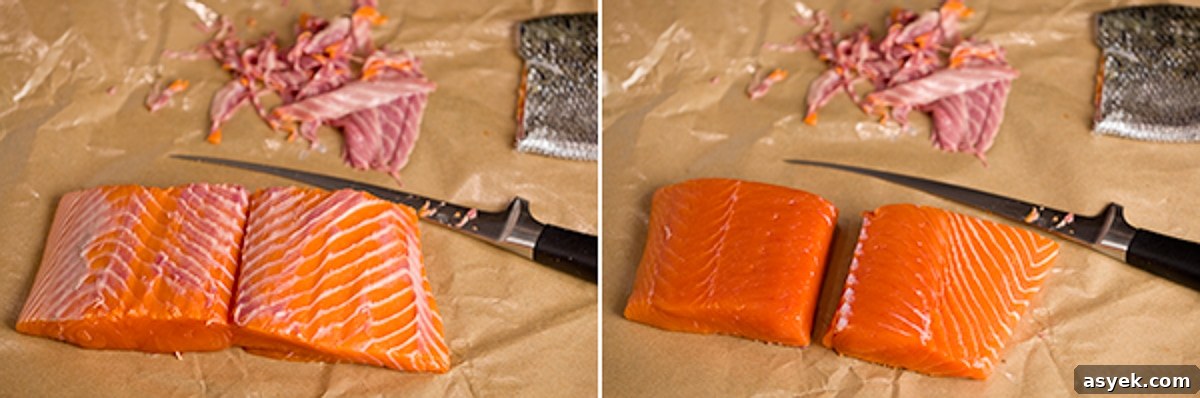
Step 6: Portion the fillet
Slice the fillet into portions as needed. A common serving size is 4–6 ounces, depending on appetite and the rest of the meal.
Chef’s Tip: If you’re new to skinning, work with single fillets or small pieces rather than a full side of salmon. It’s more manageable until you gain confidence.
How to Skin Salmon FAQs
No. It depends on the cooking method and your preference. For grilling or pan-searing, leaving the skin on protects the flesh and can crisp nicely. For steaming, roasting, or flaking into salads, removing the skin gives a cleaner result and makes it easier to trim the bloodline.
Yes. With methods like steaming or poaching, the skin often peels away easily once cooked. However, removing it before cooking makes it simpler to trim the bloodline and portion the fish cleanly.
A very sharp, flexible utility knife can work in a pinch. Avoid thick, heavy blades, which can tear the flesh. If you cook salmon often, investing in a good fillet knife is worthwhile.
Yes, it’s safe—just stronger in flavor. Some people enjoy it; others prefer to remove it for a milder taste.
Salmon skin is edible and, when crisped properly, can be delicious and nutritious. For wet cooking methods like steaming or poaching, the skin often becomes soft or rubbery, so many cooks remove it for those preparations.
Salmon Recipes to Try
-
How to Make Steamed Salmon
-
Simple Stovetop Salmon
-
Sesame Crusted Salmon
-
Baked Pistachio Crusted Salmon