Chanoyu: The Japanese Tea Ceremony
Chanoyu, commonly known as the Japanese tea ceremony, is an elegant and highly choreographed ritual centered on the preparation, presentation, and savoring of matcha, powdered green tea. It blends precise movement, aesthetic appreciation, and hospitality to create a calm, respectful atmosphere for guests.
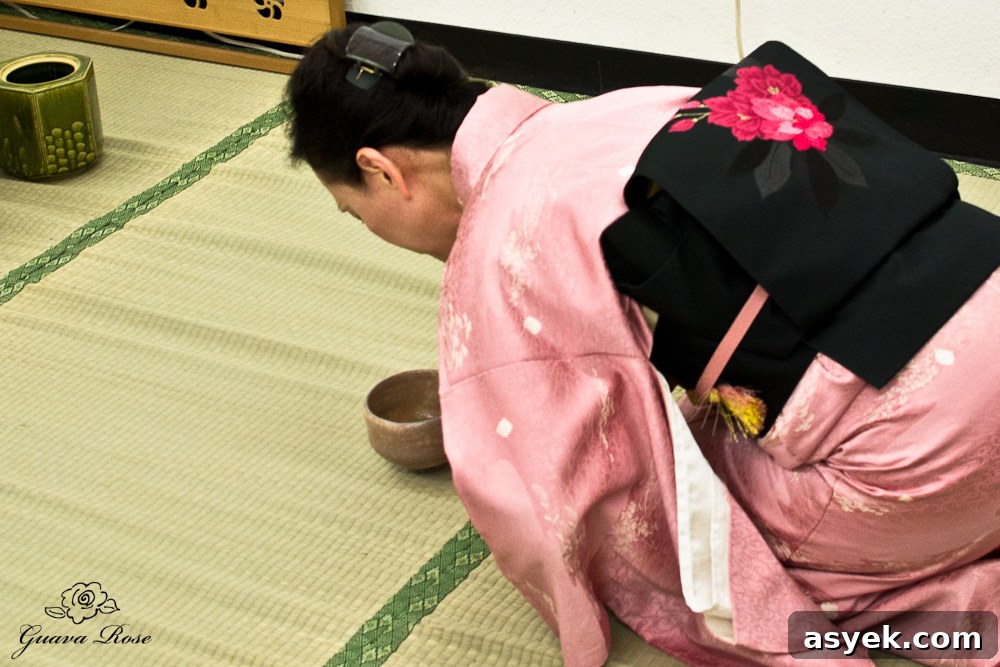
I had the privilege of observing a demonstration given by the Omotesenke School of San Francisco for a girls’ Japanese class. I attended with Kallie, Laurel, and Quill, and we watched three instructors—head teacher Sohsei (Mayumi) Kagami, Etsuko Tsukano, and Mariko Sawada—perform the ceremony with grace and attention to detail.
Matcha itself has a long history. It was popular in China during the Song Dynasty (960–1279) and was introduced to Japan in the 12th century by the monk Eisai. It first gained use among Zen priests and later became popular among the upper classes before evolving into the formalized practice seen today.
At its heart, Chanoyu expresses the Japanese spirit of hospitality: tea is prepared and served to honor the guest. The ceremony engages the senses and invites mindful appreciation of simple, refined objects and actions.
The five sensory pleasures of the art of tea are:
- the visual pleasure of handcrafted tea utensils
- the warmth and texture of the tea bowl against your hands and lips
- the taste of the tea and the sweets served with it
- the subtle fragrance of incense
- the sound of water being ladled from the kettle
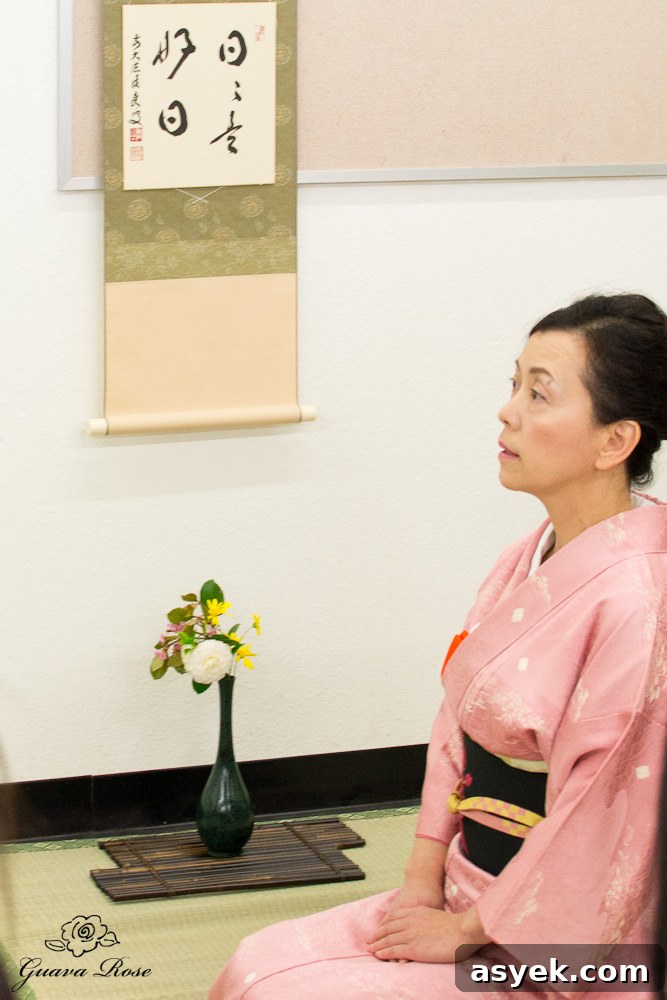
The space for a tea gathering is prepared carefully. Tatami mats are arranged, a hanging scroll (kakejiku) reflecting the day’s theme is displayed, and a flower container holds seasonal blossoms. Today’s scroll, chosen by Sohsei Kagami, carried the phrase “Nichinichi-korekoujitsu,” which translates as “Each day is the best day.”
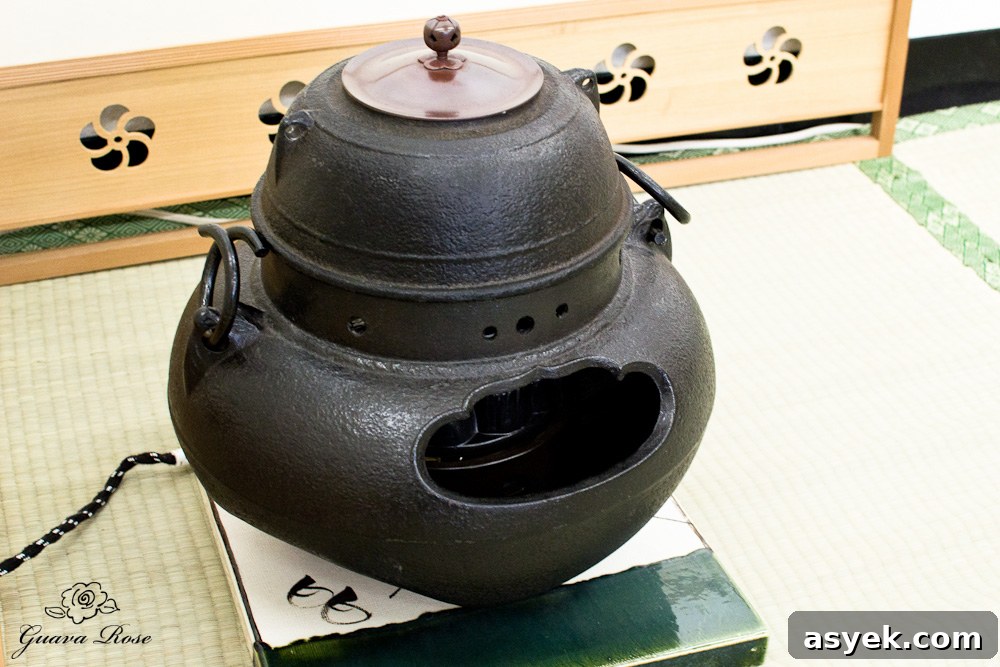
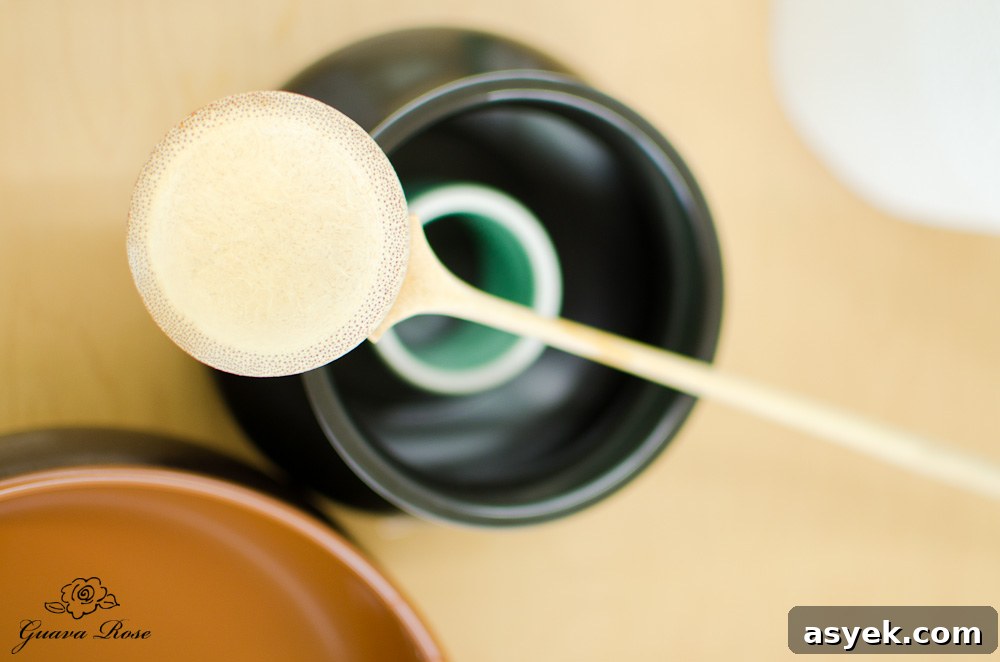
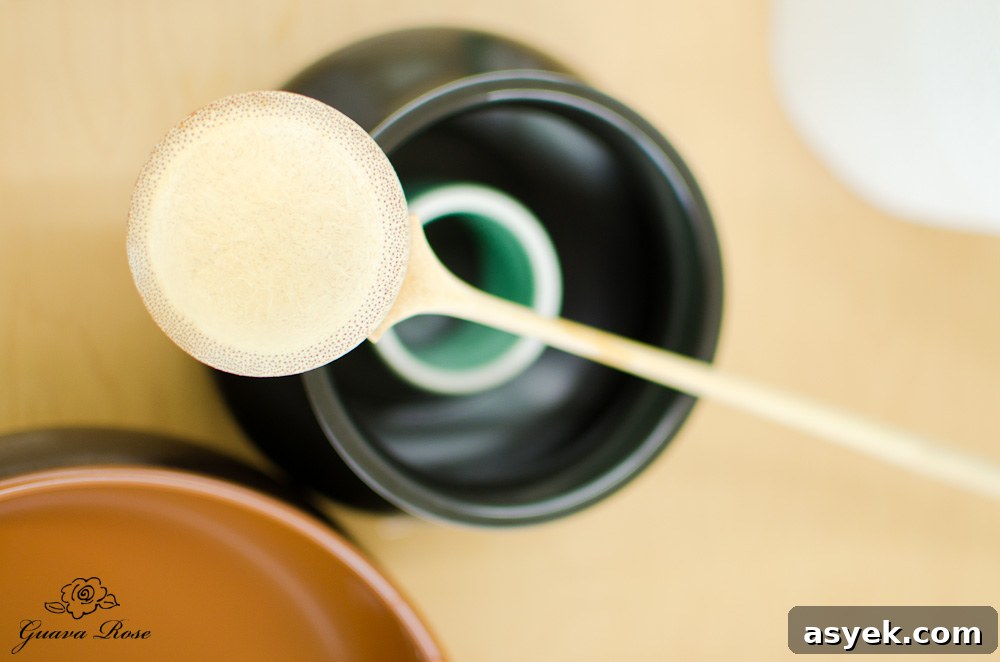
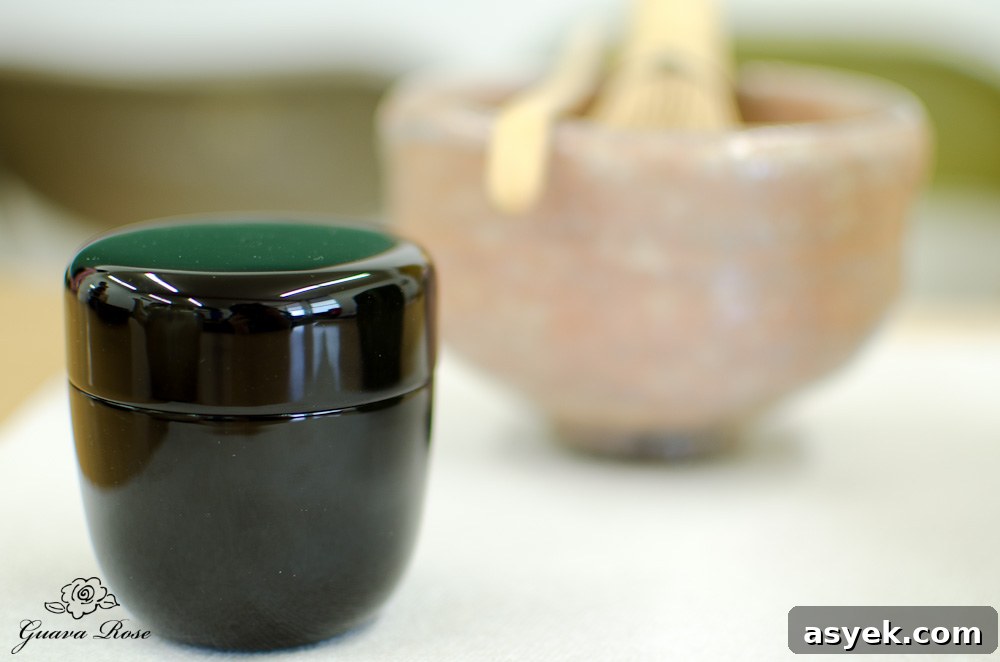
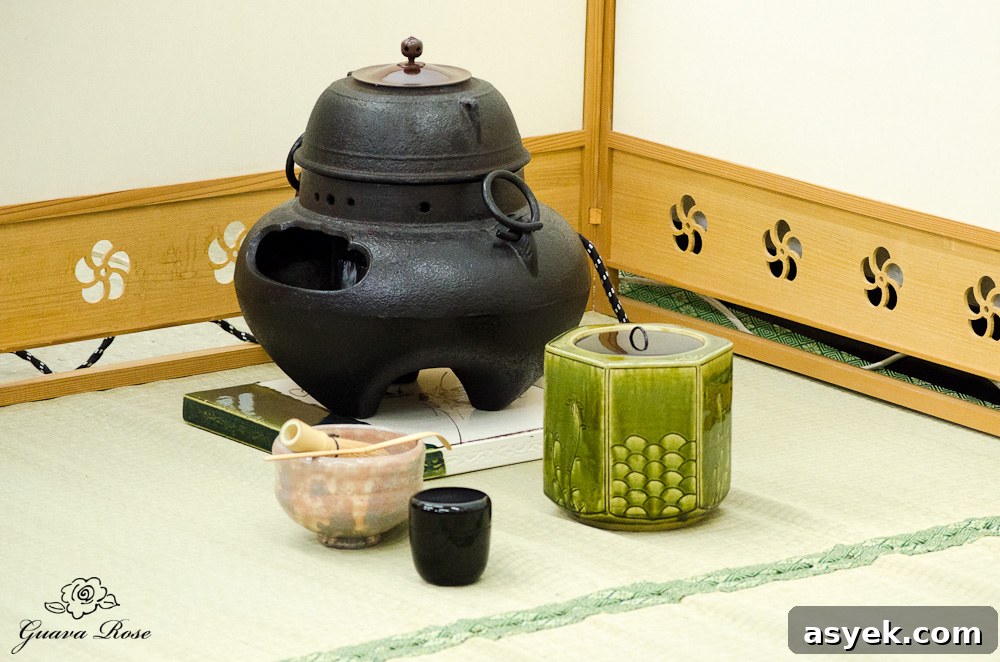
Many utensils appear during the ceremony: the iron kettle (kama), a brazier (furo) historically used for charcoal, a tea container (natsume or chaire) for the powdered tea, a water jar (mizusashi), a tea whisk (chasen), and a tea scoop (chashaku). For convenience, the instructor used a modern electric plate to heat the kettle, though traditional ceremonies often use charcoal.
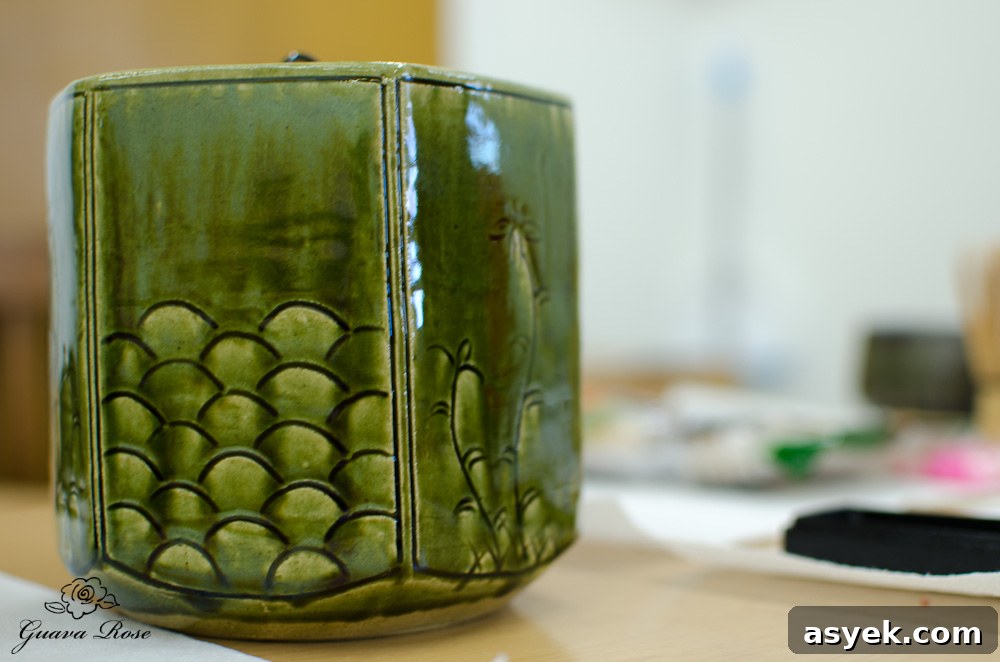
The mizusashi stores fresh water for rinsing the bowl and topping the kettle when needed. Small additions of water help regulate the kettle’s steam and temperature.
Every movement in the tea room is deliberate. Items are placed and handled slowly, and footwear is removed before stepping onto the tatami to keep the mats clean. The fukusa, a folded square of silk tucked into the kimono, is used to purify and wipe utensils; the host stores it neatly and uses it with precise gestures.
The demonstration began quietly. Mariko read the hanging scroll in silence, reflecting on its message before the formal bowing and service began. A respectful bow opens the interaction and signals the start of the ritual.
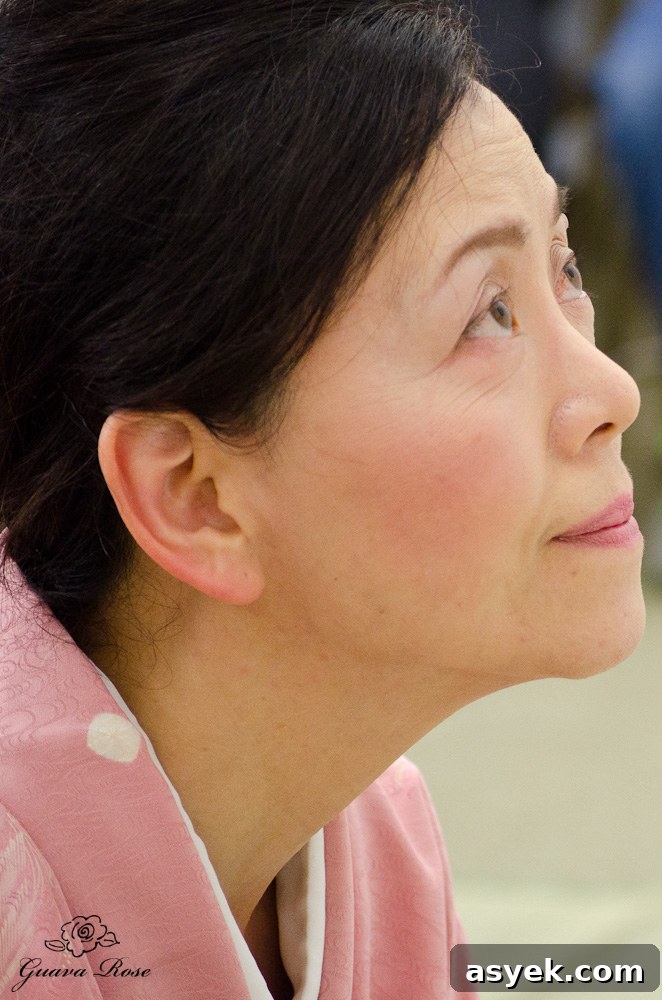
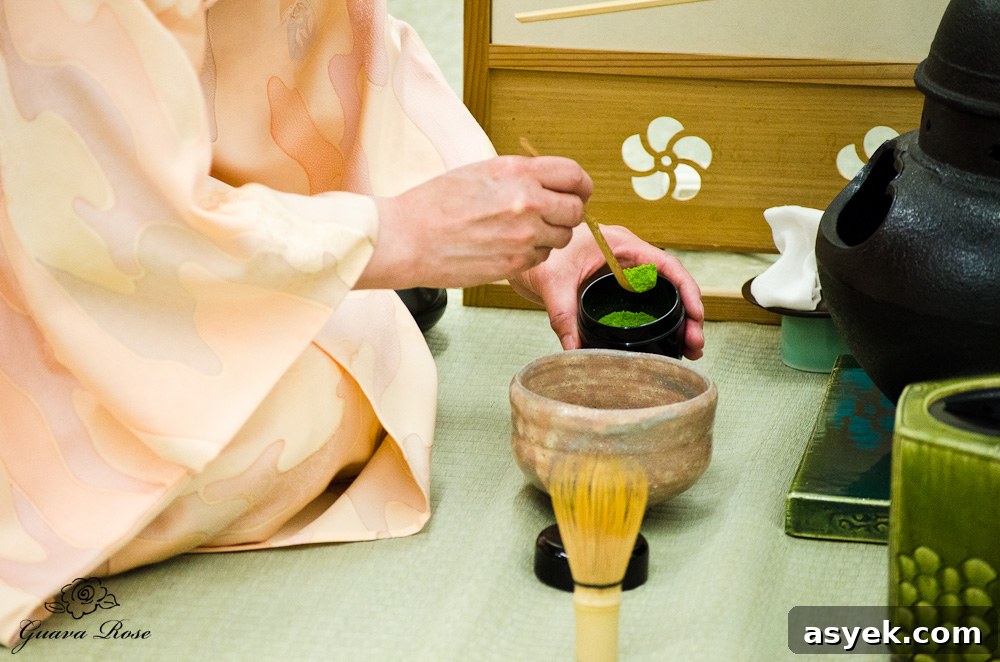
Sweets (such as manju) are served first. The guest finishes the sweet before receiving the tea. The chashaku measures the powdered matcha and places it into the tea bowl; the chasen then whisks the tea into a frothy, even consistency. The host uses the fukusa to wipe the tea scoop and to handle hot lids when necessary. The hishaku ladle is used to transfer both hot and cold water, and its resting position on the kettle indicates whether hot water was last taken.
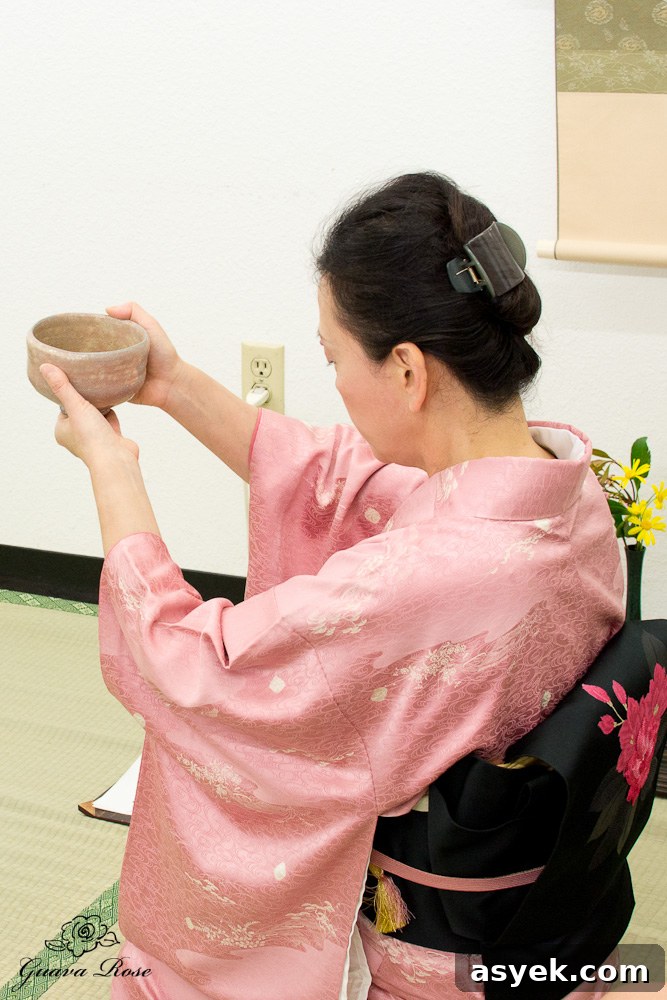
When the tea is presented, guests place the bowl on the tatami to their left and exchange a bow with the person beside them. The bowl is then lifted—cupped on the right side with the right hand and supported from below by the left—raised to eye level as an expression of gratitude to the host.
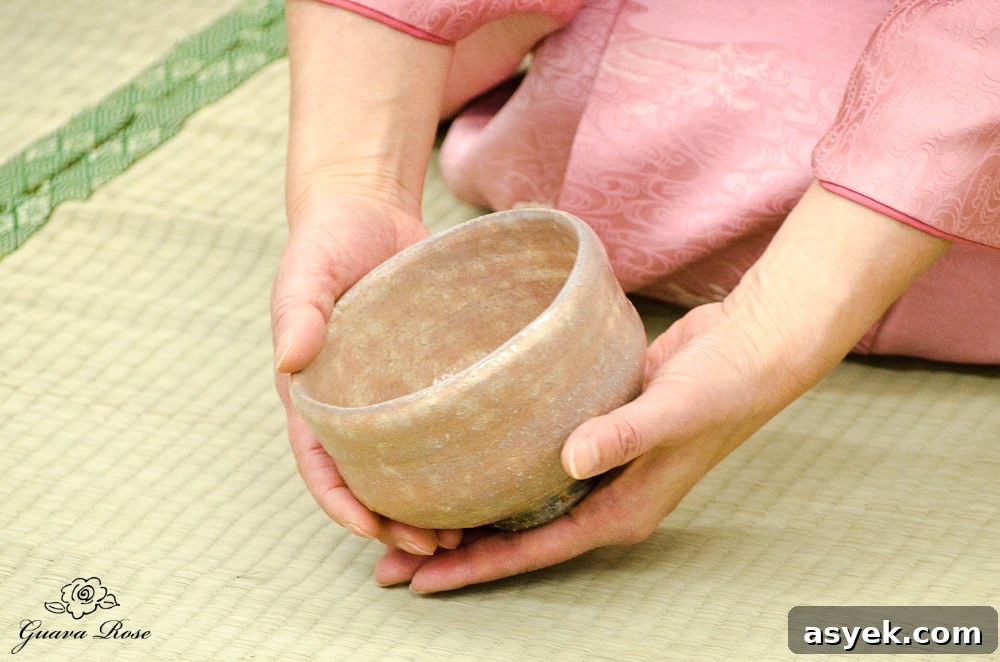
Guests feel the warmth of the bowl, rotate it a quarter turn clockwise twice to avoid the front decoration, and sip the tea until the bowl is empty. A small appreciative slurp is customary. After drinking, the rim is wiped and the bowl is admired from all sides; the bottom can reveal details about the clay and craftsmanship. The bowl is then returned to its original position.
The demonstration closed with a final bow and heartfelt thanks. The Omotesenke instructors patiently packed their equipment after an early morning drive from San Francisco, sharing both skill and a gentle appreciation for tea culture.
To be continued… next we’ll see how the students did.