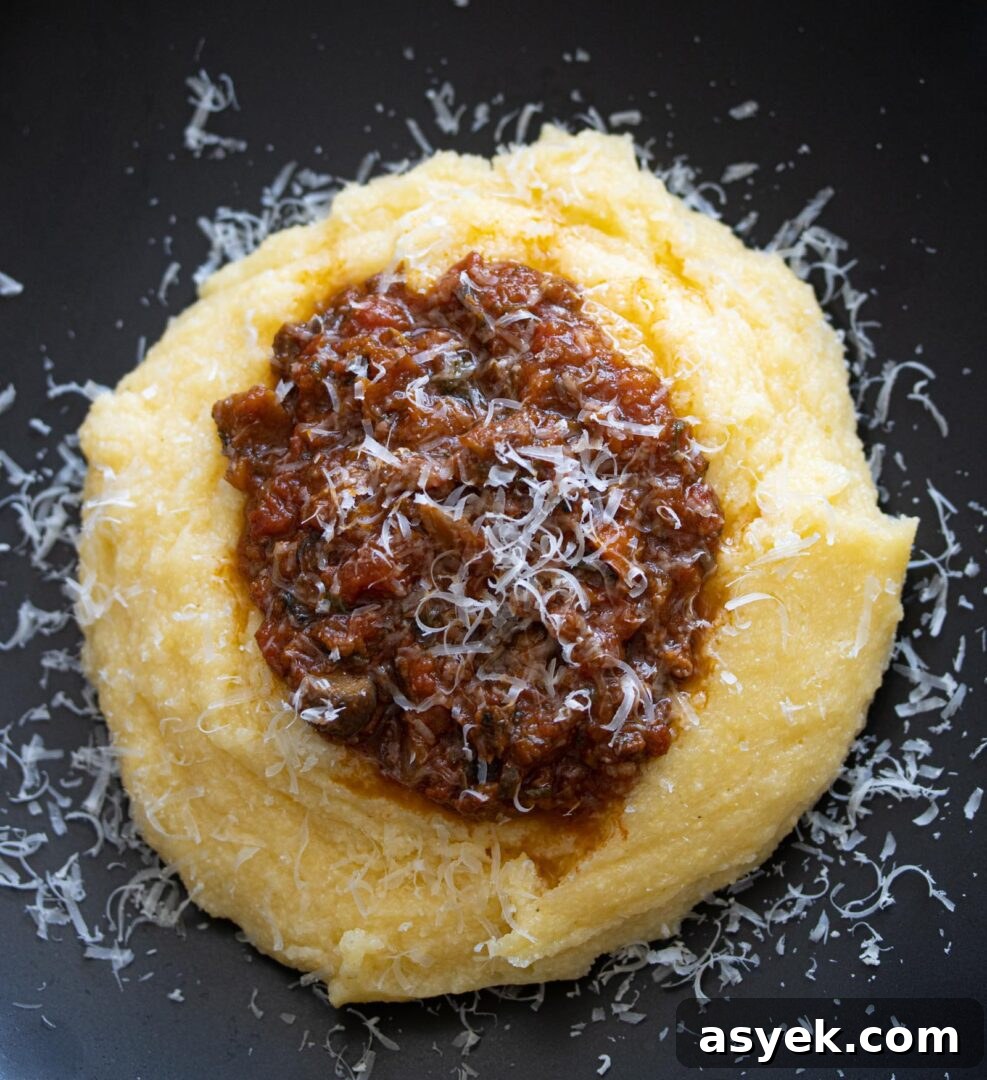
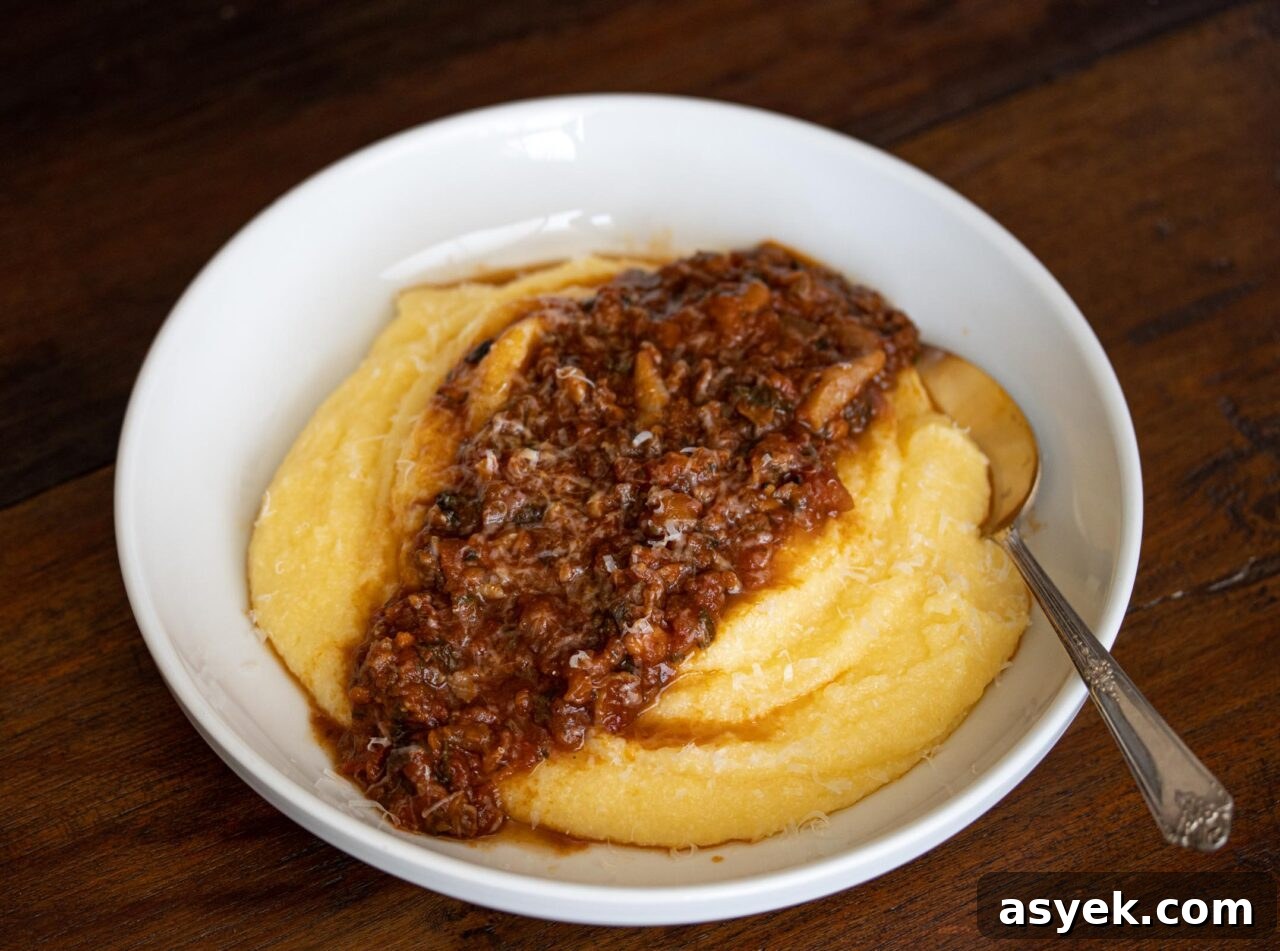
Doesn’t a warm bowl of mushroom and sausage ragù ladled over creamy polenta feel like the perfect comfort food for cooler weather?
There are countless ragù variations, most built around meat. This version is inspired by memories of my grandmother cooking in Piemonte, where polenta was a staple served with mushrooms she gathered in the woods.
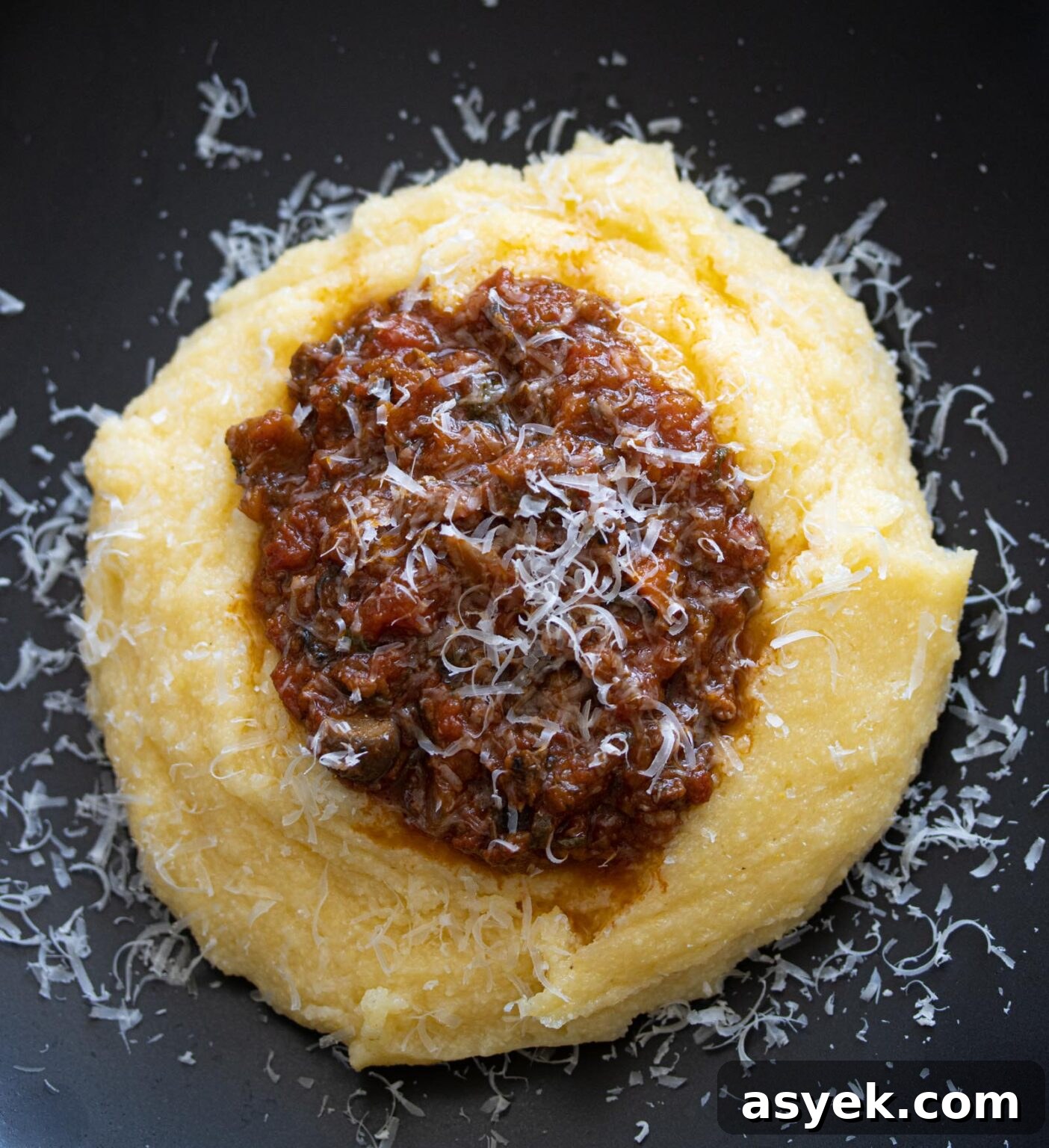
My grandmother made polenta often. Before the convenience of instant polenta, she stood at the stove, stirring a large pot for nearly an hour until the cornmeal became silky and tender. It was a labor of love: long, steady stirring produced a creamy base that paired beautifully with a rich ragù and freshly foraged porcini.
I still treasure memories of mushroom foraging with her and her cousin—the crisp morning air and the earthy scent of the forest stay with me every time I cook this dish.
In this Article
- What is polenta? And how to make it
- Ingredients for the sausage and mushroom ragù
- Equipment you will need
- Cooking tips and step-by-step
- Make-ahead and storage
- Recipe: Mushrooms, Sausage Ragù with Polenta
Today, instant polenta makes the process much faster—ready in minutes while still yielding a deliciously creamy result if handled carefully. When fresh porcini aren’t available, dried porcini rehydrated in hot water add a concentrated, savory depth—reserve that soaking liquid and add a little to the ragù if it needs extra moisture and flavor.
For this recipe I like a mix of rehydrated dried porcini and fresh mushrooms, and I use only sausage meat for the protein. It’s a simple, comforting pairing, though you can use other meats if you prefer.
What is polenta? And how to make polenta?
Polenta is a traditional Italian dish made from boiled cornmeal. Depending on the grind—coarse, medium, or fine—the texture varies from gritty to smooth. Polenta can be served hot and creamy, or cooled, sliced, and grilled or fried. Basic polenta cooks with mostly water, though milk or stock can be used for a richer flavor. The technique matters more than the ingredients: polenta requires attention while it cooks to prevent lumps and avoid burning.
Tips for success: use a heavy-bottomed pot to distribute heat evenly, whisk the cornmeal into boiling water slowly to prevent lumps, then switch to a wooden spoon and stir steadily until the polenta thickens. If you have someone to help pour and whisk, it makes the process easier.
Ingredients needed to make this pork ragù recipe
This ragù is made from simple, pantry-friendly ingredients. The list below is concise; check the recipe section for full quantities and instructions.
Sausage meat – Italian pork sausage with fennel is ideal. Substitute spicy sausage for heat if you like.
Pancetta – adds rich, savory notes and depth.
Shimeji and porcini mushrooms – a mix of fresh and dried works well; reserve some porcini soaking liquid to enhance the sauce.
Bay leaves – subtle, woody background flavor.
Red wine – a full-bodied red adds richness; the alcohol cooks off, leaving concentrated flavor.
Carrots, onion, parsley – the classic soffritto base for the ragù.
Garlic – briefly cooked to perfume the oil, then discarded so it doesn’t overpower the sauce.
Olive oil, chopped tomatoes, tomato paste, chicken stock – basic components to build a balanced, moist ragù.
Salt, black pepper, Parmesan cheese – season and finish. Grated Parmesan stirred into the polenta adds creaminess.
Instant polenta – convenient and quick; follow package directions but use the technique notes above for the best texture.
Equipment you will need
Recommended tools: a large heavy-bottomed Dutch oven or enamel cast-iron pot for the ragù, a polenta pot or other heavy-bottomed saucepan for the polenta, a sharp chef’s knife and cutting board, a whisk for incorporating the polenta, and a wooden spoon or heatproof spatula for stirring.
Cooking tips and step by step to make this mushroom and sausage ragù with polenta
This dish has two main components: the ragù and the polenta. Both are straightforward to make. The polenta needs steady attention while it thickens; the ragù benefits from a slow simmer to develop flavor.
Polenta preparation
- Bring the cooking liquid to a boil, then slowly pour the polenta in while whisking to prevent lumps.
- Once incorporated, switch to a wooden spoon or spatula and stir continuously until the polenta thickens—instant polenta typically takes a few minutes.
- Reduce heat to low and stir frequently to keep the texture smooth and to prevent sticking or splattering.
- Season to taste and finish with butter or grated cheese for extra creaminess, if desired.
Ragù
- Start by heating olive oil and briefly browning whole garlic cloves to perfume the oil; remove the garlic once golden so the flavor is subtle.
- Add the diced onion, carrots, and parsley and cook until softened, then add the sausage meat and chopped pancetta. Break the meat apart and cook until any released liquid evaporates.
- Stir in tomato paste, then deglaze with a full-bodied red wine. Add chopped mushrooms and some of the rehydrated porcini soaking liquid for extra umami.
- Pour in chopped tomatoes and chicken stock, add bay leaves, and season with salt and pepper. Simmer gently, covered, for 1 to 1½ hours, stirring occasionally.
- If the ragù becomes too dry, add more wine, stock, or reserved mushroom soaking liquid. Finish by removing the bay leaves and adjusting seasoning.
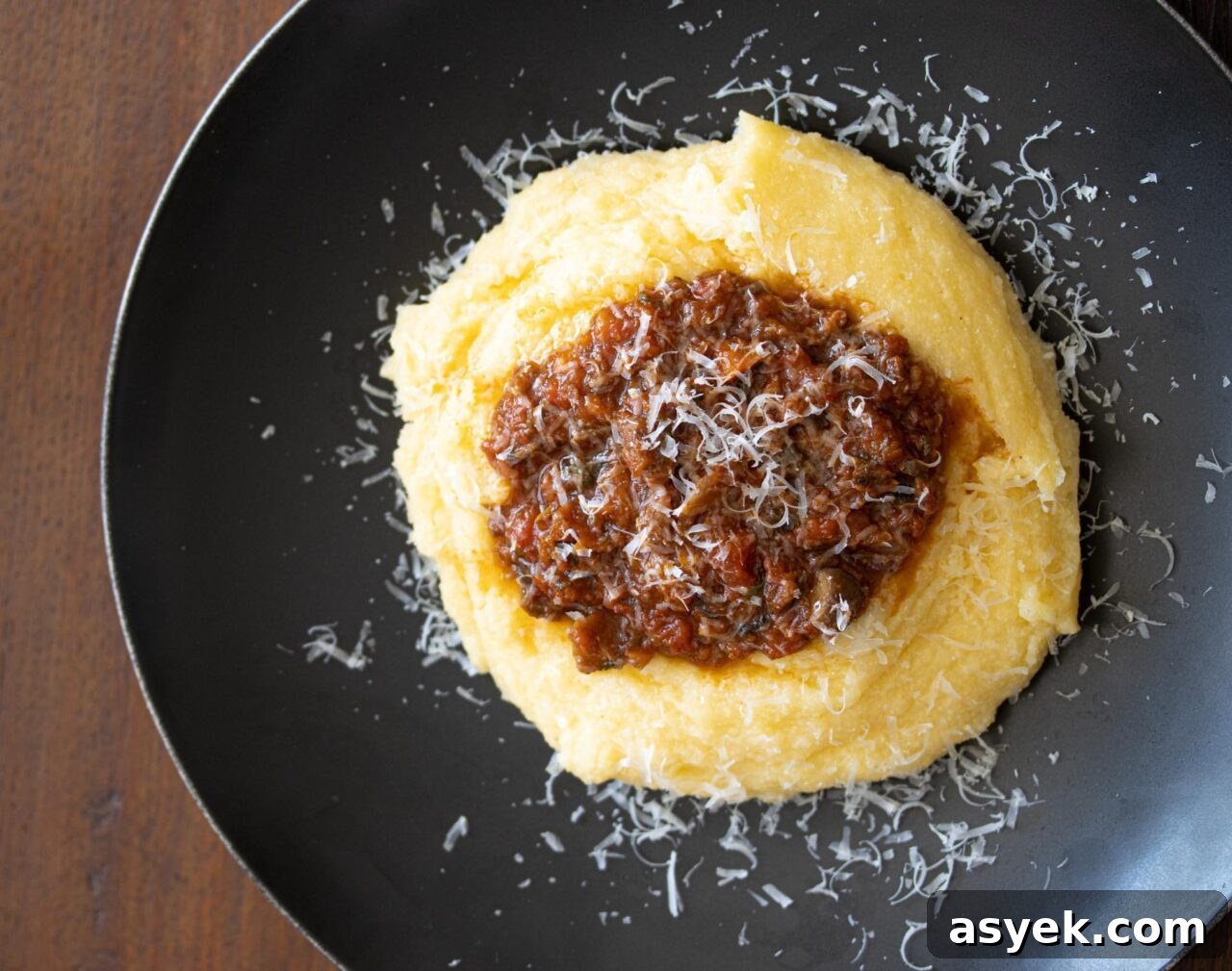
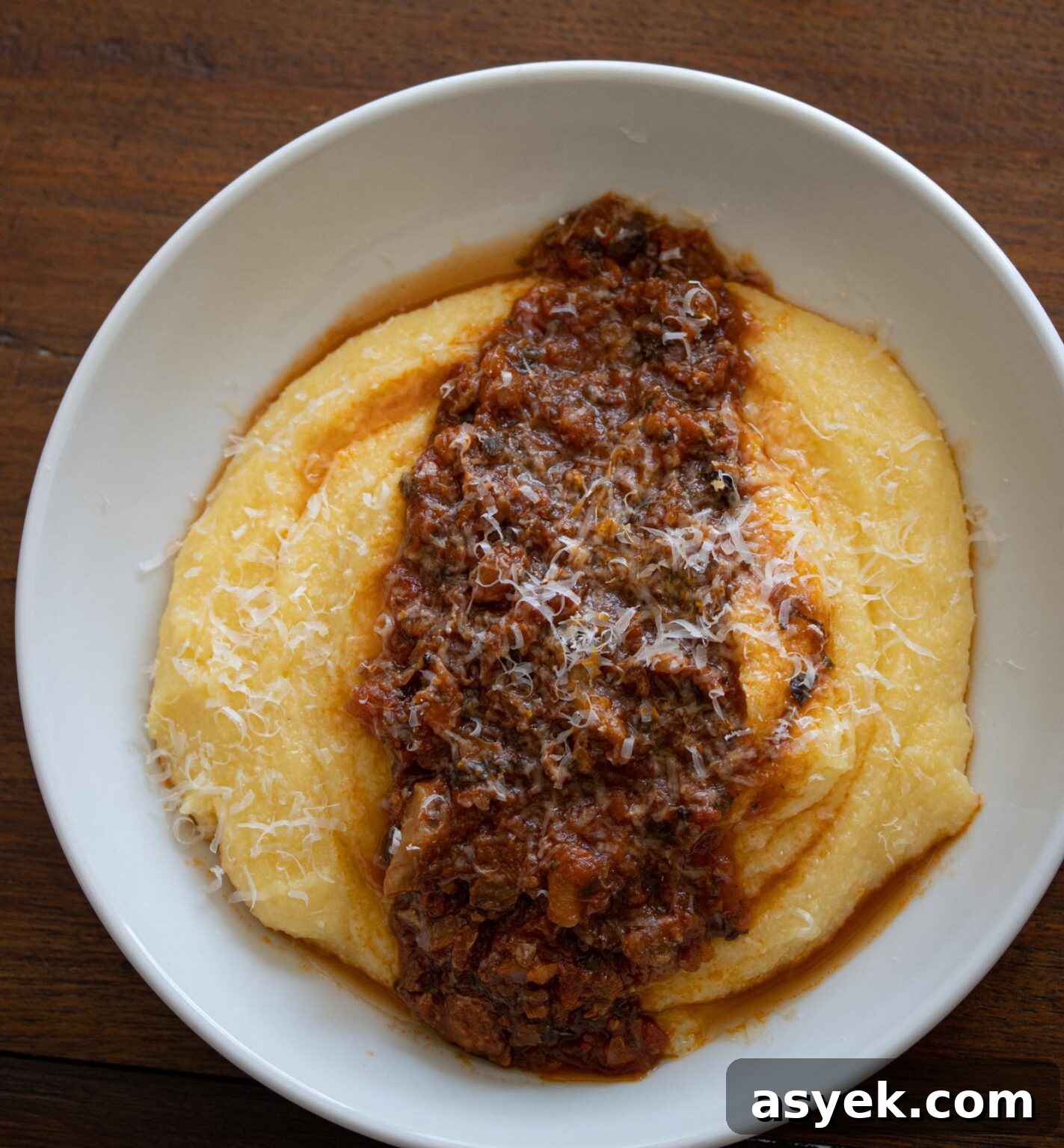
To serve, spoon the polenta onto warmed plates, top with a generous ladle of ragù, and shave or grate Parmesan over each portion.
Can you make the ragù ahead of time?
Yes—prepare the mushroom and sausage ragù a day or two in advance. Flavors deepen as it rests. Bring the ragù to room temperature before reheating gently on the stovetop, adding reserved mushroom soaking liquid or stock if it needs loosening. I don’t recommend making polenta far in advance for this dish; it’s best served fresh and creamy on the day you plan to eat it.
Storage and reheating your polenta
Storage: After the polenta cools to room temperature, transfer it to an airtight container and refrigerate for up to three days. Cold polenta will firm up.
To prevent condensation forming a thin watery layer on top, place a piece of plastic wrap directly on the surface before sealing the container.
Reheating: Slice chilled polenta and warm the pieces in a skillet with a little butter or olive oil until golden, or gently reheat leftover creamy polenta on the stove with a splash of milk, stock, or water, stirring until smooth. Serve with reheated ragù and plenty of grated Parmesan or Pecorino.
If you enjoy this polenta recipe, try some of my other dishes
Ragù alla Bolognese
Orecchiette with Sausage and Tomatoes
Turkey Sausage Patties
Mushroom Quiche
Equipment and key ingredients used for this recipe
A heavy Dutch oven, a polenta pan or heavy saucepan, a good chef’s knife, a sturdy cutting board, a whisk for the polenta, and a wooden spoon or spatula are the essentials for making this dish comfortably at home.
Mushrooms, Sausage Ragù with Polenta
Ingredients
RAGÙ
- 10 ounces sausage meat
- ⅓ cup pancetta, chopped
- 5 ounces Shimeji mushrooms
- 1 ounce dry porcini, soaked in 2 cups hot water for 20 minutes
- 2 bay leaves
- 1 cup red wine (plus more if needed)
- 2 carrots, peeled and diced
- 1 onion, peeled and diced
- 2 garlic cloves, peeled
- ½ cup parsley, chopped
- 2 tablespoons olive oil
- 3 cups chopped tomatoes
- 2 tablespoons tomato paste
- 1 cup chicken stock
- ½ cup mushrooms soaking water
- Salt and black pepper to taste
- Parmesan cheese for serving
POLENTA
- 2 quarts water
- 2 cups instant polenta
- Salt to taste
Instructions
TO PREPARE THE MUSHROOMS RAGÙ
- In a large heavy pot, heat the olive oil and add the garlic cloves. When the garlic turns golden, remove and discard the cloves to leave a lightly flavored oil.
- Add the onions, parsley, and carrots and cook until the onions are translucent. Add the sausage meat and pancetta, breaking them apart with the back of a wooden spoon. Stir in the tomato paste.
- Cook the meats until any released liquid evaporates.
- Add bay leaves, the red wine, chopped porcini, and the rehydrated mushrooms plus about half of the strained porcini liquid. Mix well.
- Add chicken stock, chopped tomatoes, salt, and pepper. Mix, lower the heat to a gentle simmer, cover, and cook, stirring occasionally, for 1 to 1½ hours.
- Taste and adjust seasoning. If the ragù is too dry, add more wine, stock, or reserved mushroom water. Cook uncovered for another 30 minutes if needed to concentrate flavors.
- Remove bay leaves before serving.
TO MAKE POLENTA
- Bring water to a boil. Gradually whisk in the instant polenta to prevent lumps. Once incorporated, switch to a wooden spoon and stir until thickened, about 6 minutes for most instant polentas. Season to taste.
ASSEMBLE
- Remove polenta from heat and spoon onto a platter or individual plates. Top with a generous portion of mushroom ragù and finish with a very generous amount of grated Parmesan. Serve immediately while hot.
Nutrition
Nutrition estimates provided as a guideline and not calculated by a registered dietitian.
- Course: Pasta, Rice & Grains; Dinners; Pork; Sunday Night Dinner
- Cuisine: Italian
- Season: Fall, Winter
Did you make this?
Leave a comment below and tag @giangiskitchen on Instagram
Visit my Amazon storefront for my selection of favorite kitchen essentials (shop names and suggestions only; no external links provided here).
Originally published on October 6, 2020.