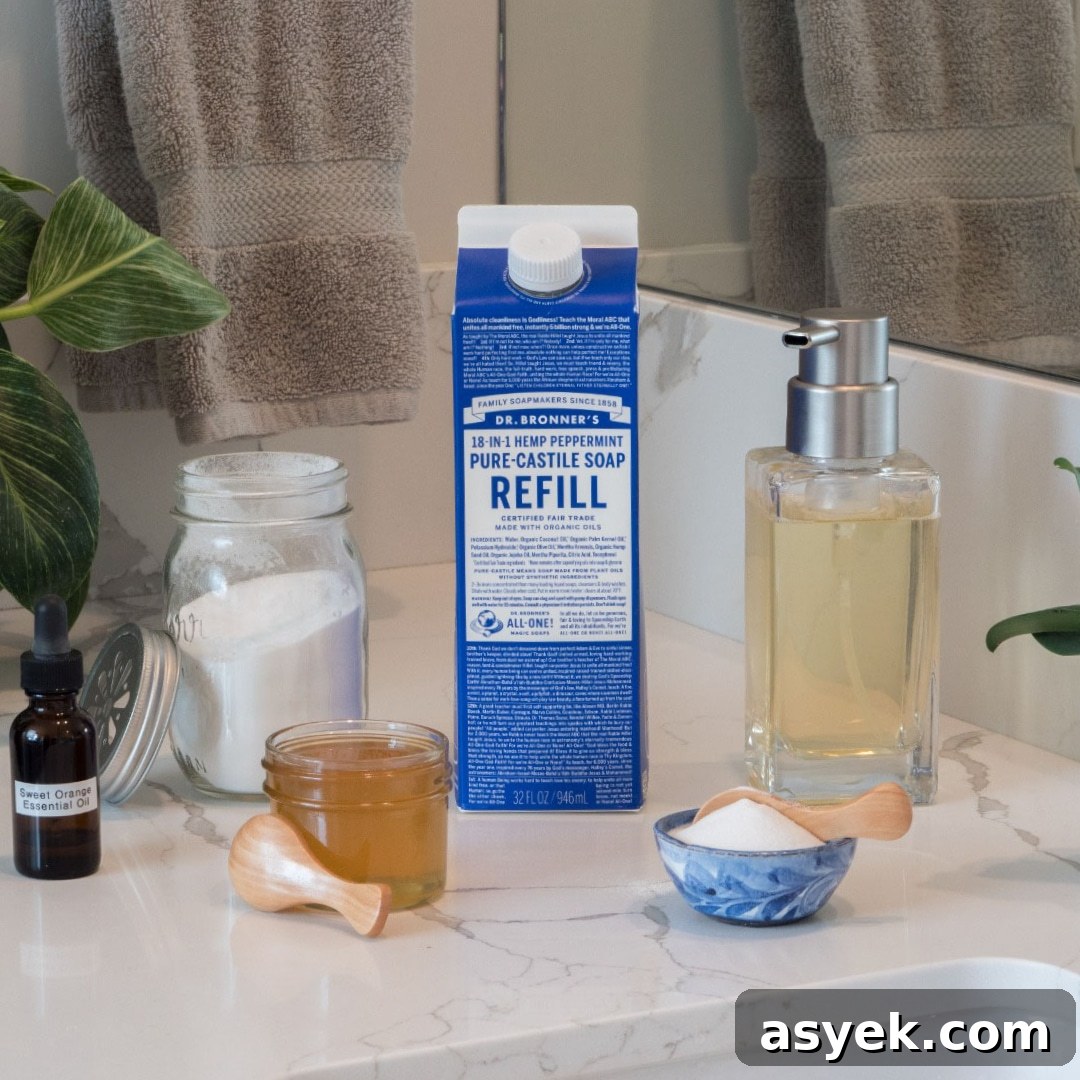
Over the years I’ve received countless questions about mixing ingredients with our Castile Magic soaps. People get creative — which is great — but it’s important to remember a basic rule:
Chemistry happens.
Don’t combine household cleaners or ingredients unless you understand how they interact. Below is a practical guide based on observations and lab input about what typically happens when Castile soap meets common additives.
If you enjoy DIY green cleaning, I applaud that. But many mixtures aren’t helpful and some can make the soap less effective. I tend to keep things simple: Castile soap with the occasional dash of baking soda or a few drops of essential oil does the job for me. Still, experimenting thoughtfully is fine — just be aware of the chemistry.
Dr. Vartan Libaridian, our chemistry and R&D consultant, helped compile the technical details. The chart below pairs my practical recommendations with his scientific explanations.
| Ingredient | Lisa’s recommendation | A chemist explains –Dr. Vartan |
|---|---|---|
| Alcohol (isopropyl alcohol, ethanol, vodka) | Alcohol is an antiseptic, but mixing it directly with Castile soap isn’t ideal. For disinfecting, wash with soap first, then apply alcohol as a separate spray. That two-step approach is also what public health guidelines recommend. | Up to about 5% isopropyl alcohol in the mixture won’t impair cleaning. Above that, foaming drops, the solution clouds, and micelle formation is disrupted. While alcohol can slightly boost cleaning, it quickly reduces foam. I recommend keeping alcohol below 5% in blends. This applies to vodka, ethanol, IPA, etc. |
| Aloe Vera | Fresh aloe gel can feel great on the skin, but adding the pulp to liquid Castile soap causes the mixture to thicken and turn slimy. For sunburn relief or moisturizing, apply aloe after you wash rather than mixing it into the soap. | Aloe contains many active components, but adding gel or powder to liquid soap doesn’t add measurable benefit. Aloe needs prolonged skin contact to work, which brief soap contact won’t provide. |
| Baking soda | Baking soda adds mild abrasion, making a good scrub for sinks and laundry. It also whitens and deodorizes in laundry and helps buffer the soap against acids that might affect pH. | |
| Bleach | I don’t recommend combining Castile soap with bleach. If you want safer, greener cleaning, bleach works against that aim and can cause respiratory irritation, burns, and environmental harm. Use bleach separately and with caution. | When hypochlorite (bleach) mixes with potassium-based soap, sodium can displace potassium in the soap salts, producing sodium-containing soaps and raising pH. The result is a harsher, higher-pH mixture that can irritate skin. The soap remains but the blend is more alkaline and potentially irritating. |
| Borax | Borax cleans effectively, but I avoid it in personal care. It can irritate skin and lungs and has been linked to reproductive effects in some studies. If you use it for laundry or cleaning, handle with gloves and keep away from children. | Borax (pH ~9.3) can buffer Castile soap and help protect it from acids, supporting cleaning performance. It can be a useful additive in household cleaning, but it is not benign for skin contact. |
| Castile Soap | Mixing different Castile soaps to create a preferred scent is fine. Our soaps share the same base and differ mainly by essential oil blends. Blending Peppermint and Eucalyptus, or Citrus and Almond, is a great way to customize scent. | |
| Citric Acid | Adding citric acid to lower pH will undo the soap. We include carefully measured citric acid in our formulas to neutralize trace alkali; adding more will reverse saponification and leave an oily mess. Don’t add extra citric acid to finished soap. | |
| Coconut milk | Coconut milk can make a shampoo feel more moisturizing, but added fats reduce the immediate cleaning power because soap molecules bind to oil. You may prefer to wash with soap and add moisturizing oils afterward. | |
| Club Soda | Mixing club soda with Castile soap isn’t useful. While club soda can help clean glass on its own, combining it with soap mainly produces bubbles and instability rather than better cleaning. | Carbonated water (pH 3–4) reacts with soap to release carbon dioxide, causing bubbling and an unstable solution. It’s not an effective or economical additive. |
| Epsom Salt | Epsom salt (magnesium sulfate) has therapeutic uses, but it’s slightly acidic and reacts with alkaline soap. This reaction can cause the soap to break down and form flakes. Use Epsom soaks and soap separately for best results. | Magnesium sulfate (pH ~6) reverses some saponification when mixed with Castile soap (pH ~8.7–9.9), releasing fatty acids and producing visible oil flakes. It’s incompatible with liquid Castile soap. |
| Essential Oils | Essential oils add scent and functional properties to cleaning and personal care blends. They’re effective in small amounts; avoid overdoing them because many are potent and can irritate. Research individual oils before using them. | Most essential oils can be added safely. They may cloud delicate formulations like Unscented Baby Mild Soap but otherwise are compatible. |
| Glycerin | Castile soap already contains natural glycerin. Adding a little extra can increase smoothness and moisturization, but beyond about 2–3% it will reduce foaming. Add only if needed for texture. | Glycerin improves moisturization potential, but concentrations above 2–3% decrease foam. |
| Hydrogen peroxide | Hydrogen peroxide is a mild antiseptic and bleaching agent. Mixing it into Castile soap accelerates its breakdown into water and oxygen, so it’s more effective applied before or after washing rather than combined. Avoid concentrated peroxide; household 3% solutions are less hazardous. | Concentrated hydrogen peroxide (30%+) can be dangerous if mixed with soap and exposed to heat. At common 3% household levels, peroxide breaks down when mixed with alkaline soap, releasing oxygen and losing its antimicrobial benefit. |
| Lemon juice | Lemon juice and other citrus juices are acidic and will undo soap by unsaponifying oils, leaving a greasy, ineffective mess. Citrus essential oils (from the rind) are oil-based and pH neutral, so they don’t react and are fine to use for scent. | |
| Oatmeal | Oatmeal blends well with Castile soap for face masks, dry shampoo, or gentle exfoliation. The main practical concern is plumbing — rinse masks where you can manage the residue, such as in a sink with a disposal. | |
| Oil – Jojoba, olive, or coconut | Adding oils makes the soap more superfatted and moisturizing, but too much oil ties up the soap and reduces cleaning power. If you want deep moisturization, wash first and apply oils or lotion afterward. If adding oil, keep it minimal (around 0.5–1%). | These oils can be added to create a superfatted soap (unreacted oils remaining). More than about 0.5–1% is not recommended because it reduces cleaning efficiency. |
| Oxygen Bleach (OxiClean-style) | Oxygen bleach dissolves into hydrogen peroxide and a washing powder. It generally doesn’t react negatively with Castile soap. For tough stains, follow the product’s instructions and consider pre-treating before laundering with Castile soap. | Oxygen bleach is essentially hydrogen peroxide combined with an activator powder; see the hydrogen peroxide section for related behavior. |
| Sal Suds with Castile Soap | Combining Sal Suds with Castile soap isn’t necessary. Both clean well on their own; mixing them won’t provide a clear advantage and Sal Suds can be harsher on skin. | There’s no adverse chemical interaction, but no clear benefit either. Sal Suds is generally more aggressive than Castile soap. |
| Salt | Table salt (sodium chloride) reacts with Castile soap and can cause the mixture to clump rather than dissolve. If you want a salt scrub, mix salt with a carrier oil like virgin coconut oil instead of with liquid soap. | Salt increases the viscosity of Castile soap and can promote aggregation or thickening of the solution. |
| Sugar | Sugar is a natural humectant that draws moisture to skin, making it a good ingredient for scrubs. Mixing sugar with Castile soap creates a pleasant scrub for hands and body. | |
| Vinegar | Vinegar and Castile soap don’t mix well. Vinegar’s acidity unsaponifies soap, resulting in a messy, ineffective mixture. Use vinegar and soap separately — unless the soap is specifically buffered, as in some recipes that combine baking soda and soap safely. | |
| Vitamin E (tocopherols) | Vitamin E is safe to add and acts as an antioxidant to extend the life of DIY solutions. It’s commonly used in personal care for skin benefits and as a preservative ingredient in homemade blends. | |
| Vodka | People sometimes use vodka as a household cleaner, but drinking-strength alcohol isn’t concentrated enough for reliable disinfection. If you use vodka, follow the same guidance as for alcohol: avoid high concentrations in the soap and consider using it separately after washing. | No specific lab mixing was done with vodka, but see the general alcohol notes: keep concentrations low to avoid foaming loss and instability. |
| Washing soda | Washing soda (sodium carbonate) is a powerful laundry booster and water softener. It works well with Castile soap for heavily soiled loads, but it’s harsh on delicates and can wear fabrics faster if overused. It combines fine with Castile for laundry applications. | With hard water, sodium carbonate precipitates calcium, improving soap performance by reducing hardness-related interference with cleaning. |
| Water | Water is the primary diluent for Castile soap and is essential for rinsing away soap and grime. For clear, stable dilutions, use distilled or filtered water. |
Further reading
- Why Vinegar & Castile Soap Don’t Mix Well
- How Soap Works
- 13 Essential Green Cleaning Ingredients
- Sal Suds or Castile Soap – Which To Use?
Many of these tips and more appear in my book, Soap & Soul: A Practical Guide to Minding Your Home, Your Body, and Your Spirit with Dr. Bronner’s Magic Soaps, available in hardback and as eBook and audiobook. It includes practical recipes, safety notes, and guidance for using Castile soaps effectively around your home.