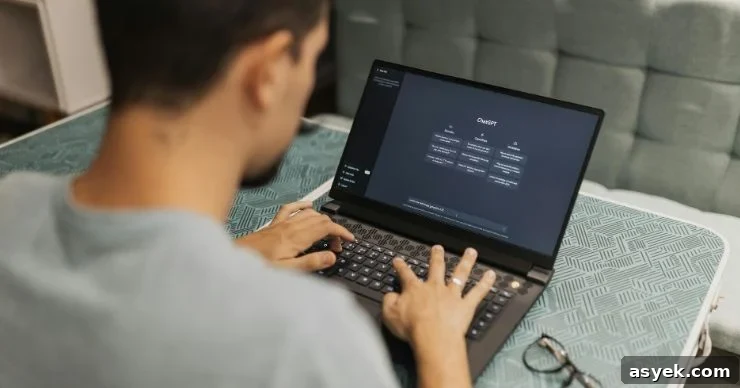
There’s a growing worry that AI will make our kids’ brains “soft” — that children won’t have to think because screens will do the thinking for them. I don’t agree. AI can produce instant answers, but it can’t help the child who never thought to ask, who can’t judge when an answer is wrong, or who can’t sit with a difficult question long enough to learn from it.
What matters more than memorizing facts is the ability to ask the right questions. That skill helps children evaluate AI responses, but it’s also central to being human: asking about the world, asking others, and questioning the answers you receive, whether from a person or a machine.
Asking a single, powerful question can change a life. In 2008 I emailed a magazine editor and asked, “Where do I start with this idea I have to write a book? Do you think anyone would read it?” The editor suggested I start a blog to test interest. I didn’t even know what a blog was, but I learned, I asked more questions, and that small interaction set me on a path to entrepreneurship, a community of parents focused on family health, and hundreds of thousands of children learning to cook and form healthy relationships with food. All because I asked.
I tell my kids often: “It never hurts to ask.” Often, it makes a huge difference.
Here are questions from several #LifeSkillsNow camp leaders — questions they asked that genuinely changed their lives. Read them with your child, or use them to ask your child something you’ve never asked before. Kids learn from what we model.
What if I fail?
Lisa Yvonne, founder of Learning Moments and a homeschool mom of eight, remembers asking her ninth-grade teacher, “What if I fail?” She expected reassurance. Instead he said, “I hope you do. If you’re not failing, you’re not trying hard enough.” That response changed her view of failure: it became feedback, not defeat. Testing, regrouping, and trying again shaped her life and work. This reframe helps kids see failure as evidence they’re stretching beyond comfort, not as something to avoid.
What if I just ask anyway?
Cynthia Heren of Inside Our Normal asked to visit a local movie set at age 18 and was instead offered work as a production assistant and editor. The small request opened a bigger door — a reminder that a “no” can lead to a better opportunity. Encourage kids to ask; adults often want to help young people grow.
Keep the Life Skills Going All Year Round!
Missed #LifeSkillsNow? You can access workshops from prior seasons to keep learning while you wait for the next season. Topics include making homemade gellies, turning ideas into businesses, making phone calls, checking car fluids, and creating sensory-friendly homes.
These short, practical workshops are a taste of our free life-skills camp for kids and teens.
Show Me the Life Skills!
How do I find out for myself?
Kathlena, The Allergy Chef, recalls being told as a child, “Go look it up yourself.” That rejection pushed her to become an independent thinker who can sift data and judge truth. In an age of instant AI answers, the crucial skill is evaluating whether an answer is accurate and trustworthy — and developing the curiosity to research and verify for yourself.

What does my body need right now?
Layne Burkette teaches families to pause and listen inward. Asking “What does my body need right now?” creates regular moments of awareness: breathing, stepping outside, or slowing down. That simple question builds self-regulation, emotional awareness, and a sense of internal safety — skills AI can’t teach or replace.
Why is this so hard for me?
Jenn Conklin spent years asking why she struggled with clutter. That exploration led her to study hoarding, decluttering methods, and organizational experts. Over time she transformed her life and career. The courageous question is “Why is this hard for me specifically?” — because digging into root causes produces meaningful solutions, not generic tips.
Is this the right thing for my kids?
Denise Albright asked whether she was helping her kids or holding them back. She realized that doing everything for them denied them opportunities to develop confidence and real-life skills. Shifting to an “earn and learn” approach helped kids contribute meaningfully and learn responsibility — a reminder that convenience often steals growth.
How can I truly care for myself…daily?
Therapist and author Risa Williams recommends asking: “What if my own well-being was my main goal?” and “What if I counted small daily things as tiny wins?” These questions led her to build practices that make self-care nonnegotiable and to keep a journal of small achievements. Celebrating tiny wins builds confidence and steady progress.
What am I really called to do?
Jackie Vernon-Thompson asked for guidance in prayer about her purpose. The answer led her to train in etiquette and build a career teaching decorum and confidence. Some of the most important questions are answered quietly over time through reflection, not by a search bar.

The Real AI-Proof Skill
The children who will thrive alongside AI aren’t those who memorize the most facts; AI can store and retrieve that easily. The resilient kids will be those who think of meaningful questions and have the courage to ask them. Curiosity, critical thinking, and human connection remain essential.
Eight camp leaders shared eight life-changing questions — none of them questions you can fully answer with a quick Google search. Technology still needs humans, and humans need curiosity.
If you want your child to spend a week learning practical life skills from experienced teachers, #LifeSkillsNow Season Five opens June 8 as a gift to families. It’s our answer to questions like: What’s the best way to use technology for learning? How can we make life skills motivating for kids? What would help parents raise independent, confident adults?
We’re here to help you and your family keep asking the right questions.